AI Services Market › Skills factory › Images › Social Cover
$4.99 · No sign-inv1.0.0– views
Social Cover
Post covers with 3 composition recipes — ready to use
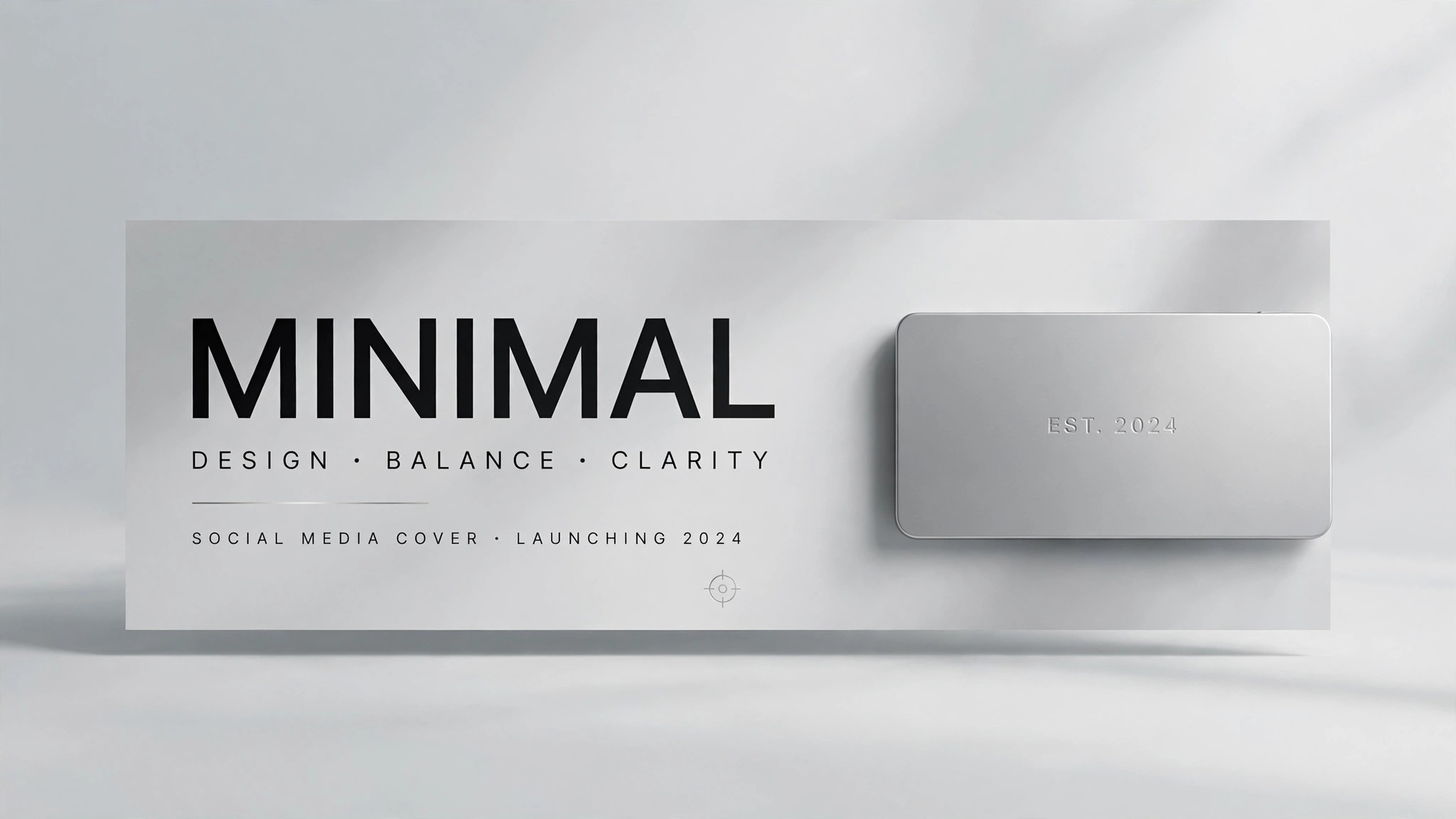
Social cover art direction: safe margins, title type hierarchy, three composition recipes, plus a reusable image-generation prompt skeleton.
Best for
Content marketers, creators
Time needed
~10 min per cover
Level
Beginner-friendly
Install it in 3 steps
No sign-up. No CLI tools. Pick your AI, copy one line, paste it over.
Prefer doing it yourself? Buy the skill ($4.99), download the ZIP from your checkout confirmation, unzip it into the directory shown above, restart your AI session — same result. Already bought it? Your AI assistant can download it for you.
Real-world proof
Real people did this exact job with AI agents.
Use case
Build a paid ad campaign from scraped brand and competitor data
Read case →Use caseRun marketing operations with a team of subagents
Read case →Use caseTurn a Telegram message into researched, designed social posts
Read case →What’s inside
One SKILL.md (the playbook) + one starter template. A preview:
Social Cover
When to use
- The user is publishing a WeChat official-account post and needs a cover image (often asks "what size, and where does the title go?").
- The user is posting to Xiaohongshu/Douyin and needs a 3:4 portrait cover, worried the title will be hidden behind the system UI.
- The user is posting to Weibo/X/Jike and needs a 16:9 or 1:1 image with a "click-worthy" look.
- The user runs a course/event/podcast and wants a consistent set of covers (define one spec, reuse it).
- The user already has a base image and needs the headline overlaid with safe margins to make a usable cover.
Workflow
- Lock platform and size (input: publishing platform → action: look up the spec table → output: confirmed canvas spec)
Ask where it will be published first, then set the canvas: WeChat post cover 2.35:1 (e.g. 900×383),
Xiaohongshu 3:4 portrait (e.g. 1080×1440), Weibo/X 16:9 (e.g. 1200×675),
square 1:1 (e.g. 1080×1080). Do one platform per image — no "one image for every platform." - Split the headline into three levels (input: article topic/title → action: three-level split → output: three-level copy)
Main headline ≤ 12 Chinese characters (one-sentence hook; suspense is fine, clickbait is not),
sub-headline ≤ 20 characters (say what it's actually about), plus an optional garnish tag
(e.g. "Episode 3", "field-tested"). If the copy can't be locked down, get the user to decide the words first —
the image comes second. - Pick a composition pattern (input: three-level copy → action: choose one of three → output: composition plan)
Pattern A, centered: main headline as big centered type, generous whitespace, best for opinion/insight pieces;
Pattern B, split columns: text left / image right (or vice versa), best for product/person introductions;
Pattern C, stacked layers: image on the top 1/3, colour block + text on the bottom 2/3, best for events/courses.
Mark the safe margins in the plan: keep 8–10% of each edge free of key text,
and for Xiaohongshu leave 12% top and bottom (against the top bar and bottom caption overlay). - Set the colour mood (input: content emotion → action: pick colours → output: hex palette)
Emotion first, then colours: celebratory/promo → reds/oranges; professional insight → deep blue/ink;
fresh lifestyle → off-white/pale green. One primary + one accent + one text colour is enough —
white text on dark backgrounds, dark grey/black text on light ones. Contrast guaranteed. - Write the image-gen prompt (input: spec + copy + composition + palette → action: fill the template.md skeleton
→ output: complete prompt)
Write the prompt in English (image models handle English more reliably). It must include: canvas ratio,
Template preview
1. Composition checklist (pick one of three before starting, tick to confirm)
Platform size cheat sheet
- [ ] WeChat post cover: 2.35:1 (e.g. 900×383), watch out for rounded-corner cropping
- [ ] Xiaohongshu/Douyin cover: 3:4 portrait (e.g. 1080×1440), 12% safe zone top and bottom
- [ ] Weibo / X / Jike image: 16:9 (e.g. 1200×675)