Prompted Result Inspection
Don't just show the answer — zoom in and check it
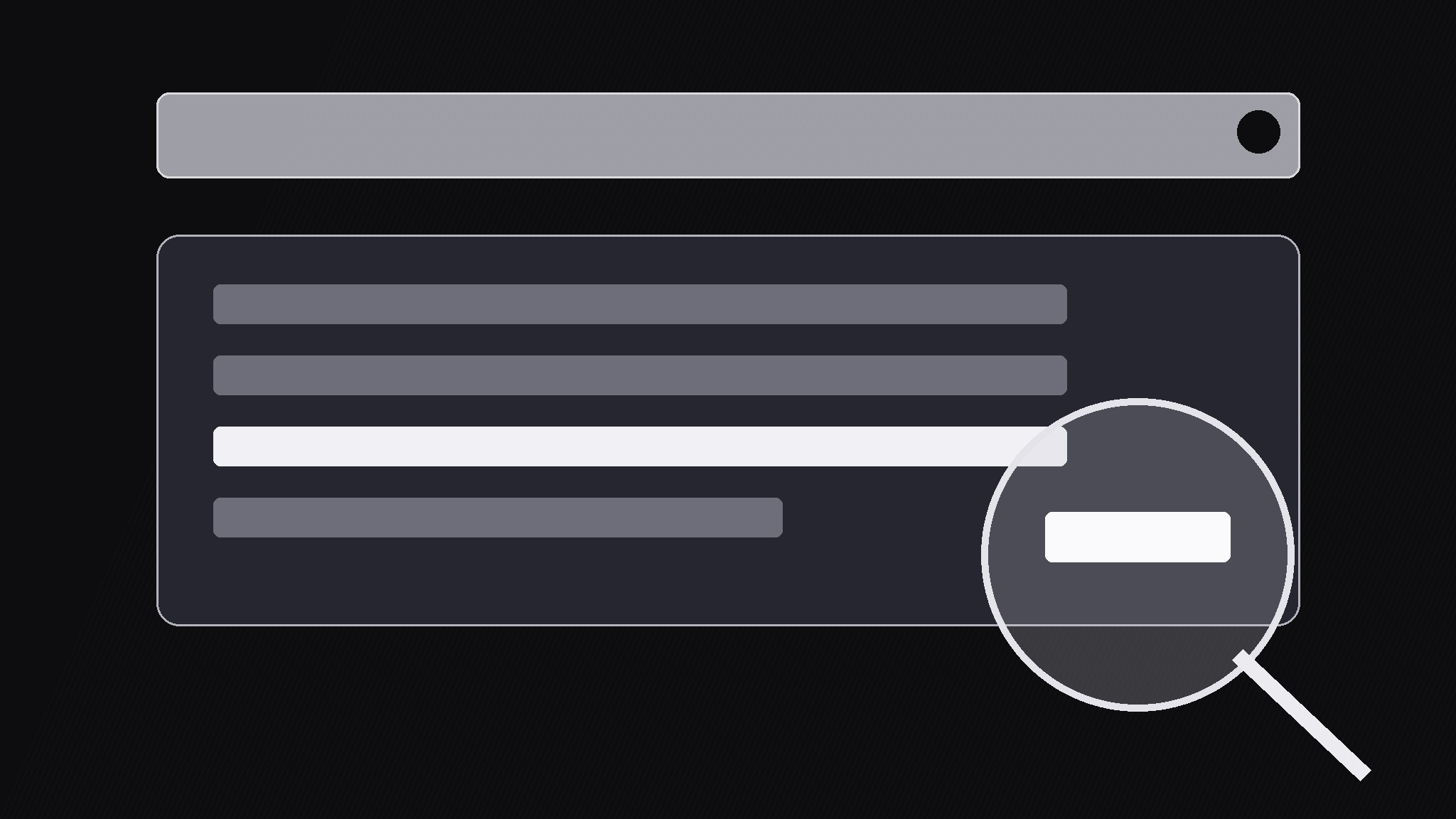
Turns your AI into a motion-graphics director for the prompted result inspection pattern — types a prompt, generates a result, then zooms into one detail of that result to check it, so viewers learn to verify AI output instead of trusting it at a glance.
Install it in 3 steps
No sign-up. No CLI tools. Pick your AI, copy one line, paste it over.
Prefer doing it yourself? Buy the skill ($4.99), download the ZIP from your checkout confirmation, unzip it into the directory shown above, restart your AI session — same result. Already bought it? Your AI assistant can download it for you.
What’s inside
One SKILL.md (the playbook) + one starter template. A preview:
Prompted Result Inspection
When to use
- An AI tutorial where the point is not the answer but whether the answer can be trusted
- A demo that shows a prompt producing output, then catches a wrong number, wrong name, or made-up citation inside it
- A review or comparison video where one AI's output needs a close-up check against the source
- A classroom-style explainer teaching viewers a verify-before-you-use habit
- A product walkthrough where the generated draft is the starting point and human correction is the payoff
Workflow
- Stage the prompt (input: prompt text → output: typed prompt shot)
Show the prompt being typed into a clean input box at 2–3 characters per frame, with a blinking cursor, over 2–4s. Keep the prompt to one or two sentences — if it is longer, show the first line and fade the rest in as a block. The prompt stays on screen as a header when the result appears, so viewers always know what was asked. Never show a prompt you have not actually run. - Generate the result (input: real output → output: streaming result)
Reveal the result the way the tool actually produced it: streaming line by line if it streamed, or as a typed block if it arrived whole. Use the real output verbatim — do not tidy up its mistakes, because the mistakes are the point of the video. Keep the result at a readable size and hold the full result on screen for at least 1.5s before any inspection starts, so viewers get the same first impression a real user would. - Pick the inspection target (input: full result → output: chosen detail)
Choose exactly one detail to inspect: one number, one claim, one citation, one name. Mark it with a soft highlight box that draws itself around the detail over 250ms. State the check out loud or in a caption: "It says 42% — let's check that." One target per inspection pass; if two details are suspect, run two passes. A video that inspects everything inspects nothing. - Zoom and annotate (input: chosen detail → output: magnified check)
Zoom into the detail with a 2.2–2.5x magnifier circle or a scale-up of the surrounding lines over 450ms with an ease-in-out curve. Inside or beside the zoom, show the verification: the source document, the calculator, the original page — the thing the claim is checked against. Draw the comparison as a simple side-by-side: claim on the left, source on the right, with a match or mismatch stamp. Keep the zoom steady for at least 2s so viewers can read both sides.
Template preview
Prompted Result Inspection — Build Template
One pass = one prompt, one result, one inspected detail.
The prompt (as actually run)
> {prompt text, 1–2 sentences}
Tool used: {name} | Run date: {date} | Raw output saved: [ ]
The result (verbatim — do not tidy mistakes)
> {paste the real output here}
Full result hold before inspection: ≥1.5s
Inspection target (exactly one per pass)
- Detail to check: "{exact quote from the result}"
- Type: {number / claim / citation / name}
- Check stated on screen: "{e.g. It says 42% — let's check that.}"
- Highlight box: draws around the detail, 250ms


