Magnetic Lattice Hero
A hero that pulls toward your cursor — and lets the headline lead.
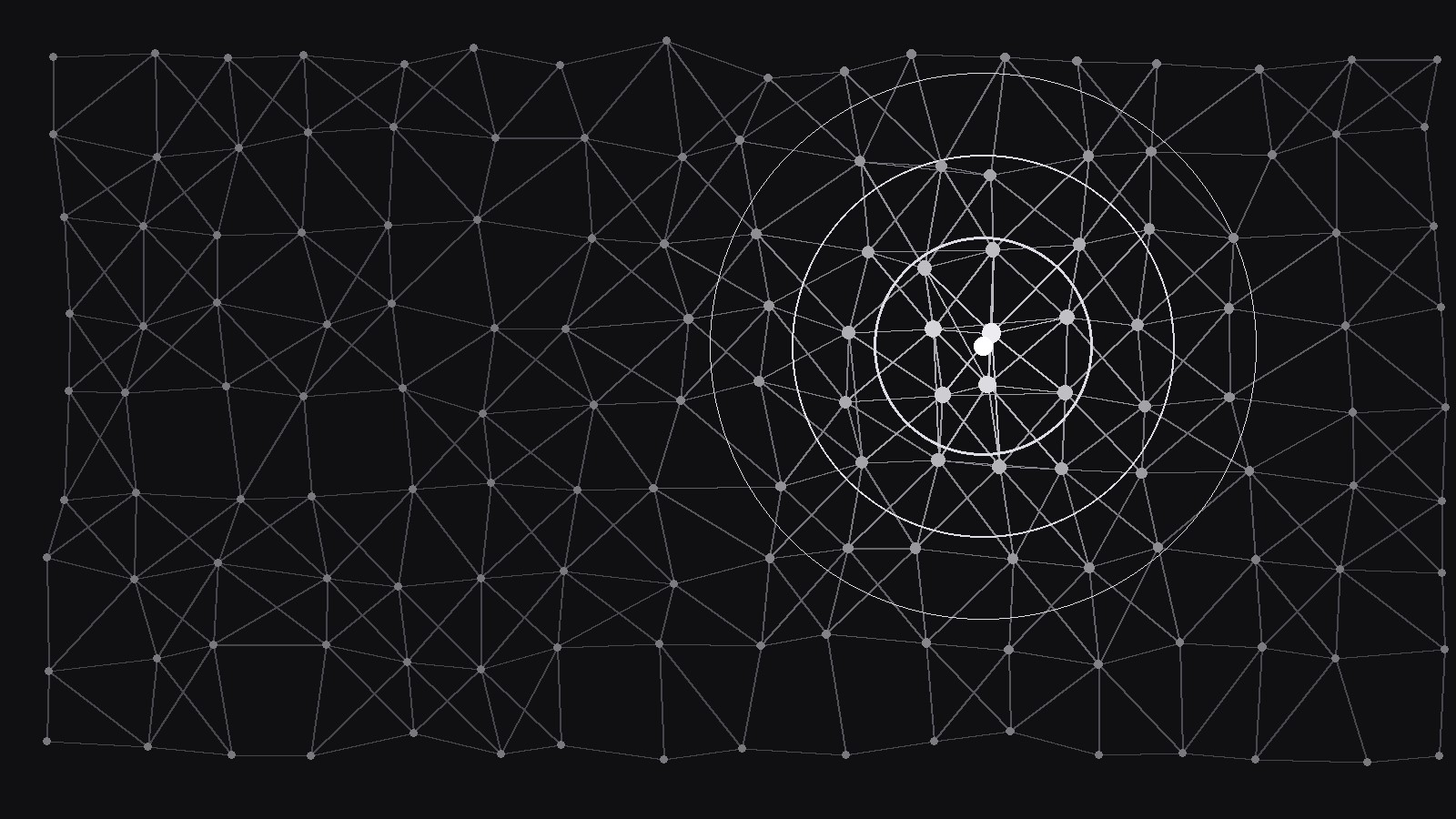
Turns your AI into a hero-section designer that builds a hero around a magnetic lattice — a field of nodes and links that pull toward the cursor, settle back, and carry the headline without competing with it.
Install it in 3 steps
No sign-up. No CLI tools. Pick your AI, copy one line, paste it over.
Prefer doing it yourself? Buy the skill ($4.99), download the ZIP from your checkout confirmation, unzip it into the directory shown above, restart your AI session — same result. Already bought it? Your AI assistant can download it for you.
What’s inside
One SKILL.md (the playbook) + one starter template. A preview:
Magnetic Lattice Hero
When to use
- Your landing page hero is a static headline over a flat background, and the product is interactive, networked, or spatial — the hero should feel like the product
- You need motion that responds to the visitor rather than looping behind them — something that rewards moving the mouse instead of ignoring it
- Your hero must work on touch devices too, where there is no cursor — the lattice needs a touch behavior, not a broken one
- A previous interactive hero was a performance problem: it janked on laptops, drained phone batteries, or failed accessibility checks
- You want one hero that degrades gracefully — full interaction on capable devices, calm static art everywhere else
Workflow
- Define the lattice (input: brand + page message → output: lattice spec)
Specify the field: node count range for desktop and mobile, spacing (a loose grid with jitter, never a rigid matrix), link rule (nodes connect to neighbors within a radius, with a maximum links per node), and the visual language (node size, link opacity, one accent color for nodes near the cursor). The lattice must read as texture at rest — quiet, even, and behind the headline — so its resting state should be calm enough to sit behind type. If the resting state competes with the headline, reduce node count or link opacity until it doesn't; the headline is the hero, the lattice is the stage. - Specify the magnetism (input: lattice spec → output: interaction spec)
Define exactly how the field responds: nodes within a radius of the cursor are pulled toward it by a force that falls off with distance, and ease back to their home positions when the cursor leaves. Specify the numbers — attraction radius, pull strength, return speed, and a cap on how far any node may drift from home (so the field never tears). Add the second behavior: on click or tap, a ripple pushes nodes outward from the point, then the field settles. Write the touch rule explicitly: on touch devices the lattice follows the finger while touching and settles on release — it never requires a hover that doesn't exist. - Place the headline on the field (input: interaction spec + copy → output: hero layout)
Lay out the hero so the lattice and the headline cooperate: the headline and CTA sit in a clear zone, and the lattice stays visually behind them — either through a calm density in the headline zone or a soft scrim that keeps text contrast steady while nodes move behind it. The CTA button must never sit on top of moving nodes without a solid fill; a ghost button over a moving field is unreadable. Specify the headline zone as a region where node drift is damped, so words never appear to wobble as nodes pass behind them.
Template preview
Magnetic Lattice Hero — Build Template
One field, one headline. The headline is the hero; the lattice is the stage.
Lattice spec
Resting state check: calm enough to sit behind type? [ ]
Interaction spec
- Attraction radius: {px} | Pull strength: {falls off with distance}
- Return speed: {ease back to home} | Max drift from home: {px — field never tears}
- Click / tap ripple: {pushes nodes outward from point, then settles}
- Touch rule: {follows finger while touching, settles on release — never hover-only}
Hero layout
- Headline zone: {region, node drift damped inside it}
- Headline: {one line} | Subline: {one line}


