Basalt Dev Portfolio
Dark stone, sharp code, outcomes first.
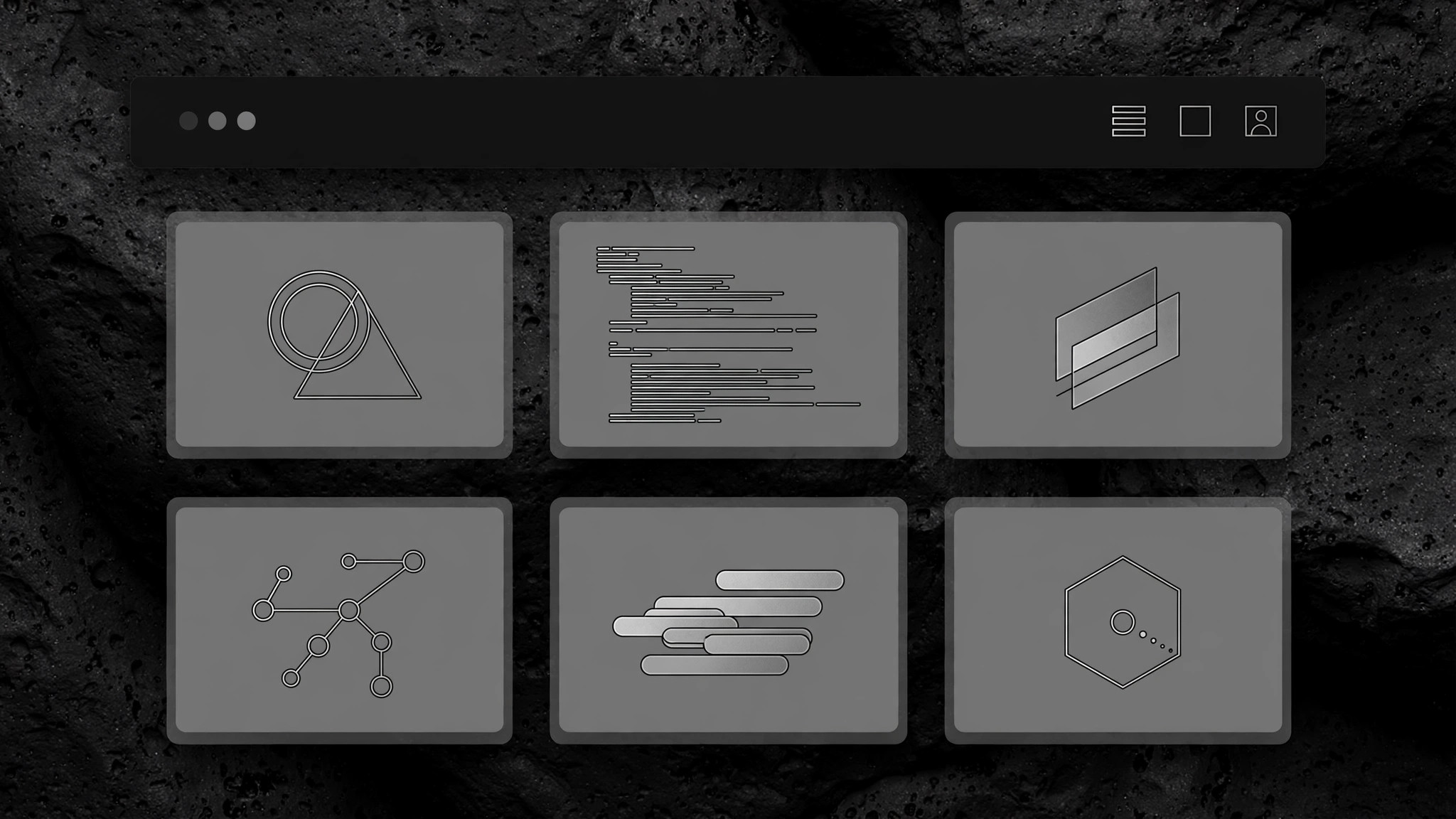
A developer portfolio playbook in a dark basalt palette: a project grid where every card leads with a verifiable outcome and links to something real, plus annotated code snippets that prove the work behind the claims.
Install it in 3 steps
No sign-up. No CLI tools. Pick your AI, copy one line, paste it over.
Prefer doing it yourself? Buy the skill ($4.99), download the ZIP from your checkout confirmation, unzip it into the directory shown above, restart your AI session — same result. Already bought it? Your AI assistant can download it for you.
What’s inside
One SKILL.md (the playbook) + one starter template. A preview:
Basalt Dev Portfolio
When to use
- You're a developer whose portfolio is a bare link list, a PDF résumé, or nothing — and recruiters or clients ask "show me what you built"
- Your current site lists technologies but not what you shipped, who it served, or what changed
- You want a single page that a hiring manager can scan in 60 seconds and a peer can dig into for an hour
- You have 3–8 projects worth showing and real code or demos to point at — not just course exercises
- You want a dark, calm, code-forward look without the neon "hacker" cliché
Workflow
- Pick the projects (input: project history → output: 3–8 selected projects)
Selection rule: shipped, used by someone, and you can explain your decisions. Write one line per project: what it is, who it's for, what changed. Cut anything you can't describe without hand-waving. One real shipped project beats six tutorial clones. - Write the outcome-first card (input: selected projects → output: project grid copy)
Each card leads with an outcome headline ("Cut report time from 2 days to 20 minutes"), then 2 sentences on your role and the hard part, then stack tags, then links to a live demo and a repo. No card without a link to something real — a card with no link is a claim with no evidence. - Choose the proof snippets (input: repos / demos → output: 1–2 snippets per featured project)
Pick short excerpts that show a decision: a tricky function, a config, a test — 10–25 lines, with a 2-sentence note on why this code matters. Never paste secrets, keys, tokens, or proprietary code you don't own or aren't allowed to share. - Compose the basalt palette (input: grid copy + snippets → output: site design spec)
Basalt means near-black stone tones: backgrounds around #141416 to #1e1e22, text around #e8e8ea, one muted stone-gray accent, one restrained highlight for links and CTAs. Code blocks use the same palette. No gradients, no neon, no glow. Type: one sans for UI, one mono for code. - Build the page (input: design spec → output: publish-ready site)
Order: name + one-line role, a 3-line bio including what you're looking for, the project grid, featured snippets, writing or talks if any, contact. Every link tested. Mobile: grid collapses to one column, snippets scroll horizontally, nothing overflows.
Output spec
- One-page or two-page site: intro, project grid (3–8 cards), featured snippets, contact
- Every project card: outcome headline, role + hard part, stack tags, live + repo links
- 1–2 annotated snippets per featured project (10–25 lines each), no secrets
- Basalt design spec: palette hex values, type pairing, card + code-block rules
- Link check: every outbound link tested; contact method that actually reaches you
Good vs. bad examples
Template preview
Basalt Dev Portfolio — Site Brief Template
One portfolio = one brief. Fill this in before building.
Person: {name}
One-line role: {…} Bio (3 lines, incl. what you're looking for): {…} Contact that actually reaches you: {…}
Project shortlist (3–8)
Project cards (one per project)
#### Card: {project name}
- Outcome headline: {…}
- My role + the hard part (2 sentences): {…}
- Stack tags: {…}
- Live demo: {URL} — tested: [ ]
- Repo: {URL} — tested: [ ]
Proof snippets (1–2 per featured project)
#### Snippet: {project} — {what it shows}
`{language} {10–25 lines — shows a decision, not a dump} `


