Agent Approval Gate Playbook
What your agent may do alone, what it drafts, and what it never touches
Turn a proactive agent's vague 'asks before acting' promise into a written approval matrix: thresholds per action, who approves what, and the audit trail that proves a gate held.
Install it in 3 steps
No sign-up. No CLI tools. Pick your AI, copy one line, paste it over.
Prefer doing it yourself? Buy the skill ($4.99), download the ZIP from your checkout confirmation, unzip it into the directory shown above, restart your AI session — same result. Already bought it? Your AI assistant can download it for you.
What's inside
One SKILL.md (the playbook) + one starter template. A preview:
Agent Approval Gate Playbook
The problem
Every proactive agent promises to ask before it acts. The promise is only as good as the gates behind it: which actions, above which amounts, to which people, with what evidence attached. Without a written matrix, "ask first" quietly becomes "asked once, assumed forever" — and the first bad send is discovered by the recipient, not by you.
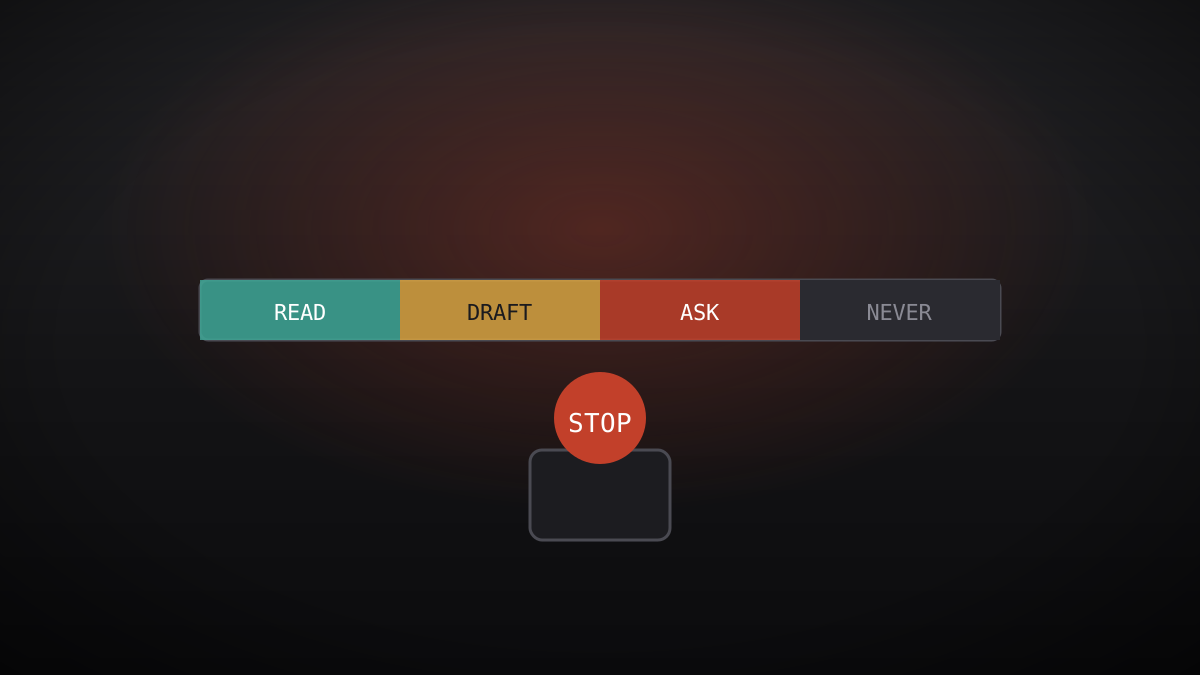
The four gated actions
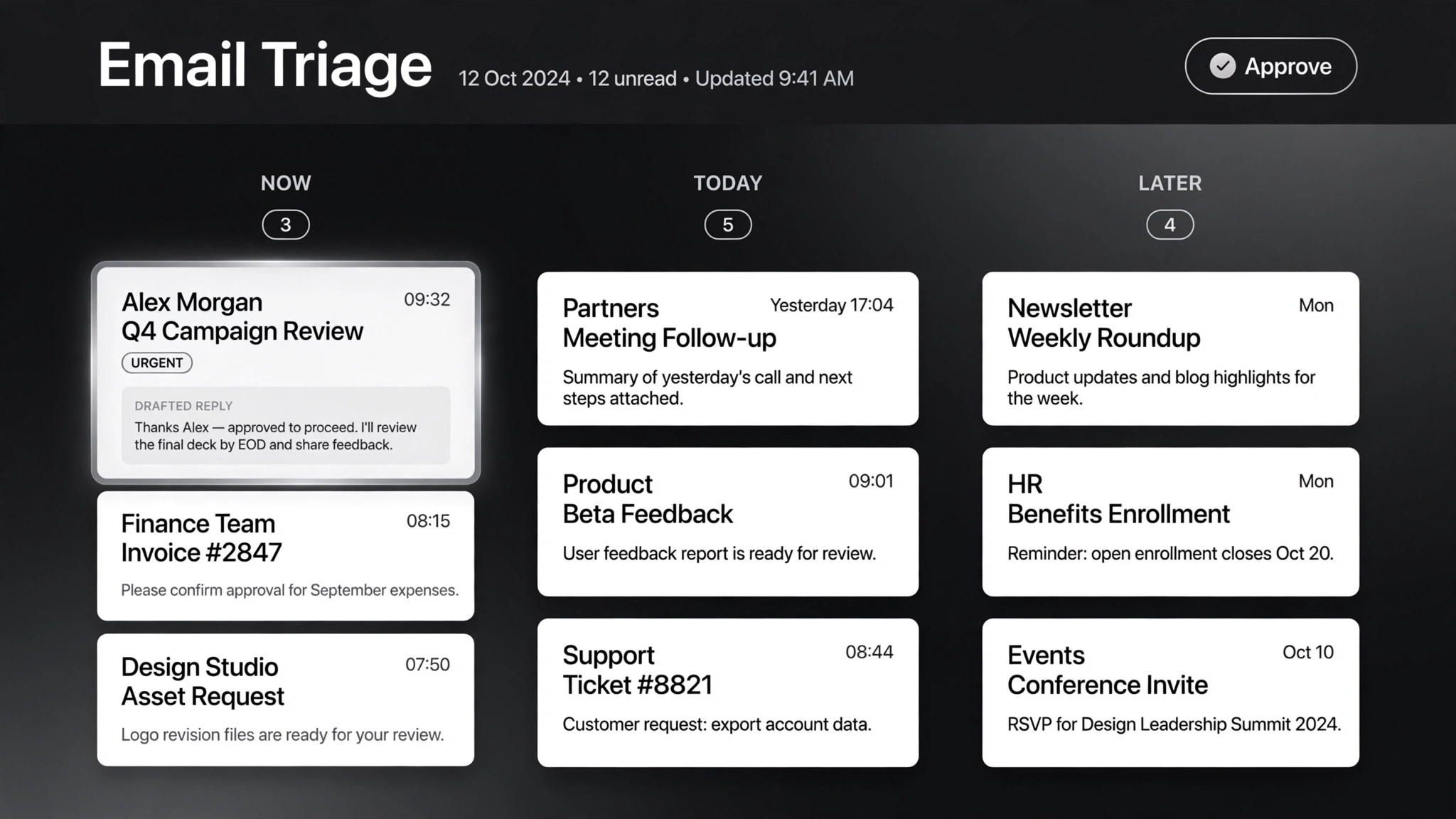
Proactive agents converge on the same four consequential actions: sending a message, making a payment, signing a document, deleting a file. Duet, Dots, and Muse all name approval for these explicitly. Your matrix covers exactly these four first; everything else (reading, drafting, summarizing) is ungated but logged.
Workflow
- Inventory the blast radius (input: agent's connected apps -> output: a list of what it can reach).
For each app, write the worst single action the agent could take in it:
email -> message a client; payments -> pay an invoice; files -> delete
a folder; calendar -> cancel a meeting. If you cannot name the worst
action, you do not understand the connection well enough to approve it. - Set thresholds (input: blast radius -> output: numbers, not vibes).
Payments: auto-allowed up to $0 by default; draft-for-approval up to a
number you choose (e.g. $200); above that, two-person approval. Messages:
internal team = draft-for-approval; external = approval + a 10-minute
review window before sending. Signatures and deletions: never auto, and
deletions always require a named approver plus a backup copy first. - Approval mechanics (input: thresholds -> output: how approval happens).
Approval must be explicit (a tap, not silence), attached to the exact
draft (not "approve whatever"), and time-boxed (unapproved drafts expire
in 24 hours). The agent re-asks when any field changes — amount, recipient,
or attachment. A changed draft approved on its old version is a failed gate. - Audit trail (input: a week of agent actions -> output: a one-page log).
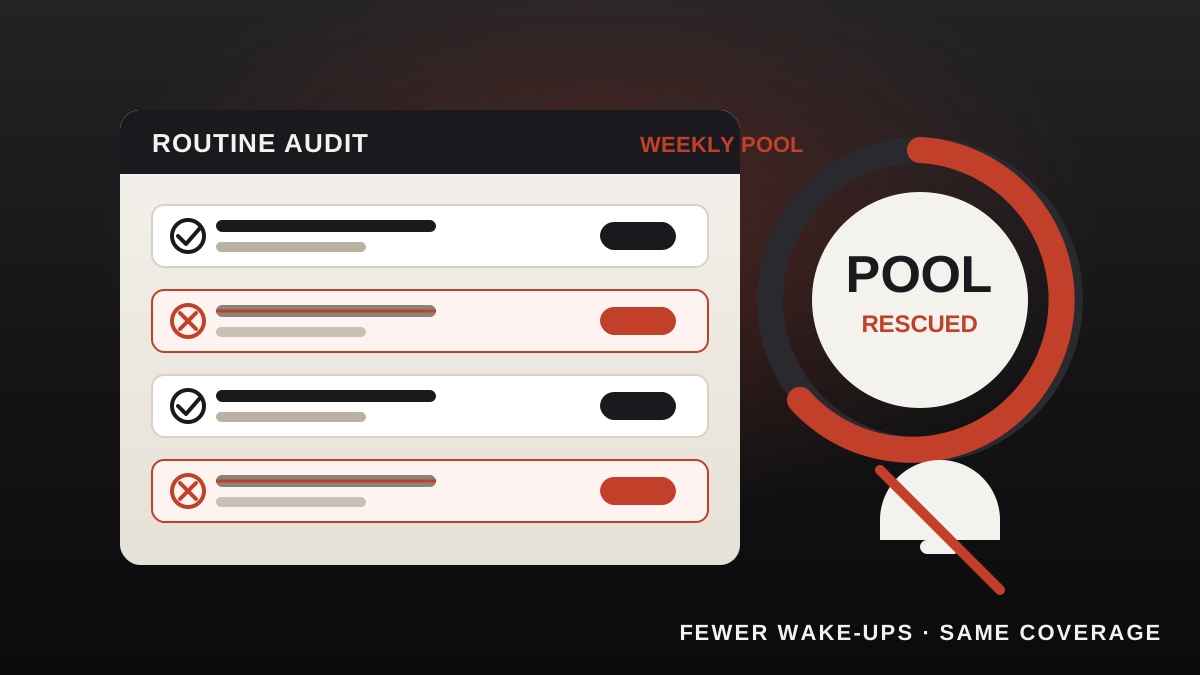
Every gated action logs: what, when, who approved, what the draft said at
approval time, and what actually went out. Review the log weekly for the
first month. Two questions to ask each week: did any approval get reused
for a changed draft? Did any action happen with no log line at all? - Break-glass (input: your absence -> output: a named deputy).
Name one deputy who may approve while you are unreachable, with a lower
threshold than yours, and a rule that break-glass approvals are reviewed
first on your return. No deputy, no unattended operation — the agent waits.
Red flags
Template preview
Approval Gate Worksheet
1. Blast radius
2. Thresholds
- Payments: auto $___ / draft up to $___ / two-person above $___
- Messages internal:
- Messages external:
- Signatures:
- Deletions:
3. Approval mechanics
- Explicit approval method:
- Draft-change rule:
- Draft expiry:
4. Weekly audit questions
- Any approval reused for a changed draft?
- Any action with no log line?
5. Break-glass deputy
- Deputy:
- Deputy threshold:
- Review-on-return rule: