Competitor Researcher
Sachez ce que font vos concurrents, dans un seul rapport.
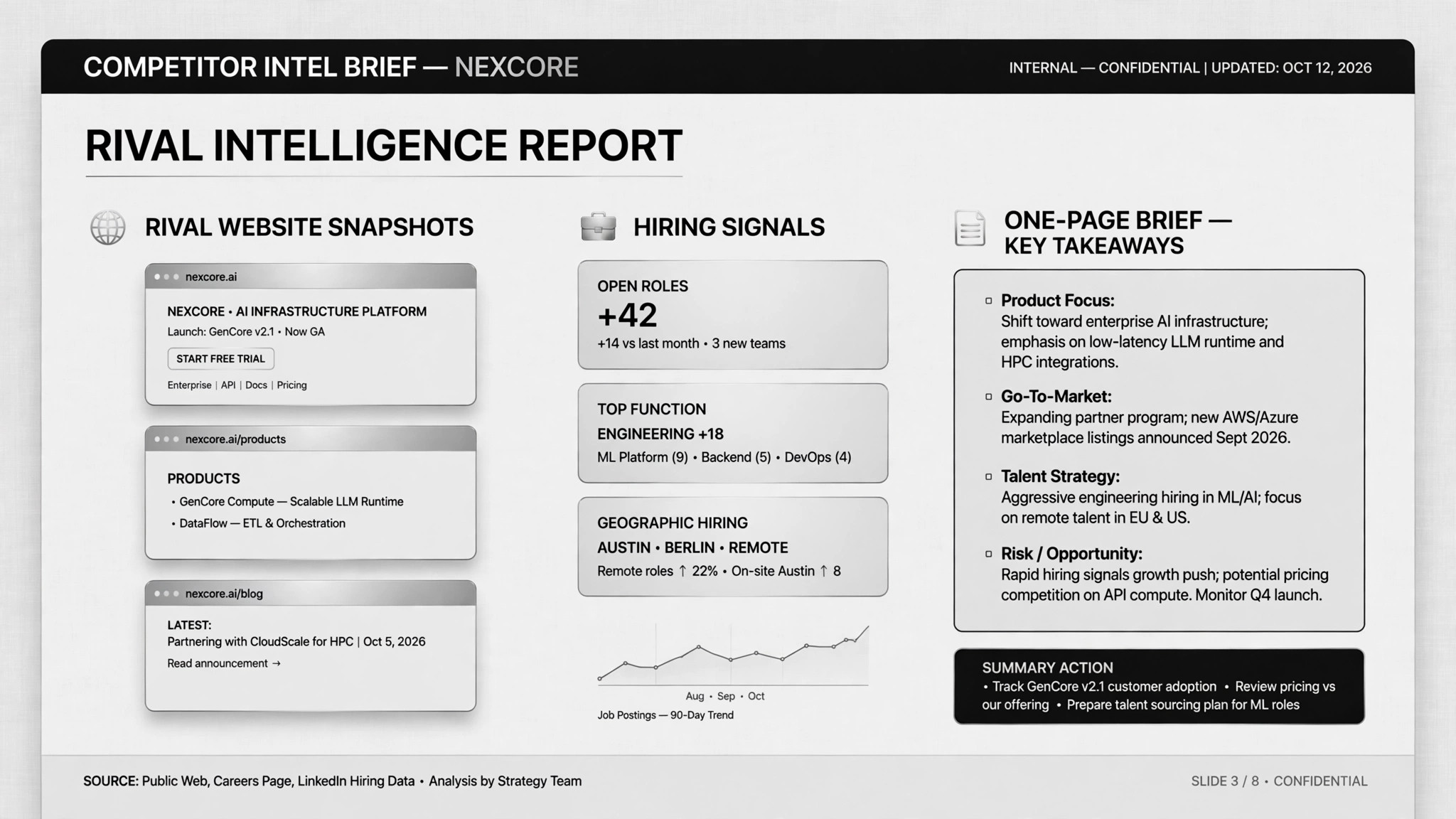
Surveille les sites et les offres d'emploi de vos concurrents, compare avec la fois précédente et vous remet un brief d'une page, preuves à l'appui.
Installez-la en 3 étapes
Sans inscription. Sans outils en ligne de commande. Choisissez votre IA, copiez une ligne, collez-la.
Vous préférez le faire vous-même ? Achetez la compétence ($4.99), téléchargez le ZIP depuis votre confirmation d'achat, décompressez-le dans le répertoire indiqué ci-dessus, redémarrez votre session IA — même résultat. Vous l'avez déjà achetée ? Votre assistant IA peut la télécharger pour vous.
Preuves concrètes
Des personnes réelles ont accompli exactement ce travail avec des agents IA.
Run a Monday competitor-monitoring brief from job listings
Lire le cas →Cas d’usageRun web research jobs and capture screenshots into a doc
Lire le cas →Contenu du pack
Un fichier SKILL.md (le guide pratique) + un modèle de départ. Aperçu :
Competitor Researcher
When to use
- You want a Monday-morning snapshot of what competitors changed last week: pricing, features, announcements, hiring
- Job listings are a leading indicator in your market and you want someone reading the signals for you
- You need a one-page competitive brief before a strategy or product meeting
- Pricing pages shift often and you want changes flagged with screenshots as proof
- You'd rather read takeaways than browse five competitors' sites yourself
Workflow
- Set the watch list (input: competitor names → output: watch list + signals)
Name 3–7 competitors and what to watch on each site: pricing page, changelog, announcements, careers page. Be specific per site — "keep an eye on Acme" is not a spec. - Fetch on schedule (input: watch list → output: snapshots + screenshots)
On your chosen cadence (the classic is Monday 8am), visit each site, record starting prices and core features, and capture homepage screenshots. Read-only: never submit forms, never apply for jobs, never create accounts. - Diff against last time (input: this week's snapshots + last week's → output: change list)
Compare and list only what changed. No change means no entry. This step is what makes the brief worth reading — a dump of everything is not intelligence. - Read the hiring signals (input: new job postings → output: inferred intentions)
Read new job descriptions and infer what each hire implies about product direction. Label every inference as inference, not fact — a JD is a signal, not an announcement. - Write the one-page brief (input: change list + signals → output: brief)
One page: changes summary, the single most important item, and three takeaways for your team. Every claim links to a screenshot or page with a capture date. Anything inferred is labeled as such.
Output spec
- One-page brief per run: changes since last run, the top item, three takeaways
- Evidence appendix: screenshots, URLs, capture dates
- A stored snapshot archive so the next run can diff against this one
- Companion template.md skeleton — fill in the blanks and use it
Good vs. bad examples
Aperçu du modèle
Competitor Researcher — Weekly Brief Template
One run = one brief. Run on your cadence (classic: Monday 8am), diff against last week.
Run — {date}
Watch list: {competitor names, 3–7}
Snapshots & screenshots
*Read-only only: no signups, no form submissions, no fake demo requests.*
What changed since {last run date}
*No change = no row.*
Hiring signals (inference — label everything)
*Reminder: a JD is a signal, not an announcement. Never state inference as fact.*
One-page brief
The single most important item: {one sentence}
Top takeaways for our team:
- {takeaway + what we should do}
- {…}
- {…}
Le pack de compétence lui-même (SKILL.md + modèle) est rédigé en anglais.
Vous aimerez aussi
 Flux de travail
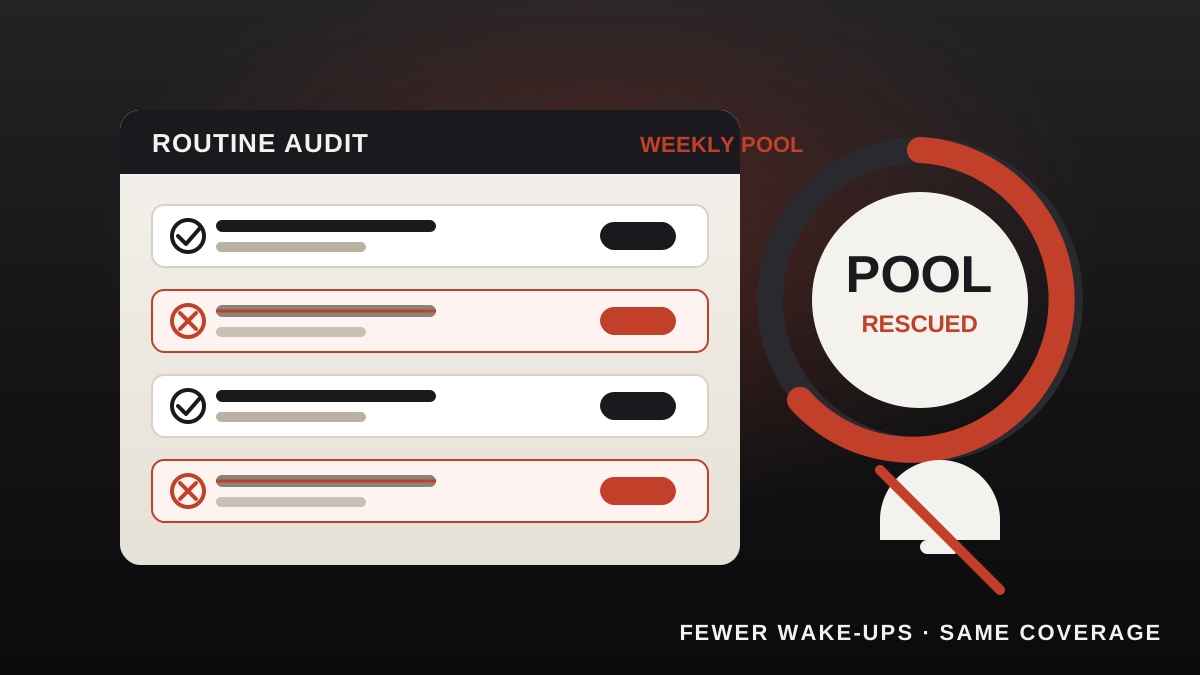
Grok Bot Routine Rescue
Find which scheduled routine is eating your weekly pool — and kill it
 Flux de travail
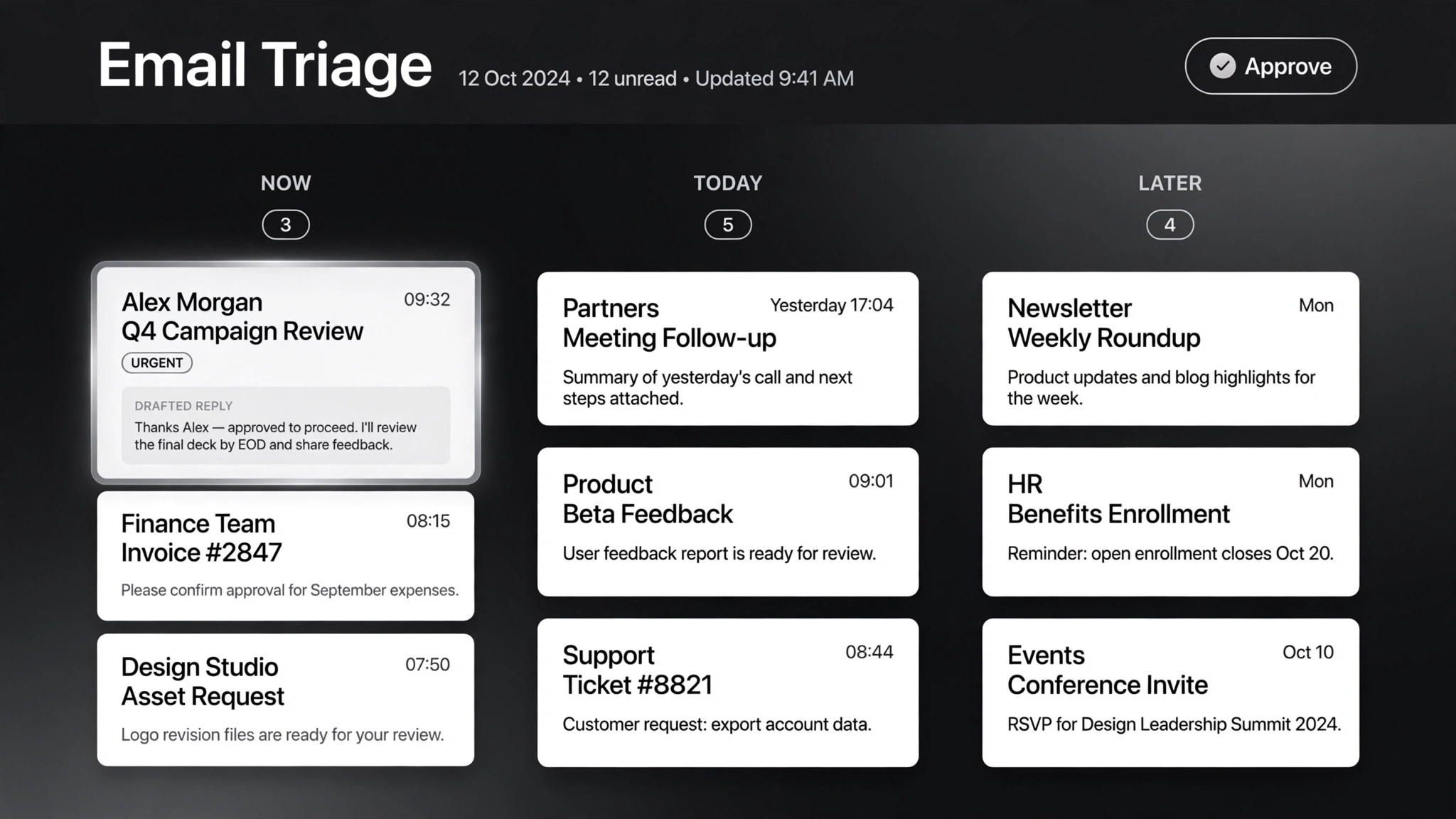
Inbox Triage
Votre boîte mail pré-lue : urgences signalées, réponses rédigées, vous n'avez qu'à cliquer sur envoyer
 Flux de travail
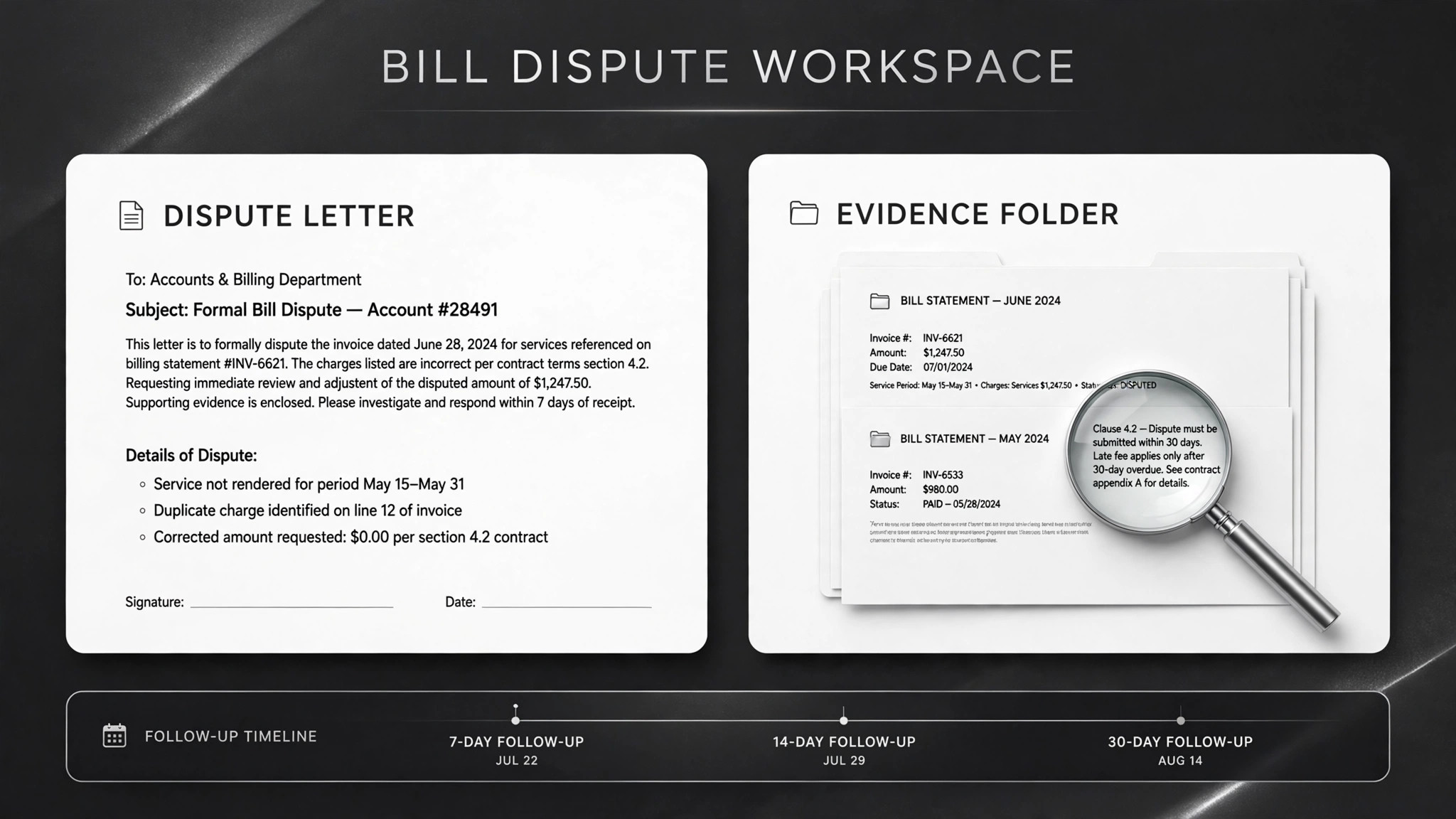
Bill Fighter
Contestez les surfacturations et les refus avec des courriers étayés par des preuves