Prismatic Fashion Deck
Light through fabric — one color story per look.
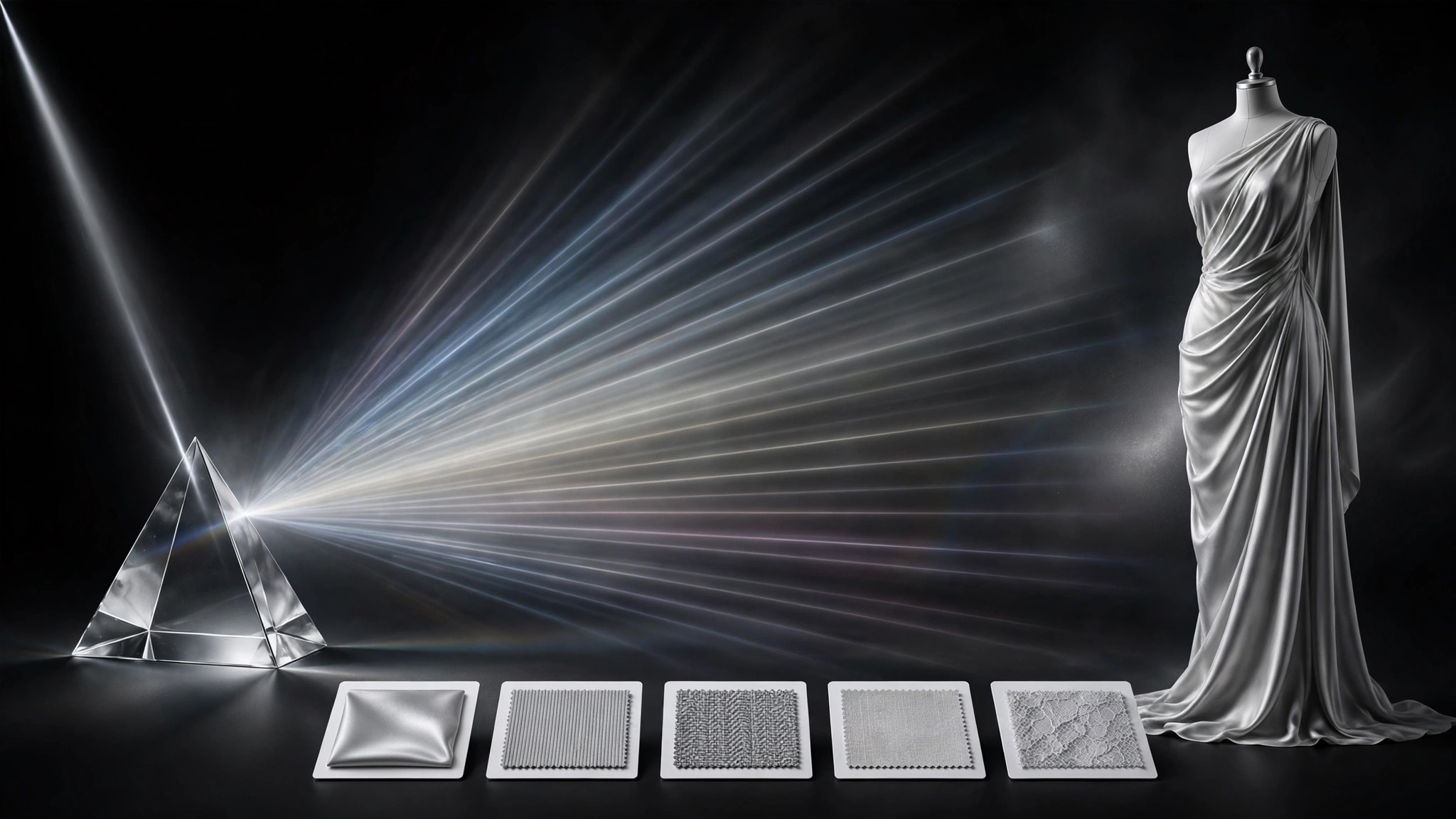
Turns your AI into a fashion-deck designer in a prismatic visual system — refracted spectrum color, light-through-glass motifs, and one color story per look, so a collection deck reads like light moving through fabric.
Install it in 3 steps
No sign-up. No CLI tools. Pick your AI, copy one line, paste it over.
Prefer doing it yourself? Buy the skill ($4.99), download the ZIP from your checkout confirmation, unzip it into the directory shown above, restart your AI session — same result. Already bought it? Your AI assistant can download it for you.
What’s inside
One SKILL.md (the playbook) + one starter template. A preview:
Prismatic Fashion Deck
When to use
- You're presenting a fashion collection, lookbook, or seasonal line and the deck needs to feel like fashion, not a sales report
- Your collection has distinct color stories that need one visual system to hold them together
- You're pitching to buyers, press, or investors who judge the deck's taste before they read a word
- You need runway order, fabric detail, and pricing to live in the same deck without clashing
- You want a deck that photographs well when someone snaps a slide in a showroom
Workflow
- Define the color stories (input: collection → output: color stories + prismatic system)
Group the collection into color stories — 3–5 looks per story, each story named for its mood and anchored by 2–4 real fabric colors taken from actual swatches, not invented hex values. Then define the prismatic system that ties stories together: a spectrum band (light refracted into its colors) used as the deck's recurring motif — as a thin divider, a slide edge, a title accent. The spectrum never competes with the clothes: it frames them. One rule governs everything: garment colors are always shown true; the prismatic treatment belongs to dividers, backgrounds, and typography, never recolored onto a garment. - Sequence the looks (input: color stories → output: runway order)
Order the deck the way a show runs: open with the strongest look, alternate statement and quiet looks so the eye rests, group each color story into a continuous run, and close with the look people will photograph. Every look gets a two-slide treatment at most: the look itself (full-bleed garment or model shot) and its detail (fabric close-up, construction note, color names). If a look can't justify its place in the sequence — it repeats a previous look's idea — cut it or move it to an appendix. The deck's job is to make buyers remember twelve looks, not to catalog forty. - Design the slide system (input: sequence → output: slide templates)
Build four templates and use nothing else: the look slide (full-bleed image, look number, name, one line), the detail slide (fabric close-up, material names, construction notes), the story divider (color story name, spectrum band, the story's palette as fabric swatches), and the commercial slide (line sheet: style codes, sizes, prices, minimums). Typography stays quiet — one elegant serif or high-contrast sans for look names, one neutral sans for everything else — so the color does the talking. The spectrum band appears in exactly one place per template, in the same position every time, so it reads as a system rather than decoration.
Template preview
Prismatic Fashion Deck — Build Template
Refracted-spectrum system, true garment colors, runway order. Fill in color stories first, then sequence.
Color stories (3–5 stories, colors from real swatches)
Story 1: {name} — {mood line}
- Palette (from real swatches): {fabric color 1}, {fabric color 2}, {fabric color 3}
- Looks: {3–5}
Story 2: {name} — {mood line}
- Palette: {}, {}, {}
- Looks: {3–5}
Story 3: {name} — {mood line}
- Palette: {}, {}, {}
- Looks: {3–5}
Prismatic motif: spectrum band in ONE fixed position per template — divider, background edge, or title accent. Never recolored onto a garment.


