Fanned Testimonial Deck
Customer voices fanned like cards — one voice per slide, one closing ask
Turns your AI into a presentation designer that builds a slide deck where customer testimonial cards fan out like a hand of cards, one voice per slide, building to a single closing ask.
Install it in 3 steps
No sign-up. No CLI tools. Pick your AI, copy one line, paste it over.
Prefer doing it yourself? Buy the skill ($4.99), download the ZIP from your checkout confirmation, unzip it into the directory shown above, restart your AI session — same result. Already bought it? Your AI assistant can download it for you.
What’s inside
One SKILL.md (the playbook) + one starter template. A preview:
Fanned Testimonial Deck
When to use
- You are pitching a product and want proof to arrive as real voices, not a wall of logos
- A sales deck needs a "what customers say" section that holds a room's attention instead of being skipped
- You are presenting case-study results and each customer's story deserves its own slide, not a cramped grid
- An investor or partner deck needs social proof sequenced as a story: problem, voices, outcome, ask
- A conference talk needs a testimonial sequence you can narrate slide by slide
Workflow
- Collect quotes with permission (input: customer feedback → output: approved quote bank)
Gather 5–9 quotes that each make one point — never two. Confirm in writing that each quote may be shown publicly, with the speaker's name, role, and company as they want it printed. A quote without permission stays in the bank, unused. Record the source (interview date, email, review) for every quote. - Order the voices into an arc (input: quote bank → output: slide order)
Sequence the deck like a story: open with the pain ("we were drowning in spreadsheets"), follow with 3–5 voices each answering one objection ("too expensive", "too hard to switch", "did it actually work?"), then close with the strongest outcome. One voice per slide — the audience should remember people, not a pile of quotes. - Lay out the fan (input: slide order → output: deck template)
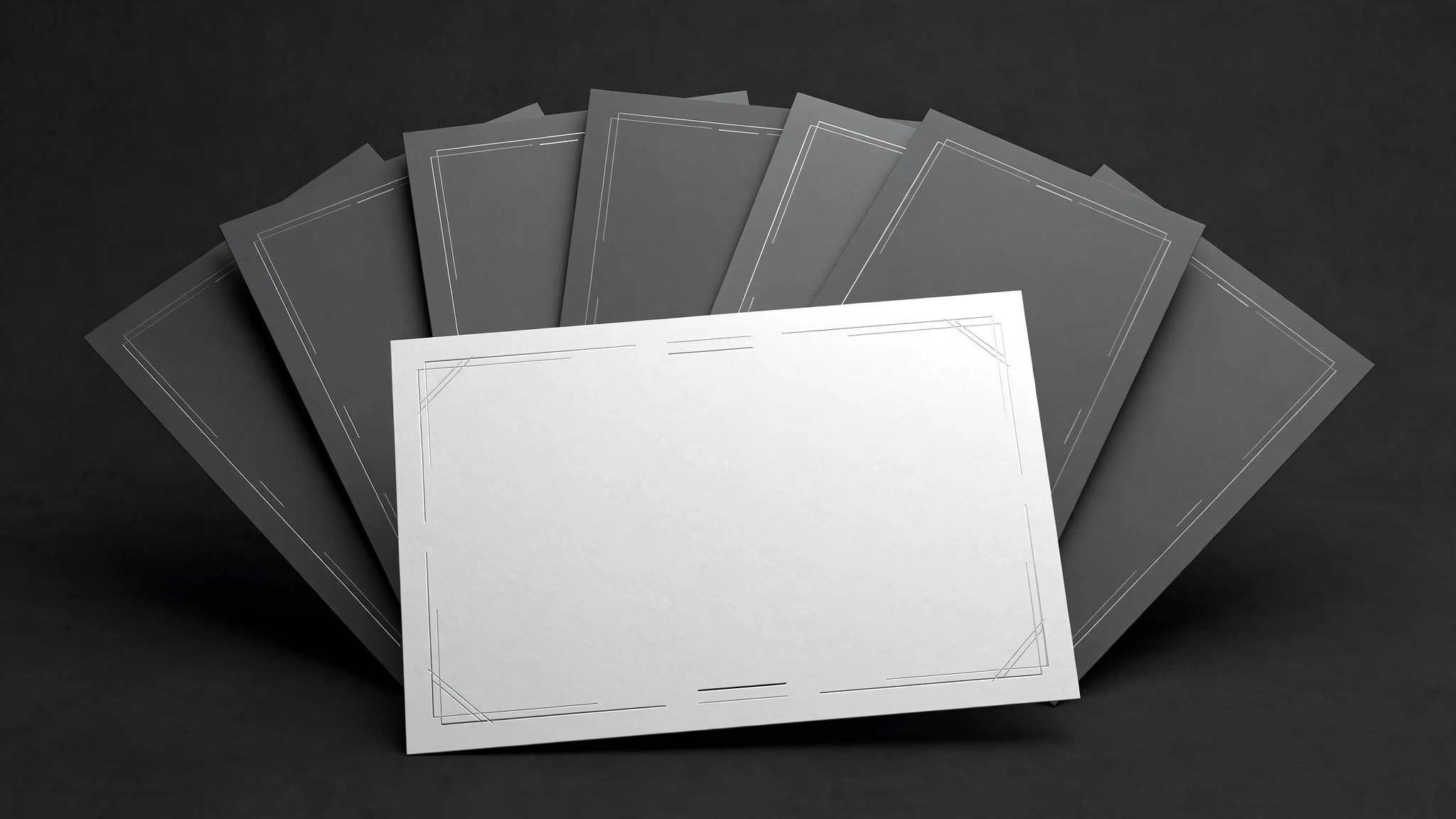
Each slide shows one hero quote card in front, with the previous and next cards peeking out behind it at a slight angle, like a fanned hand — the fan is the visual motif that ties the deck together. Keep the hero card large and high-contrast; the peeking cards stay muted so the eye lands on the speaker. Name, role, and company sit directly under the quote, never on a separate slide. - Write presenter notes (input: laid-out slides → output: narrated deck)
Every slide gets 2–3 spoken sentences in the notes: the one-line context ("This is Maya — she runs ops at a 40-person firm"), the transition ("She was worried about switching costs — listen to what happened"), and the pause point. The deck must work without the presenter too, so each slide also carries a small caption line with the takeaway. - Rehearse the arc (input: narrated deck → output: approved deck)
Read the deck end to end as an audience member: does each voice earn its slide? Does the fan motif stay consistent? Cut any slide whose quote could be deleted without weakening the story — a tight 7-slide deck beats a padded 12-slide one. End on the outcome slide, then one closing slide with a single ask.
Output spec
Template preview
Fanned Testimonial Deck — Template
One voice per slide. One ask at the end. Fill in the quote bank before laying out any slide.
Title slide
Deck title: {e.g. What our customers say} Audience: {e.g. Prospective buyers at a sales meeting} | Closing ask: {e.g. Book a demo}
Quote bank (5–9 quotes, permission confirmed for each)
Quotes held back (no permission / weak): {quote + reason}
Slide layout (fan motif)
Hero card: {large, high-contrast, quote + name + role + company} Peeking cards: {previous + next cards, muted, slight angle} Caption line per slide (takeaway): {one line}


