Storybook Margin Deck
La storia sulla doppia pagina, la tecnica nel margine.
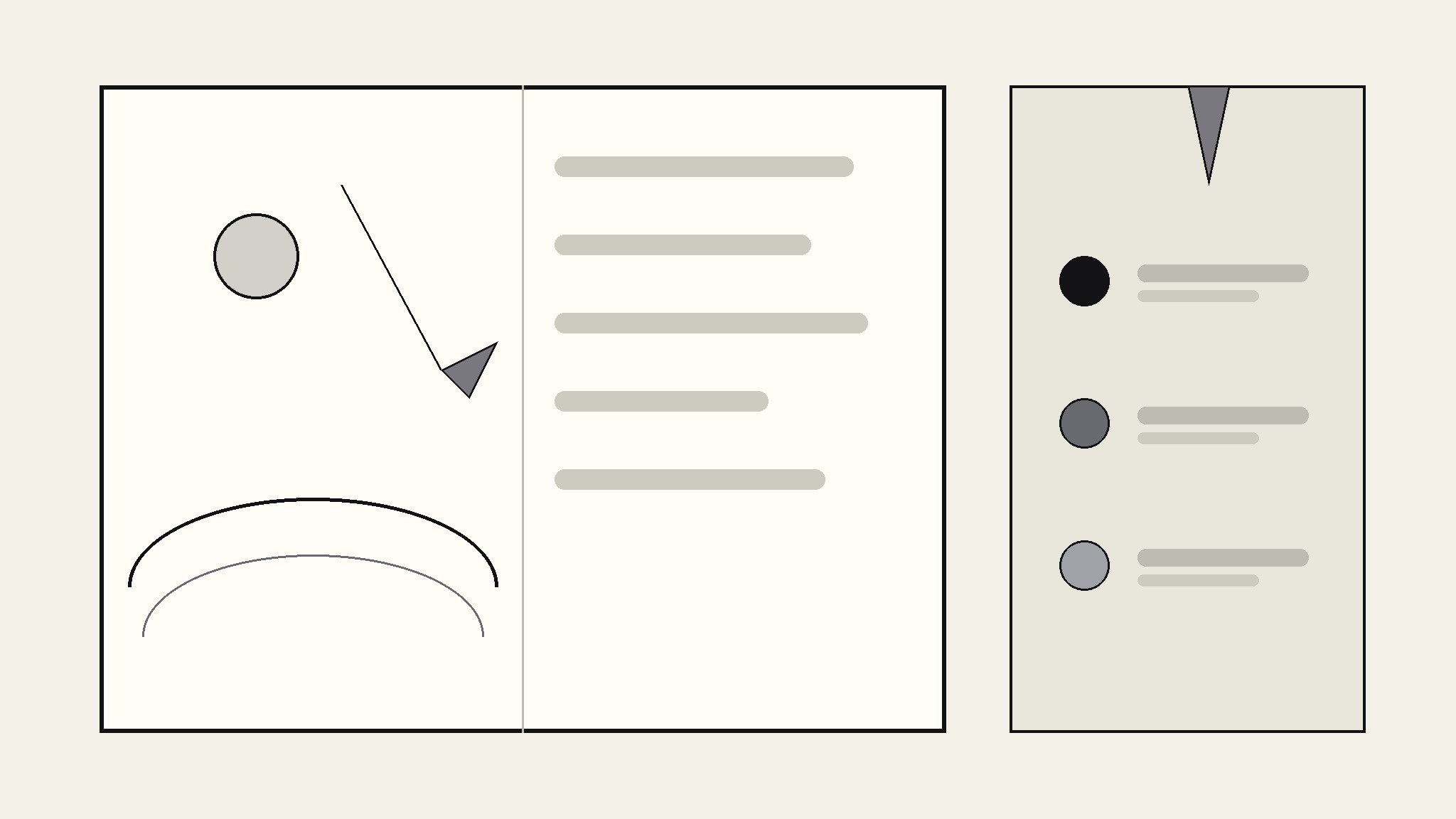
Trasforma la tua IA in un designer di presentazioni per libri illustrati — trasforma la tua proposta di albo illustrato in una presentazione in cui ogni doppia pagina abbina un'illustrazione a tutta pagina a un ampio margine annotato per note, indicazioni di narrazione e direzione artistica.
Installala in 3 passaggi
Nessuna registrazione. Nessuno strumento da riga di comando. Scegli la tua AI, copia una riga e incollala.
Preferisci fare da te? Acquista la skill ($4.99), scarica lo ZIP dalla conferma d'acquisto, decomprimilo nella cartella mostrata sopra e riavvia la sessione della tua AI — stesso risultato. L'hai già acquistata? Il tuo assistente AI può scaricarla per te.
Cosa contiene
Un file SKILL.md (la guida operativa) + un modello di partenza. Un'anteprima:
Storybook Margin Deck
When to use
- You're pitching a picture book to a publisher and the deck itself should feel like the book
- An illustrated story needs a presentation format where art direction notes live beside the art, not in a separate document
- You're presenting a children's story concept to teachers, parents, or a review panel and want them to see story and craft together
- A storyboard or animatic pitch needs room for timing, sound, and camera notes on every spread
- You're workshopping a story and want feedback on both the narrative and the visual decisions, side by side
Workflow
- Collect the story spine (input: your manuscript or outline → output: spread-by-spread beat sheet)
Break the story into spreads — one spread per beat, not per page of text. Each beat gets one sentence of story ("Milo loses his kite over the wall") and one sentence of feeling ("lonely, then curious"). If a beat can't be summed up in two sentences, it's two beats. The beat sheet is the deck's skeleton: every later step hangs off it, and cutting a weak beat here is ten times cheaper than cutting a finished slide. - Design the margin system (input: beat sheet → output: margin rules)
Fix the margin before designing any slide: one wide outer margin (about a third of the slide) reserved for annotations, in a paper tone that contrasts with the illustration area. Define three annotation kinds and give each a marker — narration cues (what the reader hears), art direction (palette, composition, character blocking), and production notes (page turn, trim, bleed). One margin, three markers, no exceptions — the moment annotations sprawl into the art area, the storybook illusion breaks. - Lay out the spread rhythm (input: margin rules + beat sheet → output: full slide sequence)
Alternate spread types so the deck breathes: full-bleed illustration spreads for emotional peaks, split spreads (art left, margin wide) for setup and transitions, and quiet text-led spreads for page-turn beats. Never run three full-bleed spreads in a row — the eye stops registering scale. Place the page-turn moments deliberately: the beat before a turn should end on a question the next spread answers. - Write the margin annotations (input: slide sequence → output: annotated deck)
Write annotations as short, specific directions a real illustrator or narrator could act on: "Kite string leads the eye top-left to bottom-right" beats "make it dynamic." Keep each annotation to one or two lines. Cut any annotation that merely restates what the art already shows — the margin earns its space only when it adds information the illustration can't carry alone. - Polish and export (input: annotated deck → output: presentation-ready deck + print check)
Read the deck twice: once as a reader (cover the margins, does the story land?) and once as a maker (cover the art, do the notes form a coherent production plan?). Check that illustration captions, character names, and palette notes stay consistent across spreads. Export a presentation version (margins visible) and, if the pitch is printed, a trimmed version that keeps margins readable at print size.
Anteprima del modello
Storybook Margin Deck — Template
Fill in the beat sheet first. One spread per beat. Then lay out slides to match.
Book: {title} — {author / illustrator}
Audience age: {e.g. 4–8} | Spread count: {n} | Trim size: {e.g. 10 × 10 in}
Margin system
- Margin tone: {paper tone, e.g. warm cream #f7f1de}
- 📖 Narration cue = {marker, e.g. italic + 📖}
- 🎨 Art direction = {marker, e.g. bold label + 🎨}
- ✂️ Production note = {marker, e.g. small caps + ✂️}
Beat sheet (one row per spread)
Spread layout
Spread {n} — {beat title}
- Illustration: {what the art shows, composition, palette shift}
- 📖 Narration cue: {what the reader hears / pacing note}
Il pacchetto della skill (SKILL.md + modello) è scritto in inglese.
Potrebbe piacerti anche
 Presentazioni
Pitch Deck
10 slide che raccontano una sola storia — gli investitori restano fino all'ultima pagina
 Presentazioni
Work Report
Settimanale, mensile, review — prima la conclusione, si capisce in 3 minuti
 Presentazioni
Academic Argument Deck
Una presentazione che argomenta — e risponde alle obiezioni.