Red Black Zine Deck
Una presentazione in stile fanzine fotocopiata che urla e resta leggibile.
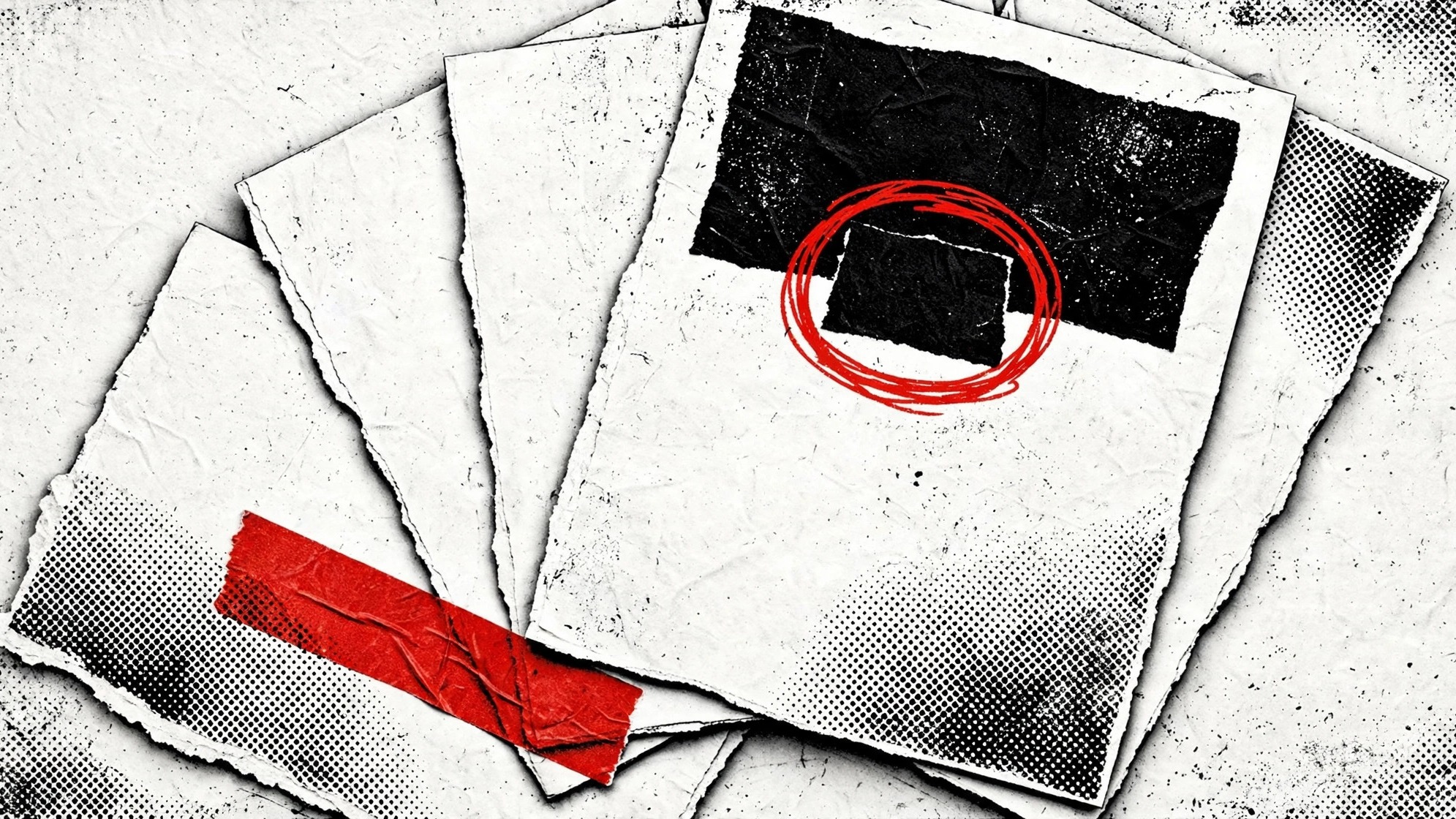
Trasforma la tua IA in un designer di presentazioni che crea una presentazione in stile fanzine fotocopiata rossa e nera — caratteri ritaglia-e-incolla, texture a mezzetinte e layout rumorosi che restano comunque leggibili.
Installala in 3 passaggi
Nessuna registrazione. Nessuno strumento da riga di comando. Scegli la tua AI, copia una riga e incollala.
Preferisci fare da te? Acquista la skill ($4.99), scarica lo ZIP dalla conferma d'acquisto, decomprimilo nella cartella mostrata sopra e riavvia la sessione della tua AI — stesso risultato. L'hai già acquistata? Il tuo assistente AI può scaricarla per te.
Cosa contiene
Un file SKILL.md (la guida operativa) + un modello di partenza. Un'anteprima:
Red Black Zine Deck
When to use
- You're presenting something with attitude — a punk project, an indie launch, a manifesto, a community talk — and a corporate template would kill it
- Your deck needs to feel handmade and urgent: photocopied flyers, cut-and-paste letters, marker annotations
- You're making slides for a zine fair, a DIY workshop, a gig poster talk, or any room where polish reads as insincere
- A standard deck has flattened your message into identical bullet slides and you need each slide to land like a page torn from a fanzine
- You want a deck that also works printed and photocopied in black and white — the red becomes black, the design still holds
Workflow
- Pick the message and the arc (input: topic → output: slide outline)
A zine deck is a rant with structure: write the one thing the audience must walk away believing, then outline 8–14 slides that build to it — opener (the provocation), three to five evidence or story slides, one slide that says the quiet part loud, and a closer with the ask. One idea per slide, in as few words as you can manage: a zine slide with a paragraph is a zine slide nobody reads. If a slide needs more than 25 words, it needs to be two slides or a handout. - Set the zine system (input: outline → output: style rules)
Three colors only: paper white (or off-white), true black, and one loud red. Rules: black is the structure (borders, bars, rules, body text), red is the emphasis (headlines, underlines, circles, arrows — never whole paragraphs), white is the breathing room. Type: one heavy condensed display face for headlines (all caps, tight, sometimes slightly rotated), one plain readable face for the few body lines. Texture: halftone dots, photocopy grain, and torn-paper edges as background seasoning at low strength — never under text. Write the rules down before building slide one; a zine deck with five different reds is a mess, not a style. - Lay out each slide like a page (input: style rules + outline → output: slides)
Build each slide as a fanzine page, not a template fill: a giant headline ripped across the top or diagonally, one image or one block of short text, and a red annotation — a circle, an arrow, a hand-written-style note — pointing at the thing that matters. Vary the layouts deliberately: full-bleed headline, split page, collage corner, one-word slide. Keep one anchor consistent (same footer strip, same page number corner, same red rule) so the variety reads as a system, not chaos. Leave real white space on every slide; a zine page crammed edge to edge is a wall, not a shout. - Add texture without killing legibility (input: slides → output: finished slides)
Texture is the last layer, not the first: photocopy grain, halftone dots, torn edges, tape strips, and staple marks go on after the layout works in flat color. Test every slide by asking: can I read the headline in two seconds at the back of the room? If the grain, the rotation, or the collage gets in the way, pull it back — a zine that can't be read is a poster for nobody. Check the red: it must stay vivid against both white and black, and every slide must still work photocopied to pure black and white (print one page and copy it to prove it). - Export and print check (input: finished slides → output: verified deck)
Export as PDF (for presenting and printing) plus the slide file in an editable format. Then do the photocopy test: print the deck, photocopy one dark slide and one light slide, and confirm both still read. Check the deck on a projector too — reds shift wildly between screens, so verify the red on the actual display if you can. Include a final slide with credits and sources: zine culture credits its lifts, and a deck that borrows images or quotes should say where they came from.
Anteprima del modello
Red Black Zine Deck — Build Template
A rant with structure. Fill this in before building slide one.
Message + arc
One thing the audience must walk away believing: {one sentence}
The ask (final slide): {what you want them to do}
Slide outline (8–14 slides, one idea each):
Zine system (write it down, then obey it)
- Colors (3 only): white {paper white / off-white #___} · black #___ · red #___ (one red!)
- Red role: emphasis only — headlines, circles, arrows, underlines. Never whole paragraphs.
- Black role: structure — borders, bars, rules, body text.
- Display type: {heavy condensed face, ALL CAPS, tight, slight rotation OK}
Il pacchetto della skill (SKILL.md + modello) è scritto in inglese.
Potrebbe piacerti anche
 Presentazioni
Pitch Deck
10 slide che raccontano una sola storia — gli investitori restano fino all'ultima pagina
 Presentazioni
Work Report
Settimanale, mensile, review — prima la conclusione, si capisce in 3 minuti
 Presentazioni
Academic Argument Deck
Una presentazione che argomenta — e risponde alle obiezioni.