Lilac Glass Pitch Deck
Un pitch calmo e premium in vetro smerigliato lilla.
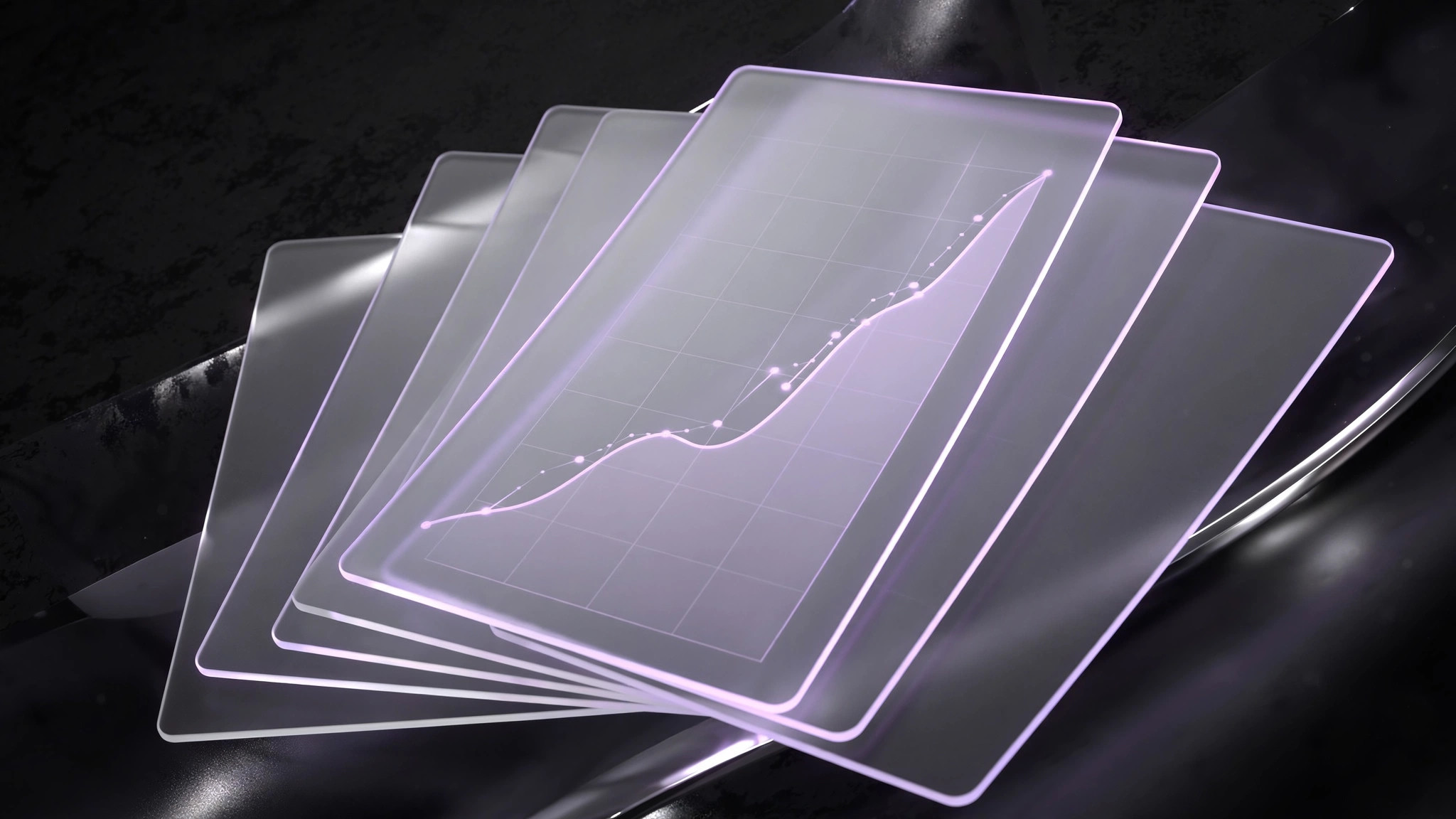
Trasforma la tua AI in un designer di pitch deck con un sistema visivo in vetro smerigliato lilla — pannelli traslucidi, luce lilla morbida e un'idea per slide, così un deck per investitori sembra calmo, premium e facile da scorrere.
Installala in 3 passaggi
Nessuna registrazione. Nessuno strumento da riga di comando. Scegli la tua AI, copia una riga e incollala.
Preferisci fare da te? Acquista la skill ($4.99), scarica lo ZIP dalla conferma d'acquisto, decomprimilo nella cartella mostrata sopra e riavvia la sessione della tua AI — stesso risultato. L'hai già acquistata? Il tuo assistente AI può scaricarla per te.
Cosa contiene
Un file SKILL.md (la guida operativa) + un modello di partenza. Un'anteprima:
Lilac Glass Pitch Deck
When to use
- You are pitching investors, partners, or a grant panel and your brand is soft, calm, or wellness-adjacent rather than aggressive
- Your existing deck is a wall of bullet points and you want one idea per slide with room to breathe
- You need a deck that still reads when forwarded as a PDF with no presenter in the room
- You are pitching a consumer, health, education, or design-led product where the deck itself is part of the brand impression
- You want a distinctive visual system — lilac light on frosted glass — instead of another navy-and-white template
Workflow
- Lock the glass system (input: your brand colors → output: a 5-rule style sheet)
Define the system before any slide content: background — deep charcoal-plum; panels — frosted translucent white at low opacity with a soft blur edge; accent — lilac (light purple) used only for the one most important element per slide; type — white headlines, soft-grey body; one rule — no slide may use more than two panel layers, so depth never becomes clutter. Write the five rules down and hand them to the AI with every slide request. If a slide breaks a rule, the rule wins — change the slide, not the rule. - Write the 10-slide spine (input: your pitch story → output: one-line spine)
Draft the deck as ten one-line slides before designing anything: 1) Hook — the one sentence that makes a stranger care. 2) Problem — a specific pain, with a real person in it. 3) Solution — your product in one sentence, no features list. 4) How it works — three steps, no more. 5) Market — who pays, how many, how you count them. 6) Proof — the strongest evidence you actually have. 7) Business model — how money flows, in plain numbers. 8) Competition — the honest map, with your edge named. 9) Team — why these people, in one line each. 10) Ask — exactly what you want, and what it buys. If a slide's one-liner needs a comma-splice to fit, the idea is two ideas — split it or cut it. - Build slides one idea at a time (input: spine + style sheet → output: slide drafts)
Build each slide from its one-liner: one headline that states the idea (not a label — "Parents pay $40/month for tutoring that doesn't work" beats "Problem"), one frosted panel carrying the single supporting fact, figure, or image, and nothing else. The lilac accent highlights exactly one element per slide: the number, the quote, or the ask. A slide with two lilac highlights has no highlight — pick one. Speaker notes carry everything that didn't fit on the slide. - Stress-test the forwarded PDF (input: slide drafts → output: revised deck)
Export the deck as a PDF and read it cold, as if you had never seen it: every slide must make sense with no presenter. Where a slide depends on narration, move the missing fact onto the slide (into the panel, in small type) or cut the slide. Check the glass system at thumbnail size: panels must stay readable, lilac must stay the accent rather than the background, and no text may sit on a busy part of a background image. Fix contrast first — frosted glass is unforgiving of grey-on-grey type. - Rehearse against the ask (input: revised deck → output: timed talk + final deck)
Time a read-through: 10 slides in 10 minutes or less, with the ask slide getting the last full minute. If you run over, cut content from the middle slides, never from the ask. The final slide must state the ask as a number and a use: "Raising $500k — 60% product, 25% hiring, 15% runway" — not "let's talk." End the deck on the ask slide; nothing after it except a contact line.
Anteprima del modello
Lilac Glass Pitch Deck — Template
10 slides, one idea each. Lilac highlights exactly one element per slide.
Style sheet (5 rules — do not break)
- Background: deep charcoal-plum, flat or softly blurred — never a busy photo
- Panels: frosted translucent white, low opacity, soft blur edge — max 2 panel layers per slide
- Accent: lilac, used on exactly ONE element per slide (the number, the quote, or the ask)
- Type: white headlines, soft-grey body — no grey-on-grey, no text over busy images
- One idea per slide: headline states the idea; the panel carries the single supporting fact
The 10-slide spine (one line each, before designing)
Il pacchetto della skill (SKILL.md + modello) è scritto in inglese.
Potrebbe piacerti anche
 Presentazioni
Pitch Deck
10 slide che raccontano una sola storia — gli investitori restano fino all'ultima pagina
 Presentazioni
Work Report
Settimanale, mensile, review — prima la conclusione, si capisce in 3 minuti
 Presentazioni
Academic Argument Deck
Una presentazione che argomenta — e risponde alle obiezioni.