Founder Skills Kit
Decidi in fretta, pubblica piccolo e mantieni i numeri onesti.
Trasforma la tua AI in una squadra decidi-e-pubblica da founder: scrive il pitch di una pagina, sceglie i tre numeri che contano, pianifica la prossima assunzione, pubblica la versione più piccola e gestisce le basi della raccolta fondi prima che ti servano.
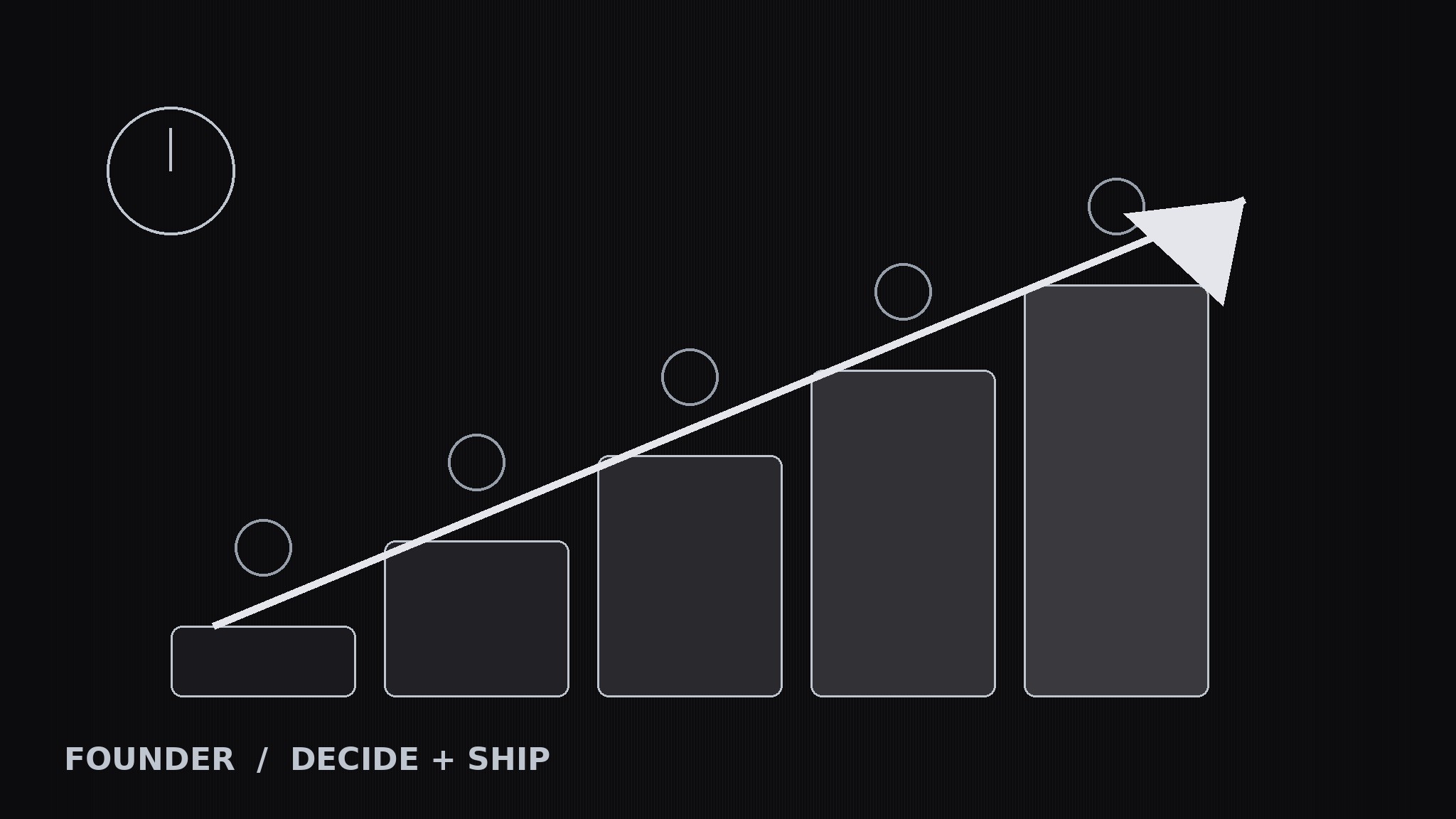
Installala in 3 passaggi
Nessuna registrazione. Nessuno strumento da riga di comando. Scegli la tua AI, copia una riga e incollala.
Preferisci fare da te? Acquista la skill ($4.99), scarica lo ZIP dalla conferma d'acquisto, decomprimilo nella cartella mostrata sopra e riavvia la sessione della tua AI — stesso risultato. L'hai già acquistata? Il tuo assistente AI può scaricarla per te.
Cosa contiene
Un file SKILL.md (la guida operativa) + un modello di partenza. Un'anteprima:
Founder Skills Kit
When to use
- You are starting or running a small company and every week brings a decision that feels bigger than the information you have
- Your pitch changes every time you tell it, and listeners keep asking "so what do you actually do?"
- You are tracking twenty metrics and none of them tells you whether the business is working
- The next hire feels make-or-break, but the role is still a fuzzy paragraph in your head
- You are months from needing money and want the fundraising basics in place before the clock starts
Workflow
- State the decision and the deadline (input: open question → output: decision memo)
Every decision gets a memo with three lines: the decision to make, the options on the table, and the date it will be made. A decision without a deadline is a meeting that never ends; a deadline without options is a panic. Most founder decisions are reversible — mark them as such and make them fast. The irreversible few get the slow, careful treatment. Knowing which kind you are facing is half the skill. - Write the one-page pitch (input: decision memo → output: pitch page)
One page, five blocks: the problem (who hurts, how much), the product (what it does, in one paragraph), the customer (who pays, not just who uses), why now (what changed to make this possible), and the ask (what you need from this reader). If a block takes more than four sentences, you do not understand it yet — write shorter until the fog lifts. The pitch page is the document every other document is cut from: deck, site, intro email, all of it. - Pick the three numbers that matter (input: pitch page → output: metrics sheet)
Choose three numbers that together tell you whether the business works: one for demand (are people coming?), one for value (do they stay or pay?), one for money (does it pay for itself?). Write each with its definition and where it comes from — a metric without a definition gets gamed, usually by you, usually by accident. Review the three weekly; everything else is a curiosity until one of the three moves. - Hire for the next bottleneck (input: metrics sheet → output: role brief)
The next hire is the person who unblocks the bottleneck the three numbers point at — not the person you wish you could afford, and not the role your peers are hiring for. Write the role brief around the bottleneck: the outcome this hire owns in their first ninety days, the three skills that produce that outcome, and what "good" looks like at day ninety. Hire for the bottleneck, not for the org chart. - Ship the smallest version (input: role brief + pitch → output: shipped slice)
Cut the next release until it is almost embarrassing: one customer, one job, one path through the product. Ship it to real users, watch what they do, and write down what actually happened — not what you hoped. The smallest version is not a compromise; it is the fastest way to replace opinions with evidence. A month spent polishing an untested assumption is a month you do not get back. - Run the fundraising basics check (input: shipped slice + metrics → output: fundraising readiness note)
Before you need money, assemble the basics: the pitch page, the three numbers with their history, the shipped slice real users touched, and a plain list of what the money would buy and what it would change. Then answer the honest question: does this round make the business meaningfully better, or does it just delay the same hard decision? If it is the second, make the decision first — money raised to avoid a decision is the most expensive money there is.
Anteprima del modello
Founder — Decide-and-Ship Template
One week = one decision memo, one pitch page, three numbers, one shipped slice.
Decision memo
Decision: {what to decide}
Options: 1. {option} 2. {option} 3. {option}
Deadline: {date} | Type: [ ] reversible — decide fast [ ] irreversible — decide carefully
Decision: {made on {date}} — Why: {one paragraph}
One-page pitch
Problem: {who hurts, how much — ≤4 sentences}
Product: {what it does — ≤4 sentences}
Customer: {who pays, not just who uses — ≤4 sentences}
Why now: {what changed to make this possible — ≤4 sentences}
Ask: {what you need from this reader — ≤4 sentences}
Il pacchetto della skill (SKILL.md + modello) è scritto in inglese.