Frame-Token Editorial Launch
Un solo set di token, ogni asset, zero deviazioni.
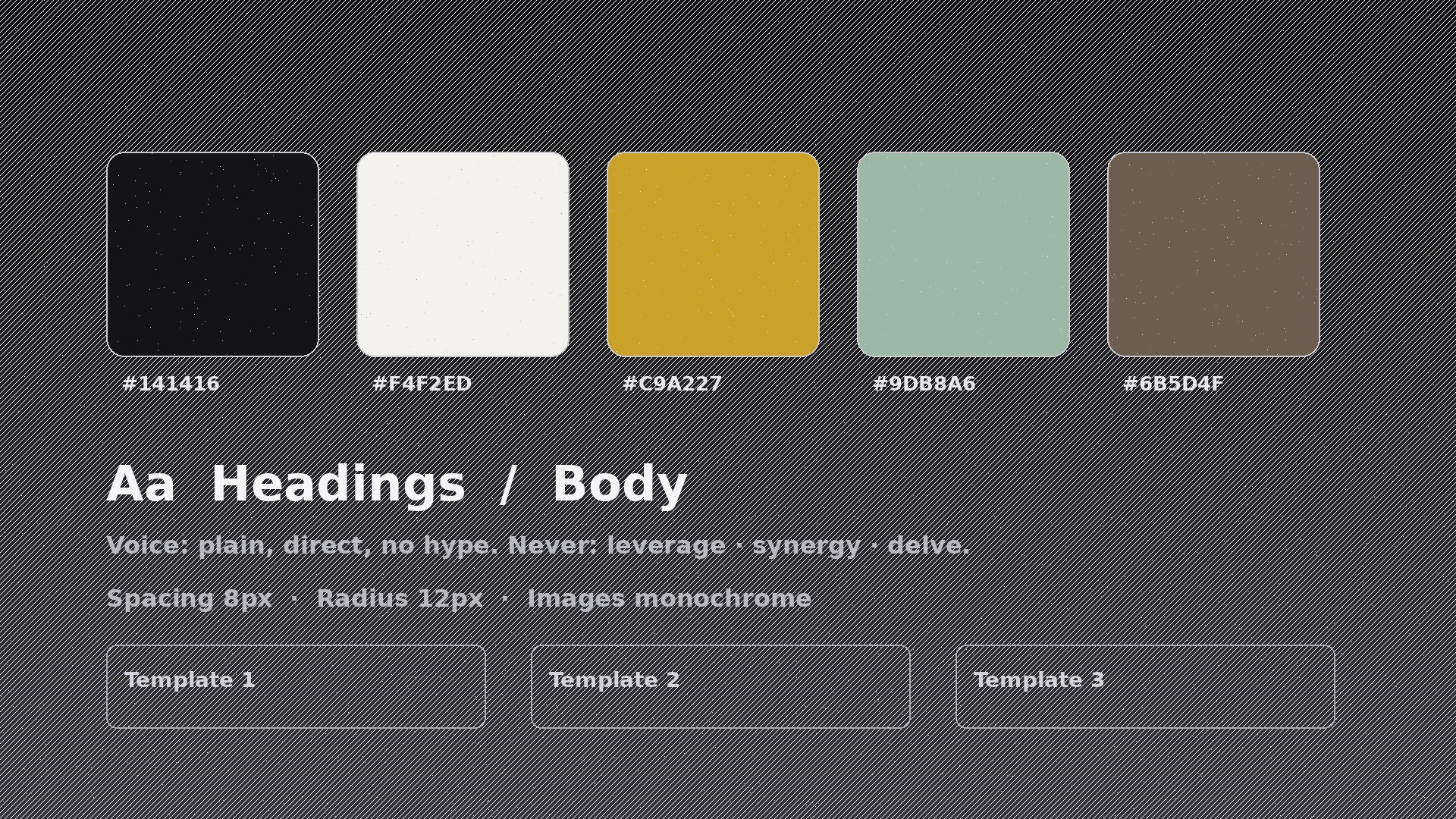
Un sistema di design token per un lancio editoriale: verifica le deviazioni tra gli asset, definisci token di cornice, colore e tipografia per ruolo, ricostruisci un asset di ogni tipo usando solo i token e consegna la documentazione, così ogni modifica futura si propaga da un unico punto.
Installala in 3 passaggi
Nessuna registrazione. Nessuno strumento da riga di comando. Scegli la tua AI, copia una riga e incollala.
Preferisci fare da te? Acquista la skill ($4.99), scarica lo ZIP dalla conferma d'acquisto, decomprimilo nella cartella mostrata sopra e riavvia la sessione della tua AI — stesso risultato. L'hai già acquistata? Il tuo assistente AI può scaricarla per te.
Cosa contiene
Un file SKILL.md (la guida operativa) + un modello di partenza. Un'anteprima:
Frame-Token Editorial Launch
When to use
- Launching an editorial product (magazine, newsletter, content brand) across many assets
- Every launch asset looks slightly different: mismatched spacing, type sizes, colors
- Handing a brand system to freelancers or a growing team
- Preparing a design system where layout spacing should be as consistent as color
- Rebranding an editorial site and its social, email, and print assets together
Workflow
- Audit what's inconsistent (input: existing assets → output: inconsistency list)
Collect every launch asset (site, social templates, email, deck, print) and list where spacing, type, and color drift: measure actual values (margins, font sizes, hex codes). Group the drift into patterns: "five different page margins", "three near-identical blues". The audit decides which tokens you need. - Define frame tokens (input: inconsistency list → output: frame token set)
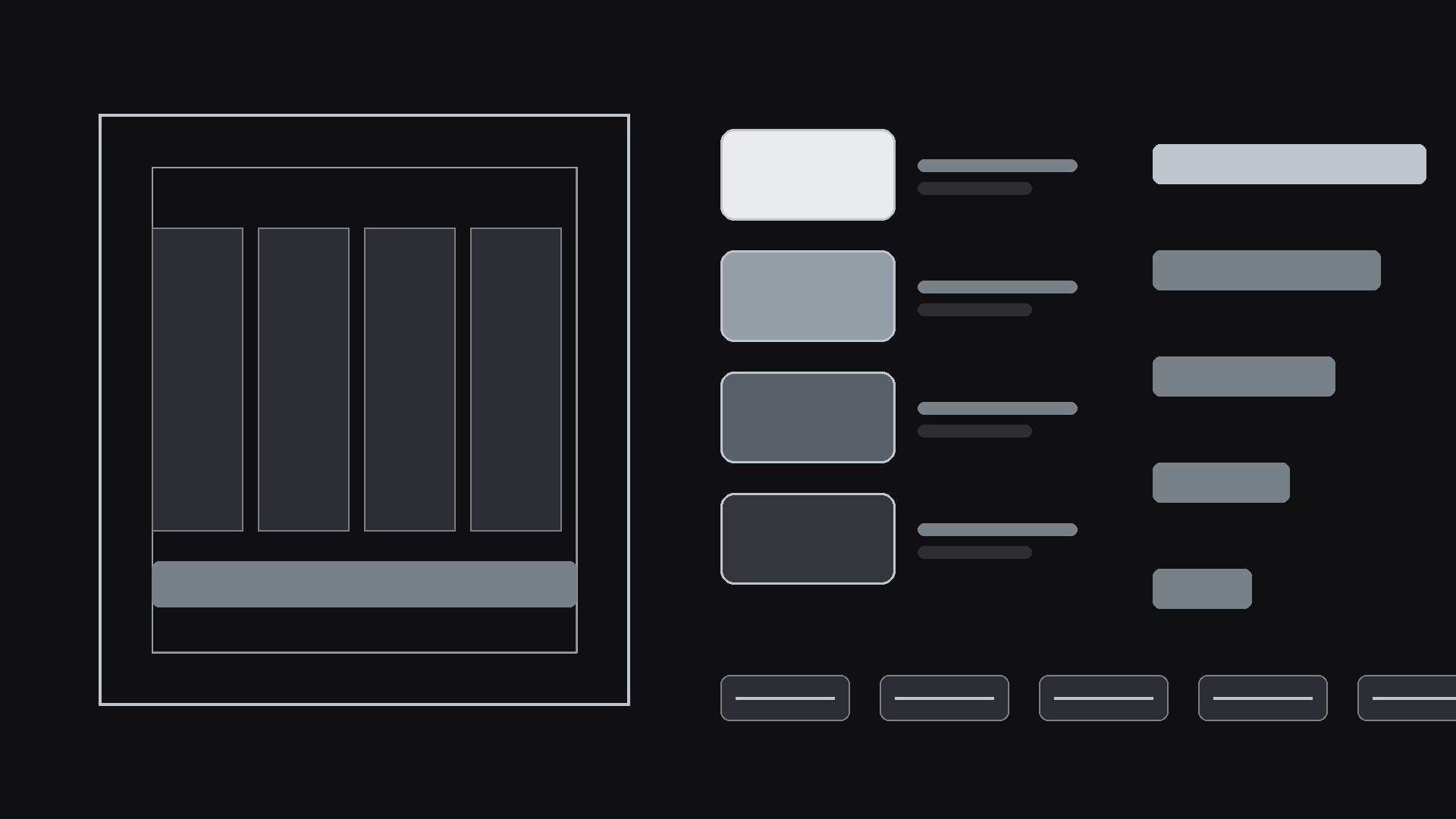
Frame tokens are the layout skeleton: page margins, column gutters, section spacing, card padding, image aspect ratios. Name them by role (frame.margin.page, frame.gutter.column, frame.space.section) and give each one value per breakpoint. Fewer tokens beat more: if two values are within a few pixels, merge them. - Define color and type tokens (input: brand assets → output: color + type token sets)
Color: semantic names (ink, paper, accent, muted) over raw values, each with light and dark values where needed. Type: a scale of sizes with line-heights, tied to roles (display, headline, body, caption), not to specific pages. Every token gets a name, a value, and a one-line usage rule. - Build the launch kit (input: token sets → output: asset kit)
Rebuild one of each asset type from tokens only: article page, social card, email header, deck title slide, poster. If an asset needs a value not in the token set, that's a signal: either add a token or change the asset — never hard-code a one-off. - Document and hand over (input: launch kit → output: token documentation)
One page per token family: name, value, usage rule, do/don't example. Include the update rule: tokens change in one place and propagate; nobody edits asset files to tweak a value. Ship the doc with the kit, not after it.
Output spec
- Inconsistency audit: measured drift across assets, grouped by pattern
- Frame tokens: margins, gutters, spacing, padding, aspect ratios — named by role, per breakpoint
- Color tokens: semantic names + values (+ dark values where needed)
- Type tokens: size/line-height scale tied to roles
- Launch kit: one of each asset type built from tokens only
- Token docs: name, value, usage rule, do/don't per token family + update rule
Good vs. bad examples
Anteprima del modello
Frame-Token Editorial Launch — Token Set Template
Tokens describe decisions, not values. One place to change, everywhere propagates.
Inconsistency audit
Drift patterns: {e.g. five different page margins / three near-identical blues}
Frame tokens (layout skeleton — one value per breakpoint)
Color tokens (semantic names)
Type tokens (roles, not pages)
Launch kit (one of each, built from tokens only)
- [ ] Article page — {file} — tokens used: {list}
- [ ] Social card — {file} — tokens used: {list}
- [ ] Email header — {file} — tokens used: {list}
- [ ] Deck title slide — {file} — tokens used: {list}
- [ ] Poster — {file} — tokens used: {list}
Il pacchetto della skill (SKILL.md + modello) è scritto in inglese.