Confetti Gathering Deck
Un deck che mette energia alla sala, invece di farla sbadigliare.
Crea un deck di slide caldo, punteggiato di coriandoli, per riunioni, ritiri, workshop e celebrazioni, con agenda, rompighiaccio e momenti condivisi già integrati.

Installala in 3 passaggi
Nessuna registrazione. Nessuno strumento da riga di comando. Scegli la tua AI, copia una riga e incollala.
Preferisci fare da te? Acquista la skill ($4.99), scarica lo ZIP dalla conferma d'acquisto, decomprimilo nella cartella mostrata sopra e riavvia la sessione della tua AI — stesso risultato. L'hai già acquistata? Il tuo assistente AI può scaricarla per te.
Cosa contiene
Un file SKILL.md (la guida operativa) + un modello di partenza. Un'anteprima:
Confetti Gathering Deck
When to use
- You're hosting a team offsite, reunion, retreat, or community meetup and need a deck that sets a celebratory tone
- Your gathering has a mix of people who don't know each other yet — the deck has to break the ice, not just list an agenda
- You're running a workshop or celebration where slides will be on screen between activities, not presented lecture-style
- You want a deck that doubles as a keepsake — attendees photograph slides, share them, remember the day
- Your last gathering deck was a wall of bullet points and the room went flat
- You need slides for a birthday, wedding welcome, club social, or milestone party
Workflow
- Name the gathering's feeling (input: event details → output: tone statement)
Write one sentence about the feeling you want people to leave with: "Everyone leaves knowing three new people and one thing they're proud of this year." That sentence decides everything — the colours, the activities, the closing slide. A reunion wants nostalgia; a team offsite wants energy and honesty; a workshop wants focus with fun. If you can't name the feeling, the deck will default to generic, and generic is what makes rooms go flat. - Set the confetti language (input: tone statement → output: visual rules)
Define the deck's confetti vocabulary: 3–4 confetti colours plus a neutral background, one display typeface for big moments and one readable body typeface, and rules for confetti density — dense on the title and closing slides, a light scatter on section dividers, almost none on activity instruction slides where clarity matters. Confetti is punctuation, not wallpaper: it marks celebrations and transitions, and it stays out of the way when people need to read instructions. - Build the arc (input: tone statement + schedule → output: slide outline)
Structure the deck as an arc, not a list: Welcome (who we are, why we're here) → Warm-up (one low-stakes icebreaker) → The meat (the gathering's purpose: talks, activities, discussion) → Shared moment (a group activity or toast) → Close (what happens next, one memorable image). Aim for 10–18 slides for a half-day gathering; a gathering deck with 40 slides has stopped being a deck and become a lecture. - Design the welcome and warm-up (input: slide outline → output: opening slides)
The welcome slide carries the gathering name, date, and one confetti burst — nothing else. The warm-up slide gives one simple icebreaker with a clear instruction: "Find someone who… and swap one story" beats "Introduce yourselves" every time. Put the instruction in large type, one line, with a visible time box ("5 minutes"). People participate when the ask is small and specific. - Build the middle: activity slides (input: slide outline → output: activity slides)
Each activity gets exactly two slides: an instruction slide (what to do, how long, what you need — large type, minimal confetti, one example) and a sharing slide (a prompt for what groups report back, with space for a photo or a few words). Never put instructions and background explanation on the same slide — the room will read the explanation and miss the instruction. End every activity slide with the time box repeated. - Build the shared moment and close (input: slide outline → output: closing slides)
The shared moment slide is the emotional peak: a group photo prompt, a toast, a collective shout-out wall, or a "one word for today" round. The closing slide repeats the gathering name, says what happens next (photos link, next date, one follow-up action), and ends on the densest confetti of the deck. The last slide is what people photograph — make it worth photographing. - Rehearse the room flow (input: full deck → output: run sheet)
Walk the deck in real time with a timer, advancing slides as if the room were live. Check: does any slide stay up longer than 5 minutes while people do something else (if so, it needs a timer or a background version)? Is every instruction slide readable from the back of the room? Does the confetti ever sit behind text? Fix, then export a PDF backup — projectors fail, laptops die, PDFs on a USB stick don't.
Anteprima del modello
Confetti Gathering Deck — Starter Template
10–18 slides. Confetti is punctuation, not wallpaper: dense on title/close, scatter on dividers, nearly none on instruction slides.
Tone
- Gathering: {gathering_name} — {date}, {location}
- Feeling people should leave with: {tone_statement}
- Confetti colours: {colour_1}, {colour_2}, {colour_3}, {colour_4} on {background}
- Display typeface: {display_font} | Body typeface: {body_font}
Slide outline
1. Welcome
- Title: {gathering_name}
- Subline: {date} · {location}
- Visual: one confetti burst, nothing else
2. Warm-up / icebreaker
Il pacchetto della skill (SKILL.md + modello) è scritto in inglese.
Potrebbe piacerti anche
 Presentazioni
Pitch Deck
10 slide che raccontano una sola storia — gli investitori restano fino all'ultima pagina
 Presentazioni
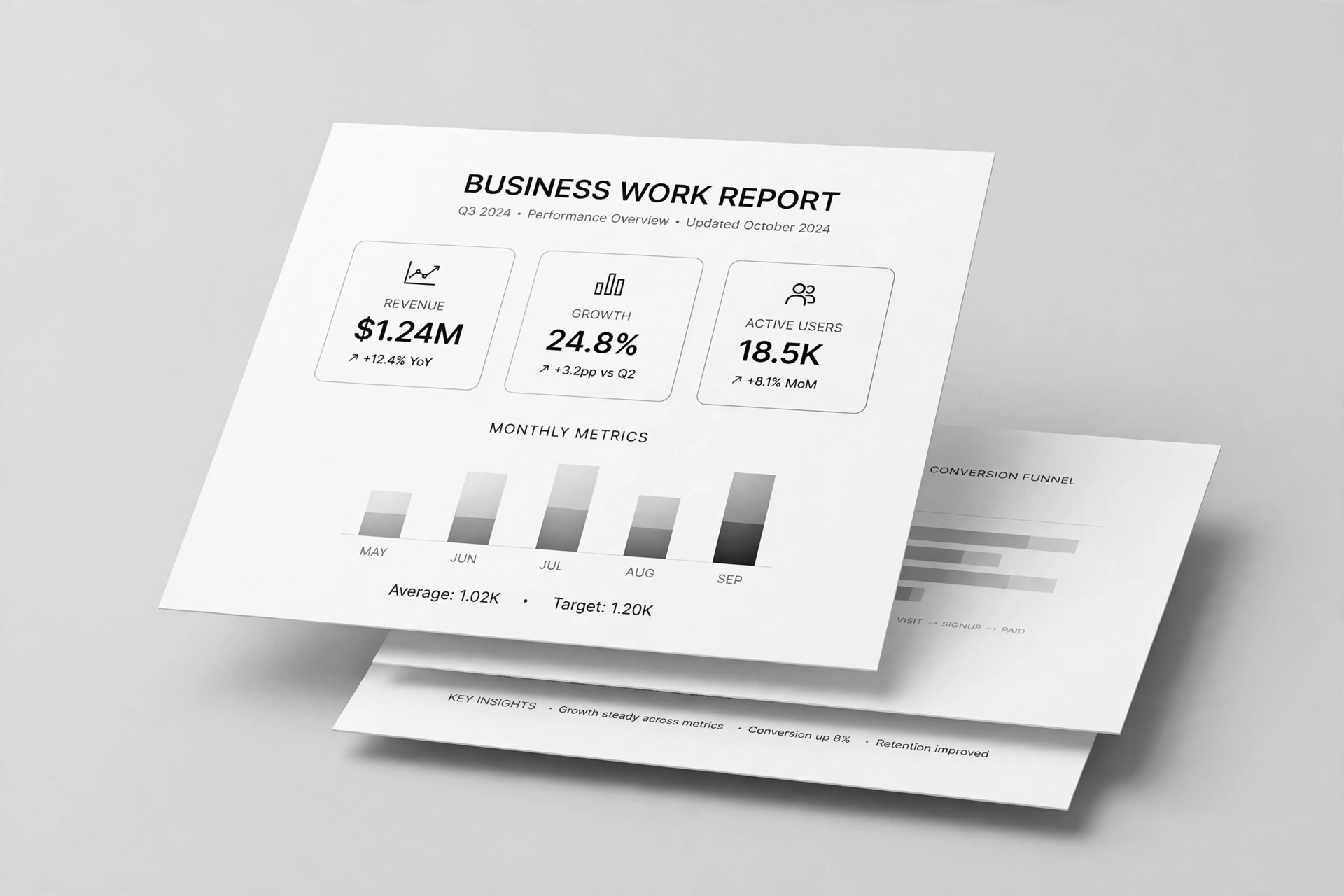
Work Report
Settimanale, mensile, review — prima la conclusione, si capisce in 3 minuti
 Presentazioni
Academic Argument Deck
Una presentazione che argomenta — e risponde alle obiezioni.