AI Services Market › スキルファクトリー › Web › Editorial Testimonial Spread
$4.99 · サインイン不要v1.0.0– 回表示
Editorial Testimonial Spread
本物の顧客の言葉を、パンチのために編集——懐疑論者の反論に順番に答えるスプレッド
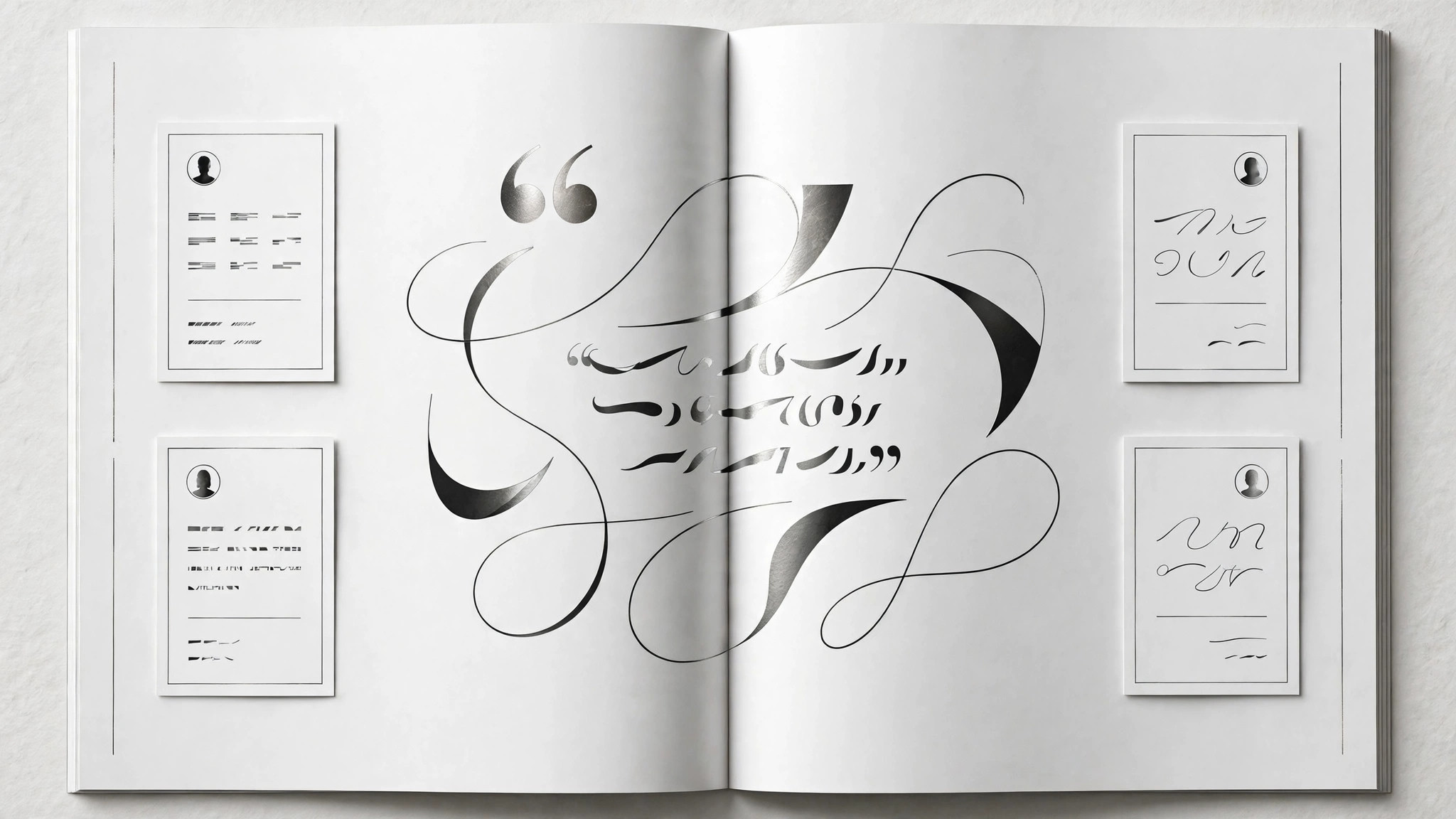
本物の顧客フィードバックを集め、カットのみで編集し、論証の順序に並べた4〜7件の帰属付き引用をスプレッドとしてレイアウトします。
こんな方におすすめ
お客様の声セクションが弱い創業者、マーケター、ページ所有者
所要時間
約20分
レベル
初心者向け
3ステップでインストール
登録不要。CLIツールも不要です。お使いのAIを選んで、1行コピーして貼るだけです。
ご自分で入れたい場合は、スキルを購入($4.99)し、購入完了画面からZIPをダウンロードして、上のディレクトリに展開し、AIのセッションを再起動してください。結果は同じです。すでに購入済みの場合は、AIアシスタントにダウンロードしてもらうこともできます。
パックの内容
SKILL.md(手順書)1点とスターターテンプレート1点が入っています。プレビューはこちらです:
Editorial Testimonial Spread
When to use
- Your testimonial section is a wall of five-star quotes that all sound the same and convince no one
- You have great client feedback scattered across emails, chats, and review sites but nothing publishable
- A prospect asked "who else uses this?" and your page has no credible answer
- Your testimonials are all praise and no specifics — no names, no outcomes, no situations a reader can recognize
- You're redesigning a landing or sales page and the testimonial block is the weakest section on it
Workflow
- Collect raw material (input: emails, chats, reviews, survey replies → output: raw quote bank)
Gather every piece of real client feedback you can find — emails, support chats, review-site comments, survey answers, call notes — and paste them into one bank, verbatim, with the source and date of each. Don't start by writing testimonials; start by collecting what people actually said. Ten messy real sentences are worth more than one polished invented paragraph. At this stage, volume matters: the more raw material you have, the more selective you can be later. - Verify and get permission (input: raw quote bank → output: approved quotes with permission records)
For each quote you might use, confirm two things: that the words are real (check the source — don't trust your memory of a call) and that you have permission to publish them with the person's name and role attached. Ask in writing, showing the exact wording you intend to publish, and keep the reply. If a client will only approve an anonymous quote, treat it as nearly worthless — anonymous praise persuades nobody — and prefer a shorter attributed quote over a longer anonymous one. - Edit for punch, not for polish (input: approved quotes → output: edited quotes)
Editing a testimonial means cutting, never inventing. Cut throat-clearing ("I just wanted to say that…"), cut generic praise ("great product, highly recommend"), and keep the specific sentence that only this client could have written — the situation, the before-and-after, the surprising detail. You may fix grammar and trim for length, but you may not add claims the client didn't make, upgrade their wording, or merge two people's words into one quote. Send the edited version back to the client if the edit changed anything substantive; their approval covers the words they said, not your rewrite. - Select the mix (input: edited quotes → output: final selection of 4–7 quotes)
A spread persuades by covering the objections a skeptic brings to the page. Select for coverage, not for enthusiasm: one quote from each key buyer type, one that names a specific outcome, one that answers the most common objection ("I worried it would be too complex…"), one that describes life before the product, and one short punchy line for the top of the spread. Four to seven quotes is the range — fewer feels thin, more feels like a wall nobody reads. If two quotes make the same point, keep the more specific one. - Lay out the spread (input: final selection → output: publishable testimonial section)
Order the quotes like an argument: the punchiest, most specific quote first (it earns the next ones), the objection-answerer in the middle, the outcome quote last. Give each quote room — generous whitespace, a readable size, the client's name, role, and company or context on the attribution line, and a photo or initials only if real. Pull one short phrase out as a large pull-quote to anchor the spread visually. Then proof: every quote matches its approved wording, every attribution is accurate, and the section reads as a sequence, not a pile.
テンプレートのプレビュー
Editorial Testimonial Spread — Template
Cut, never invent. Every published quote needs written permission for its exact wording.
Raw quote bank (verbatim, with source + date)
(Add rows until you have plenty — volume now means selectivity later.)
Permission log
Editing notes (cutting only)
- Cut: {throat-clearing, generic praise, repetition}
- Kept: {the specific sentence only this client could write}
- Changed substantively? {yes → re-approved by client / no}
Final selection (4–7 quotes, covering the objections)
Pull-quote anchor
> {One short phrase pulled from the strongest quote — verbatim}
Pre-publish checklist
スキルパック本体(SKILL.md とテンプレート)は英語で書かれています。