Records and Donut
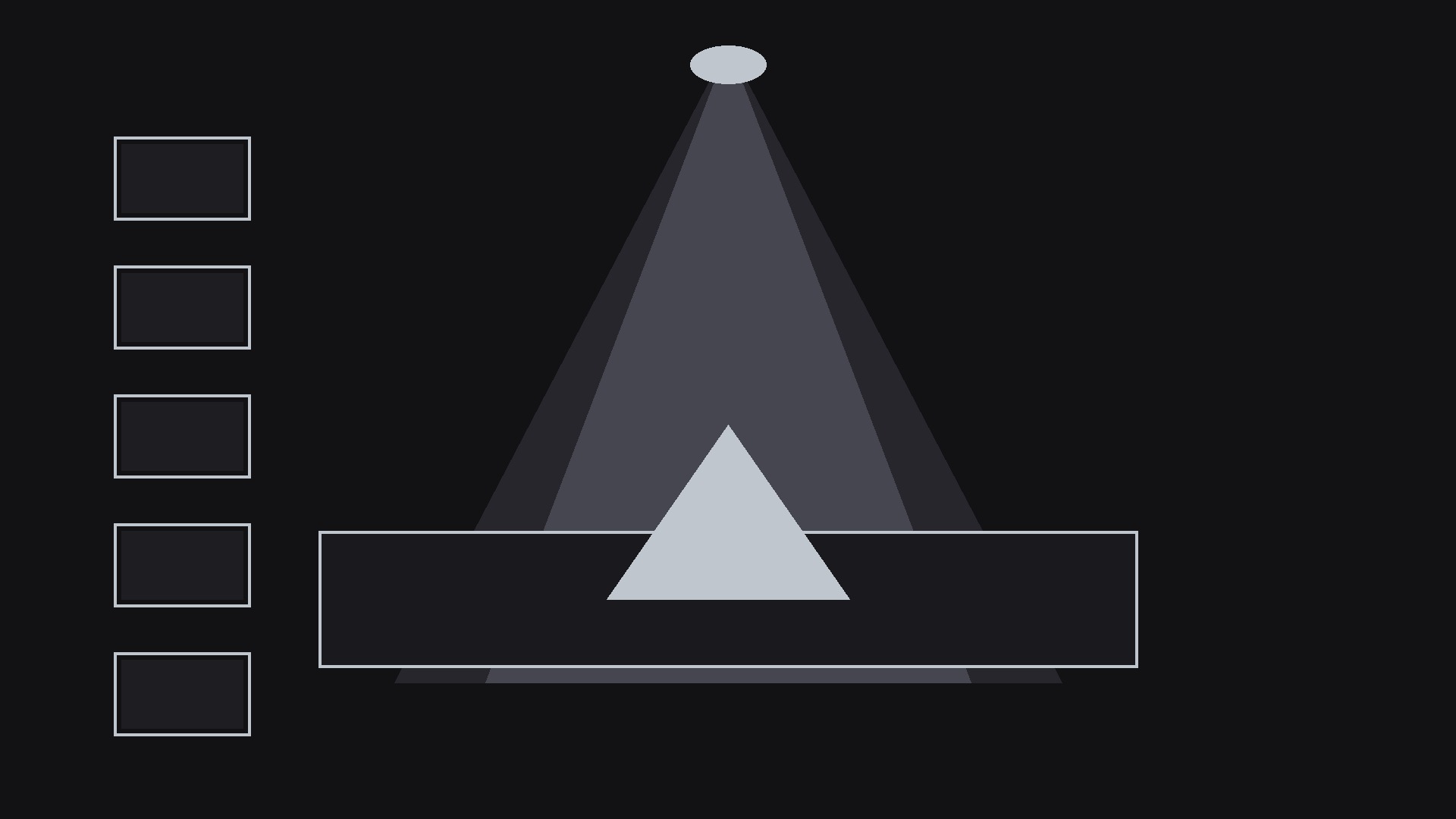
Dischi in vinile e un grafico a ciambella — la collezione che sai leggere.
Dischi che girano abbinati a un grafico a ciambella: ogni disco è una categoria, la ciambella ne mostra la quota, e i colori abbinati collegano disco e segmento.
Installala in 3 passaggi
Nessuna registrazione. Nessuno strumento da riga di comando. Scegli la tua AI, copia una riga e incollala.
Preferisci fare da te? Acquista la skill ($4.99), scarica lo ZIP dalla conferma d'acquisto, decomprimilo nella cartella mostrata sopra e riavvia la sessione della tua AI — stesso risultato. L'hai già acquistata? Il tuo assistente AI può scaricarla per te.
Cosa contiene
Un file SKILL.md (la guida operativa) + un modello di partenza. Un'anteprima:
Records and Donut
When to use
- You are showing a share-of-whole breakdown (3–6 categories) where a plain donut feels generic and the subject has a music, audio, or collection flavor
- The categories map naturally to discs: genres, artists, labels, formats, decades, playlists
- You want a 15–30 second clip for a music recap, a label report, a store's year-in-review, or a collection tour
- The audience should feel the collection as physical objects (records) AND read the exact shares (donut) — neither visual alone does both jobs
- A static donut in a slide deck needs a motion version for video without losing the numbers
Workflow
- Pick the categories (input: breakdown → output: 3–6 records + shares)
Choose 3–6 categories with shares summing to ~100%. Each category gets: a 1–3 word label, its percentage, and a record identity — a color for the disc label, and optionally a two-letter code or tiny icon at the disc center. Sort by share descending; the biggest record is the visual anchor. Merge slivers below ~4% into "Other" (one grey record) so the set stays readable. - Stage the two visuals (input: categories → output: composition)
Composition: the donut on one side (right half for horizontal, bottom half for vertical), the records on the other — a row, an arc, or a loose stack, one disc per category, sized by share (largest disc ~1.6× the smallest). Every record's label color matches its donut segment exactly — color is the key that links the two visuals. Donut: thick ring (28–34% of radius), center hole holding the total ("100%" or the grand total like "1,240 plays"), segment labels outside with leader lines or just values on the ring. - Spin the records (input: composition → output: spin keyframes)
Records rotate slowly and continuously: one full rotation per 12–20 s, linear easing, all discs the same direction. Slow is the point — a fast spin looks frantic and makes labels unreadable. Each disc keeps its label upright: counter-rotate the label layer so text stays readable while the grooves spin beneath it (or place the label on a static center hub). Grooves: 3–5 concentric hairlines per disc, plus a soft highlight arc that stays fixed while the disc turns — the highlight sells the rotation. - Grow the donut (input: composition → output: donut keyframes)
Donut segments draw in one at a time, clockwise from 12 o'clock, in descending-share order: each segment sweeps from 0 to its angle over 0.5–0.7 s (ease-out), with its label fading in as it lands (0.3 s). As each segment completes, its matching record does a single emphasis pulse — scale 1.0 → 1.06 → 1.0 over 0.4 s — so the eye links disc to segment. Stagger segments by 0.15 s; total donut build under 3.5 s. - Hold and end (input: finished composition → output: 15–30 s clip)
Hold the complete composition 2–3 s: records still spinning slowly, donut complete, all labels legible. Optionally, the top category's record does one final slow highlight: a thin ring draws around it (0.5 s) with its takeaway ("Jazz is nearly half the shelf") appearing beneath. End with a 0.4 s fade. Export 1920×1080 or 1080×1080, 30 fps. Loop-safe: if looping, keep the spin continuous across the loop point and the donut already built.
Anteprima del modello
Records and Donut — Template
Fill in the blanks, then build the clip from the SKILL.md workflow.
Data
Whole (what 100% means): {e.g. total plays / shelf records / catalog tracks} Grand total (goes in donut hole): {e.g. 1,240 plays}
Total: {100}% | Source: {source, date}
Composition
Format: [ ] Horizontal 1920×1080 (donut right, records left) / [ ] Vertical (donut bottom, records top) Record arrangement: [ ] Row / [ ] Arc / [ ] Loose stack Disc size ratio: largest ~1.6× smallest Donut ring thickness: 28–34% of radius | Center hole: {grand total}
Animation
Record spin: one rotation per {12–20 s}, linear, all discs same direction
Il pacchetto della skill (SKILL.md + modello) è scritto in inglese.