Indigo Ledger Landing
Una landing page finanziaria che convince con numeri in chiaro.
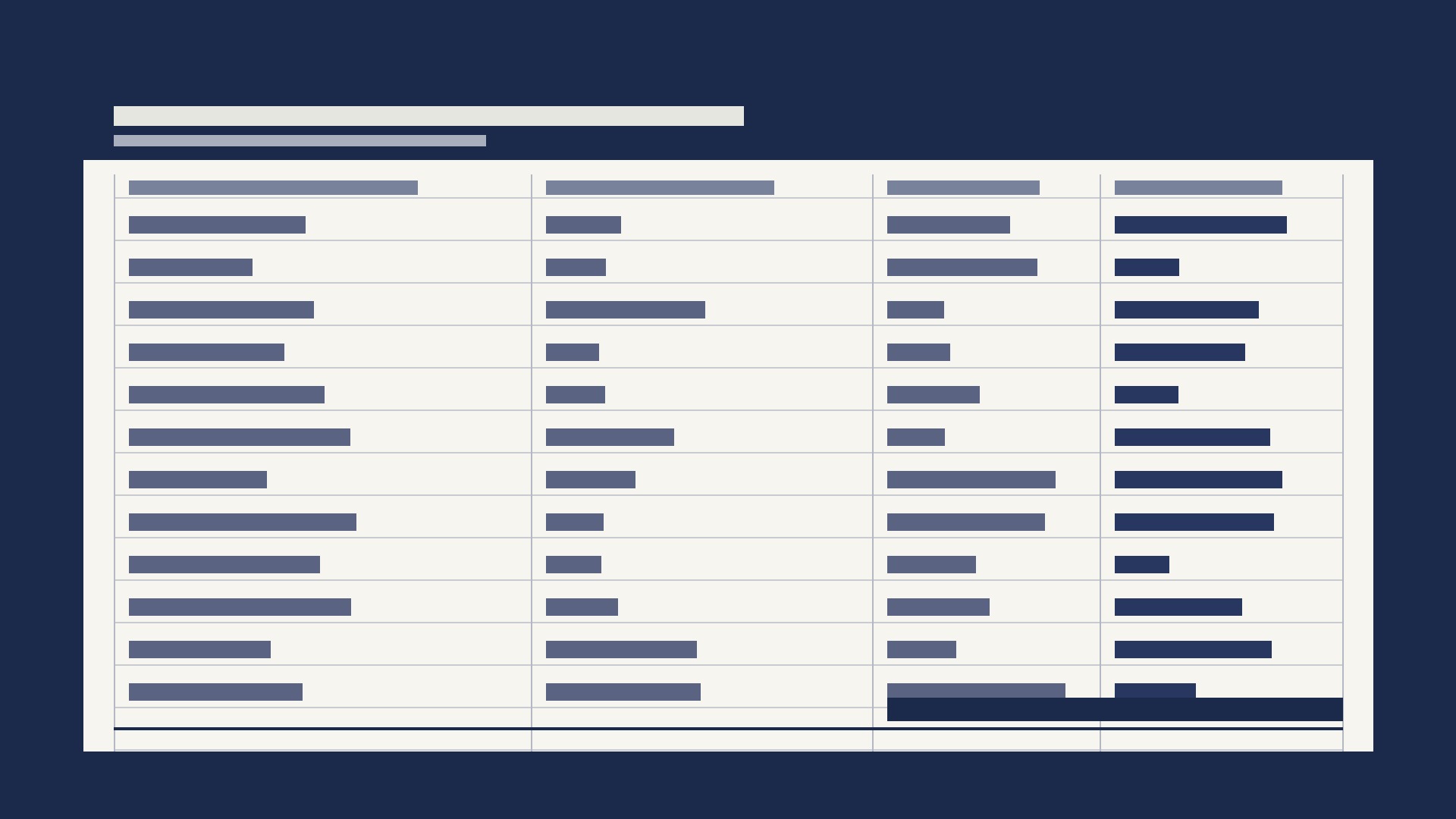
Trasforma la tua AI in un designer di landing page per prodotti finanziari e di contabilità — una landing page in stile registro aperto con inchiostro indaco profondo, in cui righe tracciate, cifre tabulari e numeri in chiaro fanno il lavoro di persuasione.
Installala in 3 passaggi
Nessuna registrazione. Nessuno strumento da riga di comando. Scegli la tua AI, copia una riga e incollala.
Preferisci fare da te? Acquista la skill ($4.99), scarica lo ZIP dalla conferma d'acquisto, decomprimilo nella cartella mostrata sopra e riavvia la sessione della tua AI — stesso risultato. L'hai già acquistata? Il tuo assistente AI può scaricarla per te.
Cosa contiene
Un file SKILL.md (la guida operativa) + un modello di partenza. Un'anteprima:
Indigo Ledger Landing
When to use
- You sell bookkeeping, accounting, invoicing, or expense software and your landing page needs to feel trustworthy to people who read numbers for a living
- Your current landing page leans on hype ("revolutionary!", "10x!") and your finance-savvy buyers don't believe a word of it
- You need a landing page whose whole argument is transparency: show the price, show the math, show the workings
- You are launching a finance tool for small businesses and want a visual identity that says "careful with your money" instead of "startup casino"
- Your pricing page is where deals stall because the numbers feel hidden or slippery
Workflow
- State the honest argument (input: product + price → output: one-page argument)
Write the landing page's argument as a ledger would: what the product costs, what it replaces, and what the buyer saves, in plain numbers with the arithmetic shown. No superlatives, no "up to" claims, no asterisks. If you can't state the value in one honest paragraph with real figures, the page isn't ready for design — fix the offer first, because a ledger-style page makes vague claims look worse, not better. - Set the ledger system (input: argument → output: visual system)
Define the visual language: deep indigo ink on warm paper white, hairline rules that separate every row like a ledger, tabular numerals (figures that line up in columns), and a single serif for numbers and headlines with a plain sans for body text. Every section is a ledger entry: a ruled header, aligned columns, a subtotal line. The design rule is simple — if it wouldn't look at home in a well-kept account book, it doesn't go on the page. - Draft the sections in ledger order (input: visual system + argument → output: page draft)
Lay out the sections the way a ledger reads, top to bottom: headline stating the promise in one line; the price, stated early and plainly, with exactly what's included; three or four features, each written as an entry with a concrete outcome ("Reconcile in 20 minutes, not 2 hours"); a worked example showing real numbers for a typical customer; social proof as a short list of named businesses with one verifiable fact each; and a final summary box — the page's balance sheet — restating price, what's included, and the guarantee. Nothing on the page is allowed to contradict the arithmetic. - Make the numbers checkable (input: page draft → output: verified page)
Every figure on the page gets a source or a worked example: if you say "saves 6 hours a month," show the 6 hours as a small calculation the reader can follow. Pricing shows the full price with no hidden fees called out explicitly ("No per-seat fees. No setup fee."). Testimonials name a real business and a real outcome — no anonymous quotes, no round-number miracles. A finance buyer will check your math; make checking it easy and rewarding. - Write the conversion details (input: verified page → output: build-ready page)
Place one clear call to action after the price and again after the summary box — same wording both times, no competing buttons. Write the risk-reversal in ledger language: trial length, refund terms, and data-export promise stated as plain facts ("Export everything, any time, in CSV"). Add the small print a careful buyer wants: security practices, support hours, and contract terms, in the same calm tone as the rest of the page. Then hand off the build pack: copy, indigo/paper tokens, type scale, and the ruled-section layout rules.
Anteprima del modello
Indigo Ledger Landing — Build Template
One landing page = one completed template. Fix the honest argument before designing.
Product: {name} — {one-line promise}
The honest argument (arithmetic shown)
- Costs: {price, exactly as it will appear on the page}
- Replaces: {what the buyer currently pays / does}
- Saves: {figure} — working: {show the calculation}
Visual system
- Ink: deep indigo {hex} / Paper: warm white {hex} / Accent (CTA only): {hex}
- Numbers/headlines: {serif with tabular figures}
- Body: {plain sans}
- Rule: hairline rules separate every row; if it wouldn't fit in a well-kept account book, it doesn't go on the page.
Il pacchetto della skill (SKILL.md + modello) è scritto in inglese.