Wonky Cute Doodles
Imparfaits exprès — des gribouillis avec un cœur.
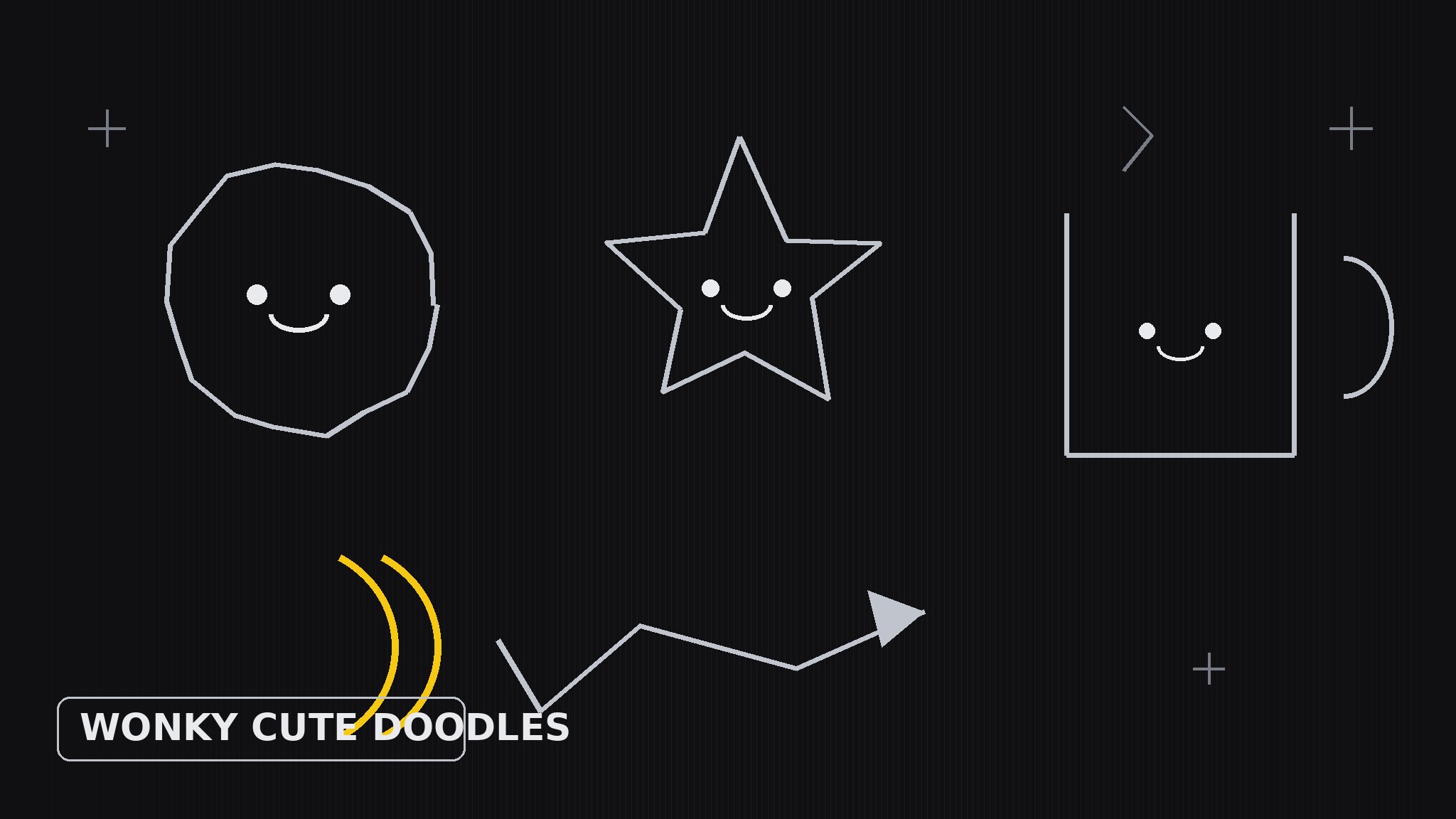
Transforme votre IA en illustrateur de gribouillis — dessine des gribouillis à main levée délicieusement imparfaits, avec des lignes tremblées, des formes inégales et de petits visages mignons qui réchauffent présentations, notes, fiches d'exercices et publications sociales sans jamais ressembler à du clip art d'entreprise.
Installez-la en 3 étapes
Sans inscription. Sans outils en ligne de commande. Choisissez votre IA, copiez une ligne, collez-la.
Vous préférez le faire vous-même ? Achetez la compétence ($4.99), téléchargez le ZIP depuis votre confirmation d'achat, décompressez-le dans le répertoire indiqué ci-dessus, redémarrez votre session IA — même résultat. Vous l'avez déjà achetée ? Votre assistant IA peut la télécharger pour vous.
Contenu du pack
Un fichier SKILL.md (le guide pratique) + un modèle de départ. Aperçu :
Wonky Cute Doodles
When to use
- A slide deck feels cold and corporate, and one small doodle in the corner would make it human
- You are making a worksheet, handout, or classroom page that should feel friendly, not formal
- A social post needs a quick illustration, and a polished stock graphic would look over-produced
- Your notes, newsletter, or Notion page needs small spot illustrations — stars, arrows, coffee cups, checkmarks with faces
- You want a consistent hand-drawn accent style across a whole document, not a random grab-bag of icons
Workflow
- Pick the moment (input: the page or post → output: placement brief)
Start from where the doodle will live, not from the doodle itself. Name the surface (slide corner, worksheet margin, post header), the feeling it should add (encouraging, playful, calming), and the one thing it must not compete with (the headline, the exercise, the data). One doodle per moment is usually enough — a page with five doodles is a coloring book, not a document. - Set the wonk rules (input: placement brief → output: style sheet)
Wonky is deliberate, not sloppy: pick the rules that make the imperfection look on purpose. Fix a line weight (one weight for outlines, one thinner weight for details), a wobble amount (lines drift slightly off straight but never zigzag wildly), a face vocabulary (two-dot eyes plus one tiny smile, used sparingly), and a palette (black ink plus one accent color at most). Write these down — they are what keeps doodle #20 looking like it belongs with doodle #1. - Sketch the cast (input: style sheet → output: doodle set)
Draw the set in one pass so the hand stays consistent: 3–5 everyday objects (cup, star, plant, pencil, cloud), 2–3 arrows and dividers (a curly arrow, a dashed underline, a bracket), and 2–3 tiny characters or faces (a smiling checkmark, a sleepy moon, a cheering blob). Every doodle gets the same treatment: one wobbly outline, one small face or detail at most, nothing shaded. If a doodle needs explaining, it is too complicated — simplify until a child could name it in two seconds. - Compose with breathing room (input: doodle set → output: placed illustration)
Place each doodle where the eye naturally rests after reading — the corner of a slide, the end of a section, the margin beside a hard paragraph — and leave empty space around it at least as tall as the doodle itself. Never let a doodle touch text, overlap a chart, or sit on a busy photo. Size for the surface: margin doodles stay small (roughly the height of two text lines), header doodles can be bolder, worksheet doodles stay light so they survive photocopying. - Clean up without straightening (input: placed illustration → output: finished page)
Do a final pass with one rule: remove accidents, keep wobble. Fix stray marks, broken lines, and anything that reads as a mistake (a half-erased stroke, a face that looks worried instead of cute). Do not "fix" the wobble itself — straightening a wonky line kills the whole charm. Check the set together at thumbnail size: if one doodle looks like it came from a different hand, redraw it to the style sheet.
Aperçu du modèle
Wonky Cute Doodles — Doodle Set Template
Fill this in before drawing. One set = one hand, one ink, one accent.
Placement brief
Surface: {slide corner / worksheet margin / social post header / newsletter spot} Feeling to add: {encouraging / playful / calming / celebratory} Must not compete with: {headline / exercise / data / photo} Doodles needed: {count, aim for 8–12 in a set, 1–2 placed per page}
Style sheet (the wonk rules)
- Outline weight: {e.g. 3px, one weight for all outlines}
- Detail weight: {e.g. 1.5px for faces and small marks}
- Wobble amount: {lines drift slightly off straight, never zigzag}
Le pack de compétence lui-même (SKILL.md + modèle) est rédigé en anglais.
Vous aimerez aussi
 Autres
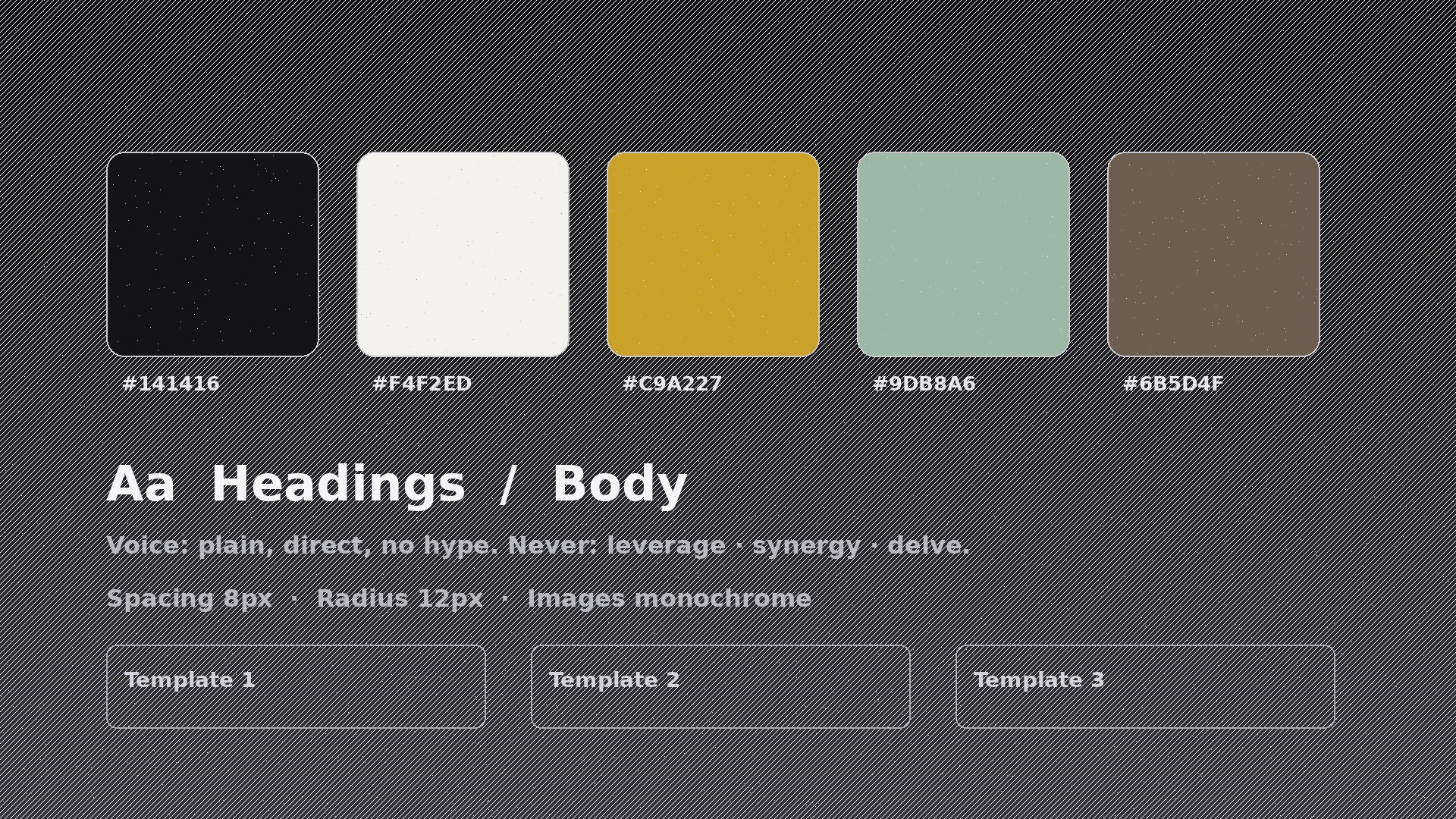
Continuity Asset Set
Un kit unique pour que chaque livrable donne l'impression de faire partie du même ensemble.
 Autres
Device-Canvas Product Launch
Un grand canevas d’appareil porte toute votre histoire de lancement.
 Autres
Frame-Token Editorial Launch
Un seul jeu de tokens, tous vos assets, zéro dérive.