Violet Editorial Team Deck
Une présentation d'équipe qui se lit comme votre propre magazine.
Transforme votre IA en designer de présentations — crée une présentation d'équipe pour une équipe éditoriale ou de publication sur un système magazine à l'encre violette : une ouverture en manchette, des titres en serif, un contributeur par double page et des preuves en langage clair de ce que l'équipe édite et publie.

Installez-la en 3 étapes
Sans inscription. Sans outils en ligne de commande. Choisissez votre IA, copiez une ligne, collez-la.
Vous préférez le faire vous-même ? Achetez la compétence ($4.99), téléchargez le ZIP depuis votre confirmation d'achat, décompressez-le dans le répertoire indiqué ci-dessus, redémarrez votre session IA — même résultat. Vous l'avez déjà achetée ? Votre assistant IA peut la télécharger pour vous.
Contenu du pack
Un fichier SKILL.md (le guide pratique) + un modèle de départ. Aperçu :
Violet Editorial Team Deck
When to use
- An editorial, publishing, or content team needs a deck that introduces the people behind the publication — editors, writers, designers, fact-checkers — to readers, partners, advertisers, or new hires
- A magazine, newsletter, or media brand wants a team deck that feels like its own pages: masthead, bylines, beats, and voice, not a generic corporate org chart
- A team page, press kit, or partnership pitch needs a deck version that a stranger can read in five minutes and come away knowing who edits what
- An editorial team is hiring or fundraising and needs to show the bench: who covers which beat, who holds which standard, who to contact
- The existing team deck is a wall of headshots and job titles that says nothing about what anyone actually edits or believes
Workflow
- Set the masthead and the promise (input: the publication → output: a masthead opener + one promise line)
Open the deck like a magazine cover, not a corporate title slide: the publication's name set as a masthead, one promise line stating what the team edits for and whom ("Sharp reporting on the city, for the people who live in it"), and one issue-style line (date, edition, or season) to give it a moment in time. The promise line is the deck's thesis — every contributor spread that follows should be readable as evidence for it. If the team cannot agree on one promise line, the deck is not ready to build; a team deck without a shared promise is just a directory. - Map the beats before the bios (input: the team's coverage → output: a beat map)
List the beats the team actually covers — city hall, food, culture, investigations, photo, design — and assign one owner per beat before writing a single bio. Each beat gets one line: what it covers, what it refuses to cover, and the standard it holds ("City hall: every claim traced to a document, no anonymous sourcing on spending"). The beat map becomes the deck's spine: contributor spreads follow beat order, not seniority, so a reader can find the person who edits the thing they care about. A beat with no owner is a gap to name honestly, not to hide — "Culture is covered by rotation; we are hiring a dedicated editor." - Build one contributor spread per person (input: beat map + contributor facts → output: contributor spreads)
Give each person one spread: name, role, beat, one portrait or illustrated avatar, one paragraph on what they edit and how they edit it, one line of proof (a story they shaped, a standard they set, a correction they owned), and one contact line. Write the paragraph in the person's own editorial voice — a food editor should sound like a food editor, not like HR. Keep every spread to the same structure so the deck reads like a magazine's contributor pages, and keep every claim checkable: no invented awards, no vague "award-winning" without naming the award. If a person has no checkable proof yet, say what they are building toward instead of padding the spread. - Show how the team works together (input: contributor spreads → output: an editorial-process section)
After the people, show the machine: how a story moves from pitch to publish — pitch, assignment, reporting, edit, fact-check, legal read, publish — with who touches it at each stage and how long each stage typically takes. Add one spread on standards: corrections policy, sourcing rules, and how the team handles errors, written plainly enough for a reader to hold the team to account. This section is what separates an editorial team deck from a photo album: it proves the team has a process, not just people. - Close with the ask and the contact sheet (input: the deck's purpose → output: a closing spread + contact sheet)
End with one clear ask matched to the audience — readers (subscribe), partners (pitch us), advertisers (book), candidates (apply) — and one contact sheet: one name and one address per purpose, not a generic inbox dump. The closing spread restates the promise line from the opener, now earned by the spreads in between. Check the whole deck once for consistency: violet ink throughout, serif headlines, one idea per slide, every name spelled right, every beat owned, every proof checkable.
Aperçu du modèle
Violet Editorial Team Deck — Outline Template
One deck = one team, one promise. Fill this in before building slides.
Publication: {name}
Promise line: {what the team edits for, and for whom} Issue line: {date / edition / season} Audience for this deck: {readers / partners / advertisers / candidates / new hires} Ask: {subscribe / pitch us / book / apply}
Beat map
Contributor spreads (one per person)
{Name} — {Role} — {Beat}
Portrait/avatar: {file or note} Paragraph (in their editorial voice): {what they edit and how they edit it} Proof (checkable): {story shaped / standard set / correction owned} Contact: {name + address}
Le pack de compétence lui-même (SKILL.md + modèle) est rédigé en anglais.
Vous aimerez aussi
 Présentations
Pitch Deck
10 diapositives, une seule histoire — les investisseurs restent jusqu'à la dernière page
 Présentations
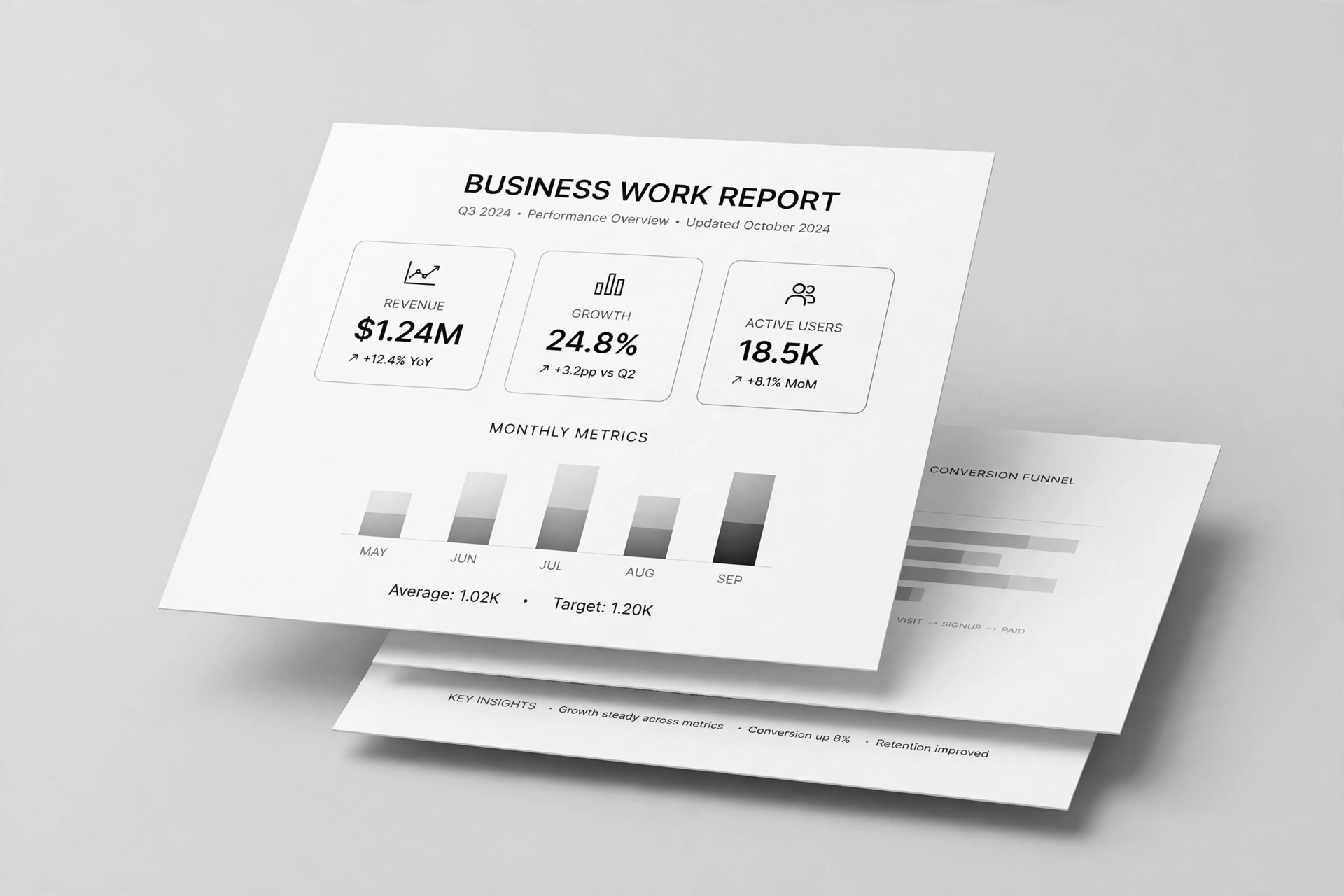
Work Report
Hebdomadaire, mensuel, bilans — la conclusion d'abord, compris en 3 minutes
 Présentations
Academic Argument Deck
Une présentation qui argumente — et qui répond aux objections.