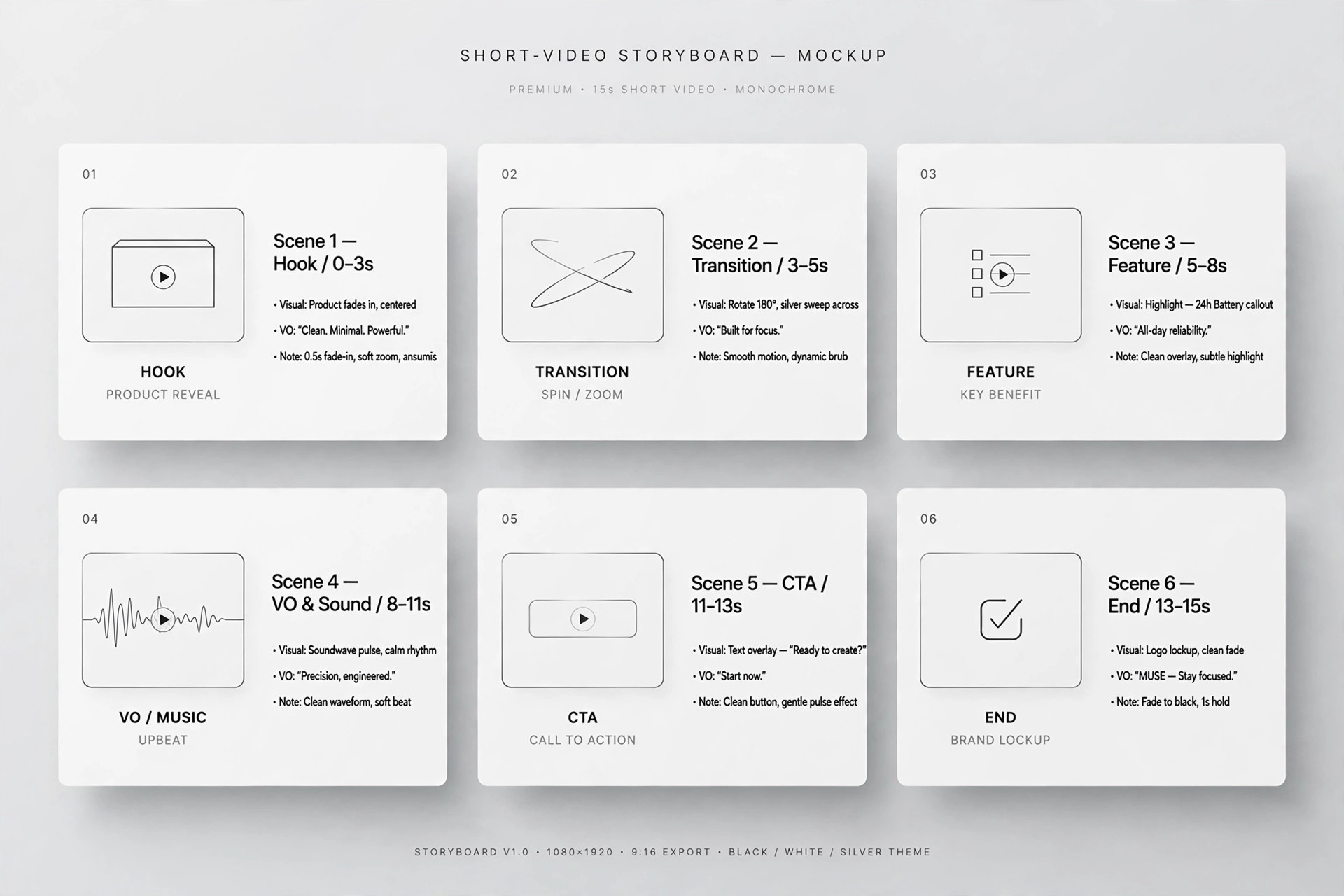
Step Cards to Chapter
Des étapes qui se dispersent, s’empilent et se replient en un chapitre mémorable.
Transforme une liste d’étapes en un chapitre : des cartes d’étapes éparses volent, s’empilent dans l’ordre et se replient en un titre de chapitre qui dit aux spectateurs ce que toute la séquence représente.
Installez-la en 3 étapes
Sans inscription. Sans outils en ligne de commande. Choisissez votre IA, copiez une ligne, collez-la.
Vous préférez le faire vous-même ? Achetez la compétence ($4.99), téléchargez le ZIP depuis votre confirmation d'achat, décompressez-le dans le répertoire indiqué ci-dessus, redémarrez votre session IA — même résultat. Vous l'avez déjà achetée ? Votre assistant IA peut la télécharger pour vous.
Contenu du pack
Un fichier SKILL.md (le guide pratique) + un modèle de départ. Aperçu :
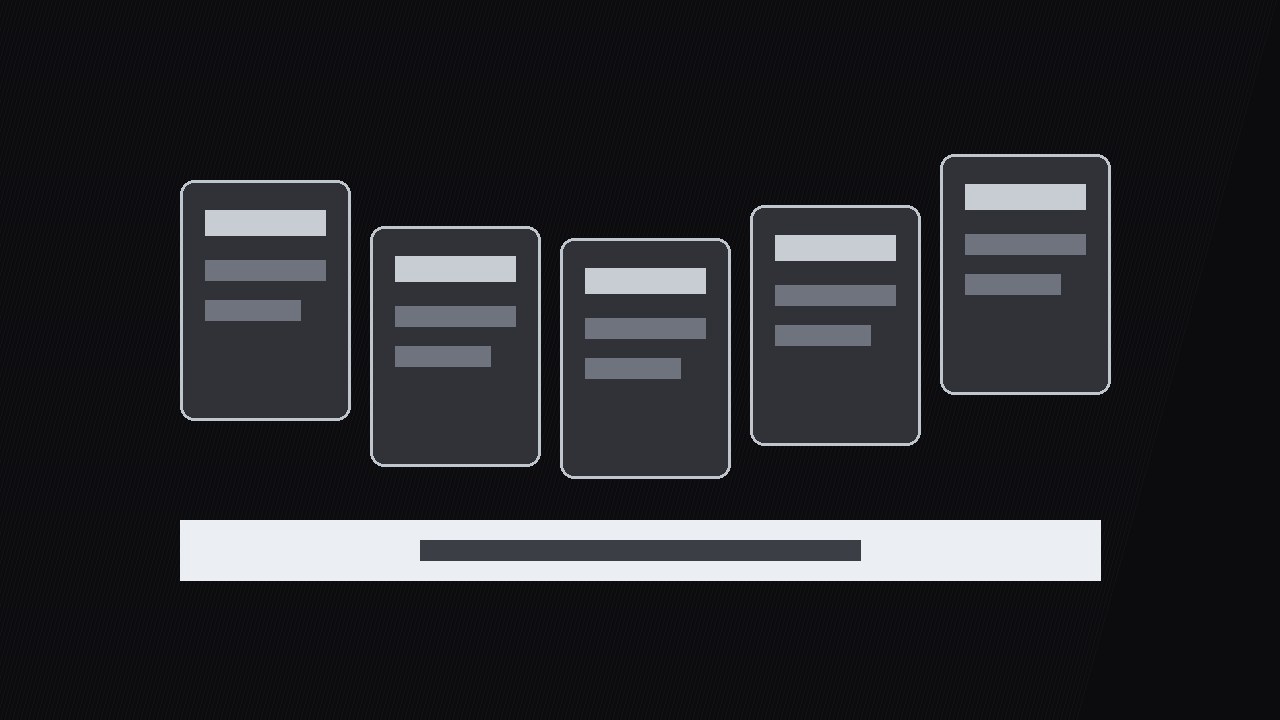
Step Cards to Chapter
When to use
- Your tutorial has a sequence of steps that viewers experience one at a time, and you need a moment that shows how they fit together before moving on
- You're structuring a course and each section opens with a chapter card that previews the steps inside it
- Your how-to video lists "step 1, step 2, step 3" in the voiceover but never shows the sequence as a whole, so viewers can't tell how far along they are
- You're recapping a completed procedure — "here's what we just did" — and want the recap to feel like a conclusion, not a repeat
- You want a consistent chapter-opening style across a course so viewers learn to read "chapter card = new section, new payoff"
Workflow
- Write the steps as cards (input: procedure → output: 3–7 step cards)
Break the procedure into 3–7 steps, one card per step. Each card has three lines max: a step number, a verb-first title ("Connect the cable," not "Cable connection"), and one clarifying line of at most 8 words ("…until it clicks"). If a step needs more than one clarifying line, it's two steps — split it. Number the cards in the order they'll be performed, and write the titles so they read as a coherent sequence when stacked: reading the titles top to bottom should tell the whole procedure in one breath. - Name the chapter (input: step cards → output: chapter title + payoff line)
Write the chapter title as the outcome the steps produce, not a label for the steps: "A Working Connection," not "Setup Steps." Add a payoff line underneath in one sentence: "By the end of this chapter, you'll have a tested connection and know how to check it." The title + payoff is what the cards fold into — it's the answer to "why am I doing these steps?" If you can't write the payoff in one sentence, the steps don't belong in one chapter; regroup them until the payoff is obvious. - Scatter the cards in (input: step cards → output: 0.0–1.5s scatter animation)
Animate the cards flying in one at a time, 0.15s apart, from slightly different angles and offsets (±12 px, ±4° rotation), each landing with a soft settle (overshoot 4 px, 0.25s ease-out). The scatter should feel like cards being dealt onto a table — lively but controlled. Keep the scatter tight: cards land in a loose grid or a fanned row, never overlapping the text of a neighbor. Total scatter time: 0.8–1.5s depending on card count. The voiceover during this beat names the chapter, not the individual steps — the cards are a visual promise of what's coming. - Stack them in order (input: scattered cards → output: 0.6s stacking animation)
After a 0.5s hold on the scatter, the cards reorder themselves into a neat vertical stack in step order: each card glides to its stack position over 0.6s with an ease-in-out curve, rotation easing back to 0°, in sequence from first step to last with a 0.08s stagger. The stack reads top to bottom, step 1 to step N, with a connecting spine or numbered rail on the left so the order is visible even at a glance. This is the "here's the plan" moment — hold the full stack for 1.5–2s so viewers can read every title. - Fold into the chapter title (input: ordered stack → output: 0.8s fold animation)
The stack folds into the chapter title: cards collapse toward each other (each card sliding 60% toward the stack's center over 0.4s), then the stack as a whole shrinks and fades (0.4s) as the chapter title scales in from 95% to 100% with a 0.3s fade. The payoff line appears under the title 0.2s later. The fold should read as "these steps become this chapter" — a transformation, not a cut. Never cut from the stack to the title without the fold: the fold is what makes viewers feel the steps add up to something. - Return to the cards as you go (input: chapter title → output: progress callbacks)
As the chapter proceeds and each step is completed, bring back the stack briefly (0.8s) with completed steps visibly checked and the current step highlighted — the same cards, the same layout, so viewers recognize them instantly. Each callback lasts 1–1.5s: long enough to orient, short enough not to stall the tutorial. By the final step, the stack returns fully checked, and the chapter title reappears for one closing beat — the loop closes, and viewers feel the chapter land.
Aperçu du modèle
Step Cards to Chapter — Chapter Template
One chapter per procedure. Fill in the cards and title before animating.
Chapter: {outcome title, e.g. "A Working Connection"}
Payoff line: {one sentence — "By the end of this chapter, you'll have {outcome}."}
Step cards (3–7, in performance order)
Sequence read-test: {reading the titles top to bottom tells the whole procedure in one breath — yes / no} Split rule: {more than 7 steps → split the chapter; more than one clarifying line → split the step}
Animation timing
Progress callbacks (same cards, same layout every time)
Checklist before export
[ ] 3–7 cards, verb-first titles, ≤3 lines per card
Le pack de compétence lui-même (SKILL.md + modèle) est rédigé en anglais.