Sky Glass Deck
Du verre dépoli sur un ciel ouvert — des slides aérées qui restent lisibles.
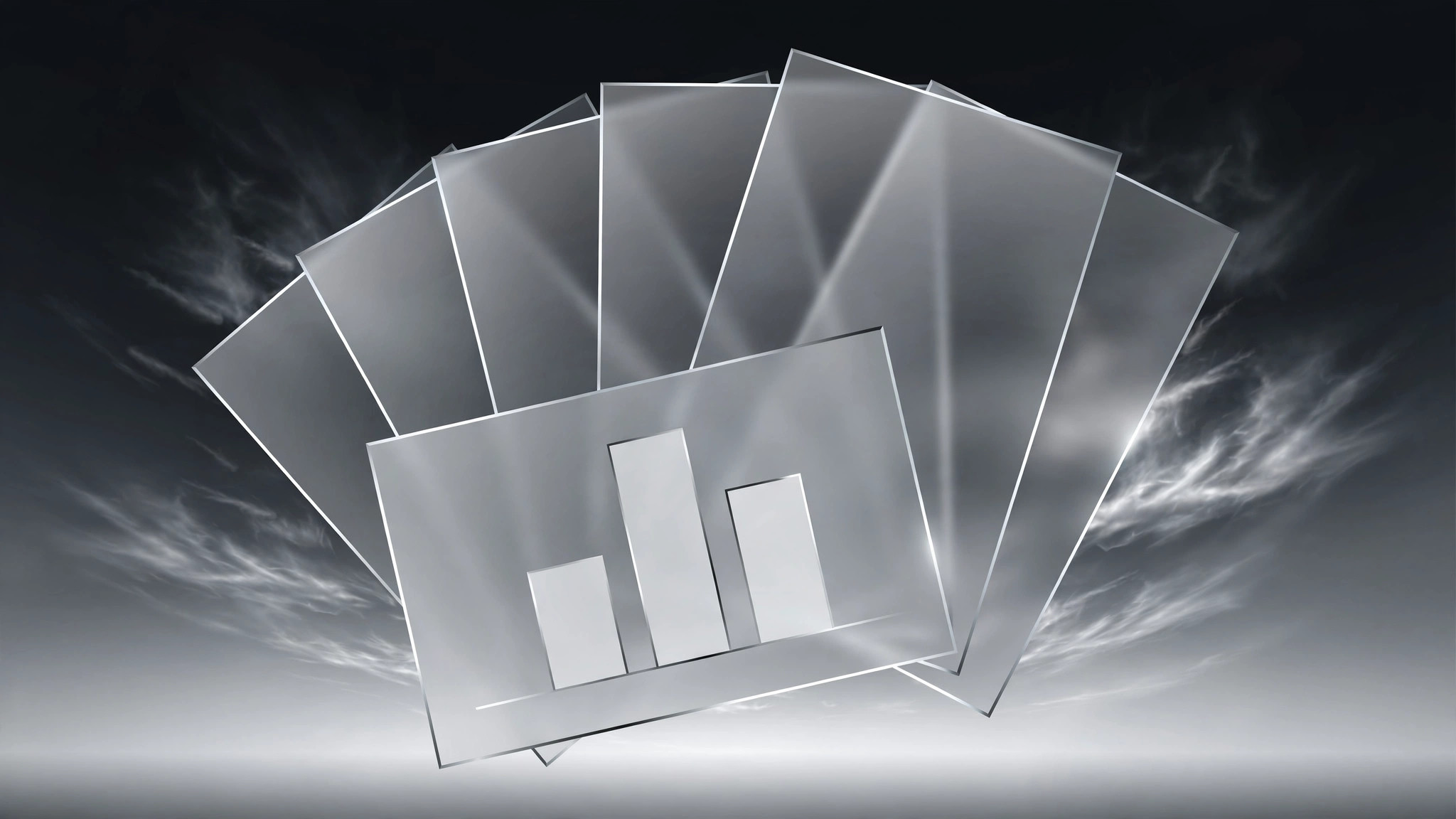
Transforme votre IA en designer de présentations sky-glass — elle crée une présentation dans un langage visuel de verre dépoli sur ciel ouvert, avec des panneaux translucides, des dégradés aérés et un système de slides qui garde chaque slide lisible.
Installez-la en 3 étapes
Sans inscription. Sans outils en ligne de commande. Choisissez votre IA, copiez une ligne, collez-la.
Vous préférez le faire vous-même ? Achetez la compétence ($4.99), téléchargez le ZIP depuis votre confirmation d'achat, décompressez-le dans le répertoire indiqué ci-dessus, redémarrez votre session IA — même résultat. Vous l'avez déjà achetée ? Votre assistant IA peut la télécharger pour vous.
Contenu du pack
Un fichier SKILL.md (le guide pratique) + un modèle de départ. Aperçu :
Sky Glass Deck
When to use
- A pitch, keynote, or investor deck needs to feel open and modern instead of dense and corporate
- A product launch deck should carry a light, airy look — sky gradients, frosted-glass panels, generous white space
- A conference talk needs slides that look designed but stay readable from the back row
- A brand or agency deck needs a reusable slide system, not ten one-off slides that drift apart
- An existing deck's content is good but its slides are cluttered, and it needs a clean visual reset
Workflow
- Set the deck's story (input: topic + audience → output: outline)
Write the story before touching any visuals: one message per slide, in order, each expressible as a single sentence. A ten-slide deck is ten sentences; if a slide needs two sentences, it is two slides. End with the one action you want the audience to take, and work backwards so every slide earns its place on the way there. - Define the glass system (input: outline → output: style rules)
Fix the visual language in writing before building slides: a sky gradient range (light horizon to soft blue above, used as background, never behind body text), frosted-glass panel rules (translucent fill, thin light border, soft shadow, always over a calm area of the gradient), one typeface family with three sizes (headline, body, caption), and one accent color for the single most important element per slide. Write the rules down — the deck's consistency comes from the rules, not from memory. - Build the master slides (input: style rules → output: masters)
Build four masters and use nothing else: title (full sky gradient, headline on a glass panel), content (calm gradient, one glass panel holding the slide's content), section divider (wide sky, one line of text), and closing (sky, glass panel, single call to action). Every slide in the deck must be one of these four; a fifth layout is a sign the story has a slide that doesn't fit. - Lay out each slide (input: masters + content → output: slides)
For each slide, put the one message in the headline (a claim, not a label — "Teams save three hours a week" not "Time savings"), put the supporting evidence inside the glass panel, and leave at least a third of the slide as open sky. Charts and diagrams sit inside panels on a solid light backing, never directly on the gradient — translucent fills make data hard to read. One slide, one message, one panel; if the content overflows the panel, cut content, not padding. - Check legibility and export (input: slides → output: final deck)
Check every slide at full-screen distance: headline readable in three seconds, body text readable without squinting, and text contrast holding up where the panel crosses a darker part of the gradient (move the panel or calm the gradient — never thin the text). Then export: a presentation file for presenting, and a PDF for sharing. Flip through the PDF once end to end — if any slide makes you pause to decode it, fix that slide before it ships.
Aperçu du modèle
Sky Glass Deck — Template
One deck = one story, four masters, one glass system. Story first, visuals second.
Story outline (one sentence per slide, in order)
- {slide message}
- {slide message}
- {slide message}
- {slide message}
- {slide message}
Audience action at the end: {the one thing the audience should do}
Glass system (style rules)
- Sky gradient: {light horizon → soft blue above; 2–3 stops, one family}
- Glass panel: {translucent fill} / {thin light border} / {soft shadow} / {always over a calm area of the gradient}
- Typeface: {one family} — headline {size}, body {size}, caption {size}
Le pack de compétence lui-même (SKILL.md + modèle) est rédigé en anglais.
Vous aimerez aussi
 Présentations
Pitch Deck
10 diapositives, une seule histoire — les investisseurs restent jusqu'à la dernière page
 Présentations
Work Report
Hebdomadaire, mensuel, bilans — la conclusion d'abord, compris en 3 minutes
 Présentations
Academic Argument Deck
Une présentation qui argumente — et qui répond aux objections.