Primary Doodle Deck
Des doodles dessinés à la main, trois encres primaires, des règles strictes.
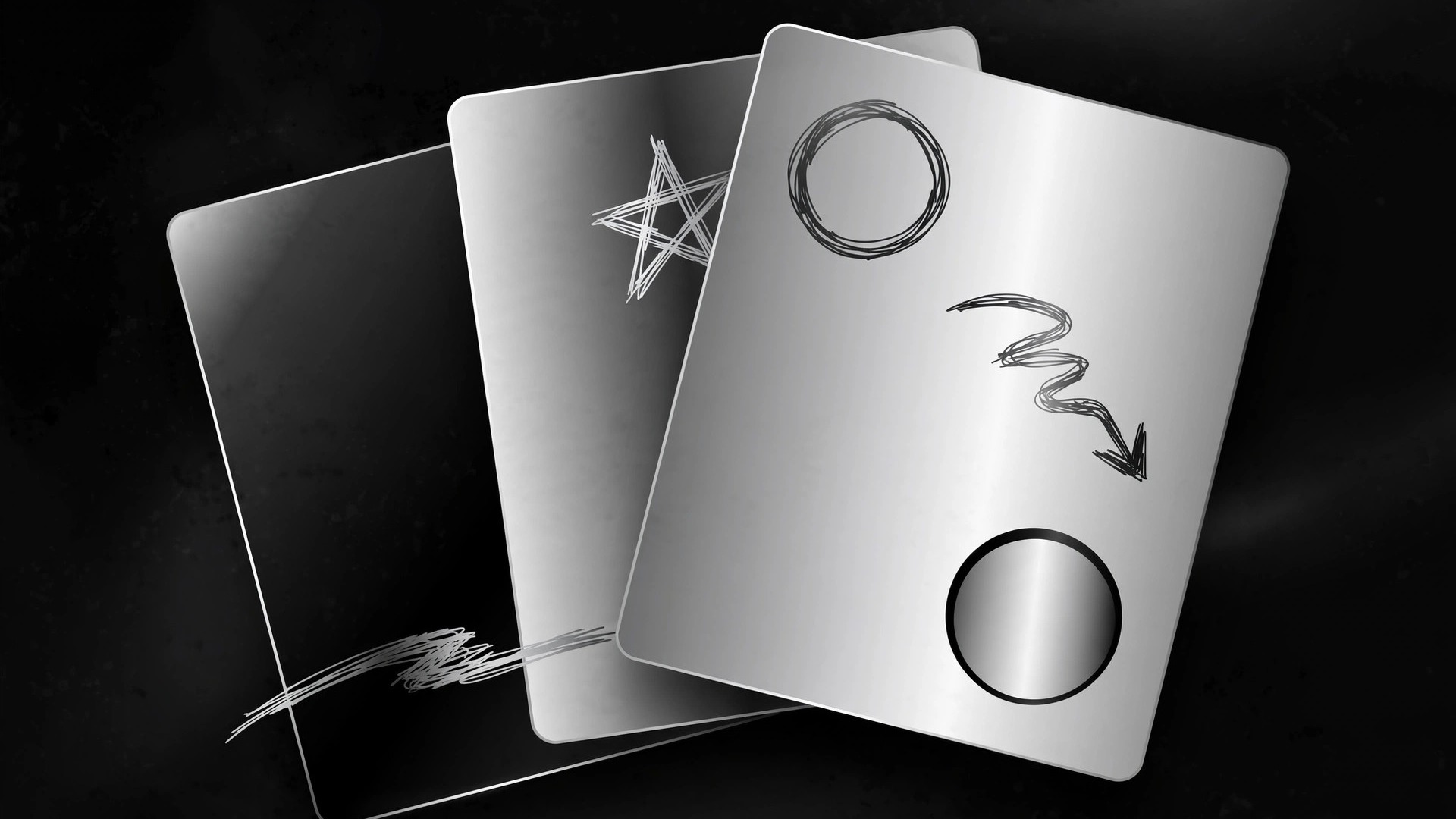
Transforme votre IA en designer de présentations dans un style doodle primaire — des marques griffonnées à la main en encre rouge, jaune et bleue sur fond noir et blanc, pour qu'une présentation semble ludique et humaine sans glisser dans le chaos.
Installez-la en 3 étapes
Sans inscription. Sans outils en ligne de commande. Choisissez votre IA, copiez une ligne, collez-la.
Vous préférez le faire vous-même ? Achetez la compétence ($4.99), téléchargez le ZIP depuis votre confirmation d'achat, décompressez-le dans le répertoire indiqué ci-dessus, redémarrez votre session IA — même résultat. Vous l'avez déjà achetée ? Votre assistant IA peut la télécharger pour vous.
Contenu du pack
Un fichier SKILL.md (le guide pratique) + un modèle de départ. Aperçu :
Primary Doodle Deck
When to use
- Your deck needs to feel human and approachable — a classroom, community, or creative pitch, not a boardroom
- You want a hand-drawn look with a strict color discipline: three primary inks, nothing else
- Your slides are idea-heavy and need doodles that explain, not decorate
- You need a deck a non-designer can extend: the doodle rules must be simple enough to follow by hand
- You want playful without childish — the doodles carry structure, the type stays grown-up
Workflow
- Set the palette and paper (input: deck topic → output: style rules)
Fix the palette before any slide exists: black ink for all lines and type, and three primary inks — red, yellow, blue — used as fills and highlights only. No gradients, no pastels, no fourth accent. Background is white or warm off-white, like paper. Type is one grotesque or humanist sans for headlines and body, set in black, with a single handwritten-style font reserved for annotations and labels — never for body text. Write these rules down as the deck's one-page style sheet; every slide gets checked against it. - Build the doodle vocabulary (input: deck content → output: doodle library)
Draw a small library of reusable doodles, each in black line with at most one primary fill: arrows, circles, stars, underlines, checkmarks, speech bubbles, stick figures, boxes, magnifiers, lightbulbs. Each doodle has one job — the arrow points, the circle highlights, the star marks the key number. Keep strokes rough but controlled: consistent line weight, no photorealism, no clip-art. If a doodle needs more than two strokes to be understood, it's too complicated — simplify it. The library stays small (12–18 marks) so the deck looks like one hand drew it. - Structure the slides (input: outline → output: slide plan)
Plan the deck slide by slide: title, agenda, one idea per content slide, one proof slide per claim, close. Every content slide gets exactly one job and one hero element — one diagram, one number, one comparison. Doodles sit in fixed roles: underline the headline's key word, circle the number that matters, arrow from cause to effect. A slide with more than three doodles is a slide with no hierarchy — remove doodles until the eye lands on the message first and the marks second. - Lay out each slide (input: slide plan + doodle library → output: finished slides)
Layout rules: generous white space, left-aligned headlines, one primary color per slide as the dominant accent (never all three competing at once), black for everything structural. Doodles are drawn at the same scale and stroke weight across slides so the deck feels hand-made by one person. Numbers get the red or blue treatment — a hand-drawn circle around the figure, a doodle star beside it. Keep body text to five lines or fewer per slide; anything longer belongs in speaker notes, not on the wall. - Check the deck (input: finished slides → output: verified deck)
Flip through the deck fast: does every slide read in three seconds? Is the primary color balanced across the deck (no five red slides in a row)? Are doodles explaining or just decorating — remove any mark whose deletion changes nothing. Check legibility: handwritten annotations at least 24pt equivalent, never the smallest text on the slide. Finally, hand the style sheet to someone who hasn't seen the deck and ask them to make one new slide — if they can't, the rules are too vague to survive contact with a real team.
Aperçu du modèle
Primary Doodle Deck — Style Sheet + Slide Template
Hand-drawn doodles, three primary inks, strict rules. Fill in the style sheet first, then plan slides.
Style sheet (one page — the deck's law)
- Palette: black ink (all lines + type) + red + yellow + blue (fills + highlights only)
- Forbidden: gradients, pastels, a fourth accent color
- Background: {white / warm off-white} — like paper
- Headline + body type: {one grotesque or humanist sans}, black
- Annotation type: {one handwritten-style font} — annotations and labels ONLY, never body text
- Rule: one dominant primary color per slide; three primaries on one slide almost never
Le pack de compétence lui-même (SKILL.md + modèle) est rédigé en anglais.
Vous aimerez aussi
 Présentations
Pitch Deck
10 diapositives, une seule histoire — les investisseurs restent jusqu'à la dernière page
 Présentations
Work Report
Hebdomadaire, mensuel, bilans — la conclusion d'abord, compris en 3 minutes
 Présentations
Academic Argument Deck
Une présentation qui argumente — et qui répond aux objections.