Lilac Glass Pitch Deck
Un pitch calme et haut de gamme en verre dépoli lilas.
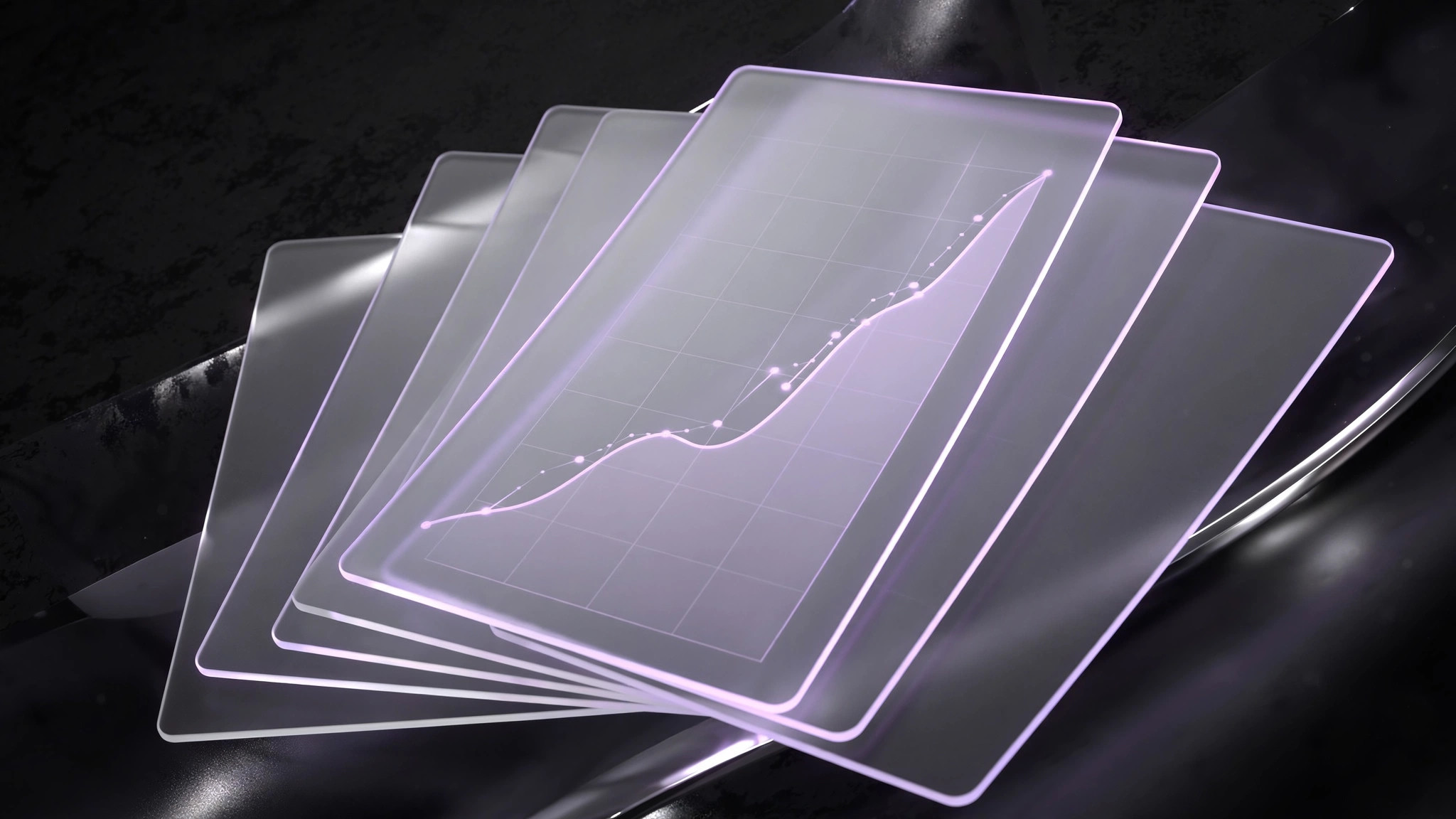
Transformez votre IA en conceptrice de pitch decks dans un système visuel en verre dépoli lilas — panneaux translucides, douce lumière lilas et une idée par slide, pour qu'un deck investisseur semble calme, haut de gamme et facile à parcourir.
Installez-la en 3 étapes
Sans inscription. Sans outils en ligne de commande. Choisissez votre IA, copiez une ligne, collez-la.
Vous préférez le faire vous-même ? Achetez la compétence ($4.99), téléchargez le ZIP depuis votre confirmation d'achat, décompressez-le dans le répertoire indiqué ci-dessus, redémarrez votre session IA — même résultat. Vous l'avez déjà achetée ? Votre assistant IA peut la télécharger pour vous.
Contenu du pack
Un fichier SKILL.md (le guide pratique) + un modèle de départ. Aperçu :
Lilac Glass Pitch Deck
When to use
- You are pitching investors, partners, or a grant panel and your brand is soft, calm, or wellness-adjacent rather than aggressive
- Your existing deck is a wall of bullet points and you want one idea per slide with room to breathe
- You need a deck that still reads when forwarded as a PDF with no presenter in the room
- You are pitching a consumer, health, education, or design-led product where the deck itself is part of the brand impression
- You want a distinctive visual system — lilac light on frosted glass — instead of another navy-and-white template
Workflow
- Lock the glass system (input: your brand colors → output: a 5-rule style sheet)
Define the system before any slide content: background — deep charcoal-plum; panels — frosted translucent white at low opacity with a soft blur edge; accent — lilac (light purple) used only for the one most important element per slide; type — white headlines, soft-grey body; one rule — no slide may use more than two panel layers, so depth never becomes clutter. Write the five rules down and hand them to the AI with every slide request. If a slide breaks a rule, the rule wins — change the slide, not the rule. - Write the 10-slide spine (input: your pitch story → output: one-line spine)
Draft the deck as ten one-line slides before designing anything: 1) Hook — the one sentence that makes a stranger care. 2) Problem — a specific pain, with a real person in it. 3) Solution — your product in one sentence, no features list. 4) How it works — three steps, no more. 5) Market — who pays, how many, how you count them. 6) Proof — the strongest evidence you actually have. 7) Business model — how money flows, in plain numbers. 8) Competition — the honest map, with your edge named. 9) Team — why these people, in one line each. 10) Ask — exactly what you want, and what it buys. If a slide's one-liner needs a comma-splice to fit, the idea is two ideas — split it or cut it. - Build slides one idea at a time (input: spine + style sheet → output: slide drafts)
Build each slide from its one-liner: one headline that states the idea (not a label — "Parents pay $40/month for tutoring that doesn't work" beats "Problem"), one frosted panel carrying the single supporting fact, figure, or image, and nothing else. The lilac accent highlights exactly one element per slide: the number, the quote, or the ask. A slide with two lilac highlights has no highlight — pick one. Speaker notes carry everything that didn't fit on the slide. - Stress-test the forwarded PDF (input: slide drafts → output: revised deck)
Export the deck as a PDF and read it cold, as if you had never seen it: every slide must make sense with no presenter. Where a slide depends on narration, move the missing fact onto the slide (into the panel, in small type) or cut the slide. Check the glass system at thumbnail size: panels must stay readable, lilac must stay the accent rather than the background, and no text may sit on a busy part of a background image. Fix contrast first — frosted glass is unforgiving of grey-on-grey type. - Rehearse against the ask (input: revised deck → output: timed talk + final deck)
Time a read-through: 10 slides in 10 minutes or less, with the ask slide getting the last full minute. If you run over, cut content from the middle slides, never from the ask. The final slide must state the ask as a number and a use: "Raising $500k — 60% product, 25% hiring, 15% runway" — not "let's talk." End the deck on the ask slide; nothing after it except a contact line.
Aperçu du modèle
Lilac Glass Pitch Deck — Template
10 slides, one idea each. Lilac highlights exactly one element per slide.
Style sheet (5 rules — do not break)
- Background: deep charcoal-plum, flat or softly blurred — never a busy photo
- Panels: frosted translucent white, low opacity, soft blur edge — max 2 panel layers per slide
- Accent: lilac, used on exactly ONE element per slide (the number, the quote, or the ask)
- Type: white headlines, soft-grey body — no grey-on-grey, no text over busy images
- One idea per slide: headline states the idea; the panel carries the single supporting fact
The 10-slide spine (one line each, before designing)
Le pack de compétence lui-même (SKILL.md + modèle) est rédigé en anglais.
Vous aimerez aussi
 Présentations
Pitch Deck
10 diapositives, une seule histoire — les investisseurs restent jusqu'à la dernière page
 Présentations
Work Report
Hebdomadaire, mensuel, bilans — la conclusion d'abord, compris en 3 minutes
 Présentations
Academic Argument Deck
Une présentation qui argumente — et qui répond aux objections.