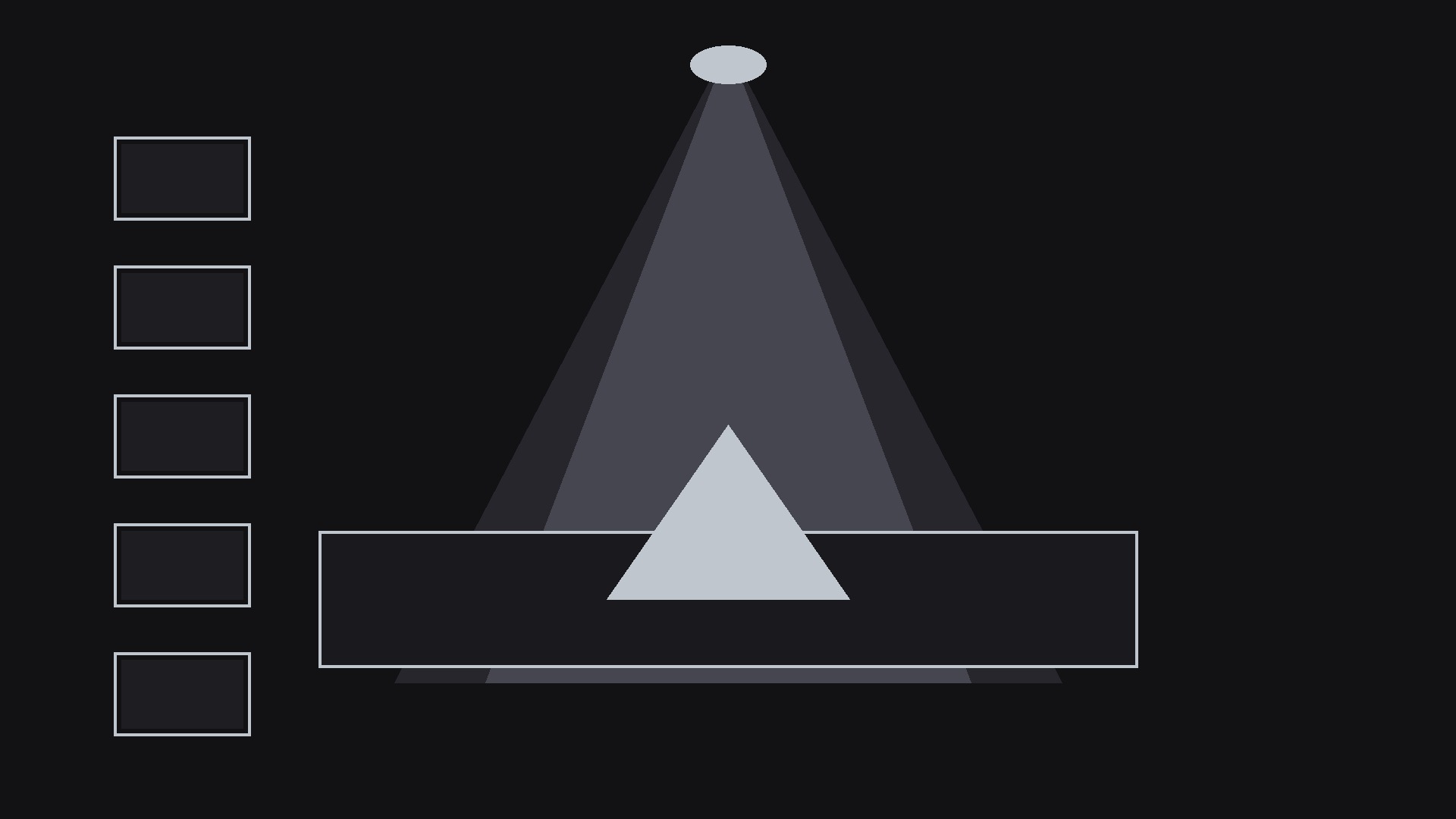
Handoff and Explain
Un élément passe le relais au suivant — l'explication le suit.
Transforme votre IA en directrice d'animation graphique pour les séquences de passage de relais — prend un élément, le transmet visiblement d'un côté, d'un présentateur ou d'une étape au suivant, et fait tomber une étiquette d'explication au moment exact où le passage s'achève. Pour les vidéos explicatives où le public doit suivre qui tient le témoin et pourquoi cela compte.
Installez-la en 3 étapes
Sans inscription. Sans outils en ligne de commande. Choisissez votre IA, copiez une ligne, collez-la.
Vous préférez le faire vous-même ? Achetez la compétence ($4.99), téléchargez le ZIP depuis votre confirmation d'achat, décompressez-le dans le répertoire indiqué ci-dessus, redémarrez votre session IA — même résultat. Vous l'avez déjà achetée ? Votre assistant IA peut la télécharger pour vous.
Contenu du pack
Un fichier SKILL.md (le guide pratique) + un modèle de départ. Aperçu :
Handoff and Explain
When to use
- An explainer video moves a topic from one presenter, character, or section to the next and the audience keeps losing track of who is talking about what
- A product walkthrough passes a single object — a file, a request, a parcel — through a chain of steps, and each step needs one line of explanation as the object arrives
- A team or process video shows work passing between departments (sales → onboarding → support) and each handoff needs its cause and its consequence stated
- A tutorial introduces a concept in one frame and then hands it to a worked example in the next, with a label that names the connection between the two
- A relay-style ad or announcement has two speakers finishing each other's point, and the cut between them needs to feel like a pass rather than a jump
Workflow
- Name the baton and the chain (input: topic or process → output: handoff chain)
Before any animation, write the chain as a sentence: "A passes X to B, who passes it to C." The baton (X) must be one concrete thing the viewer can watch — a document, a parcel, a glowing token, a highlighted word — never an abstraction like "responsibility". Limit the chain to three handoffs (four holders) in a single sequence; longer chains blur together and the audience stops tracking who holds what. For each holder, write one line: what they do with the baton and what changes because of it. If you cannot describe the baton as a visible object, the sequence is not ready to animate — pick a visual stand-in (an icon, a card, a coloured dot) and give it a name the narration uses consistently. - Stage the two sides (input: handoff chain → output: staged frame)
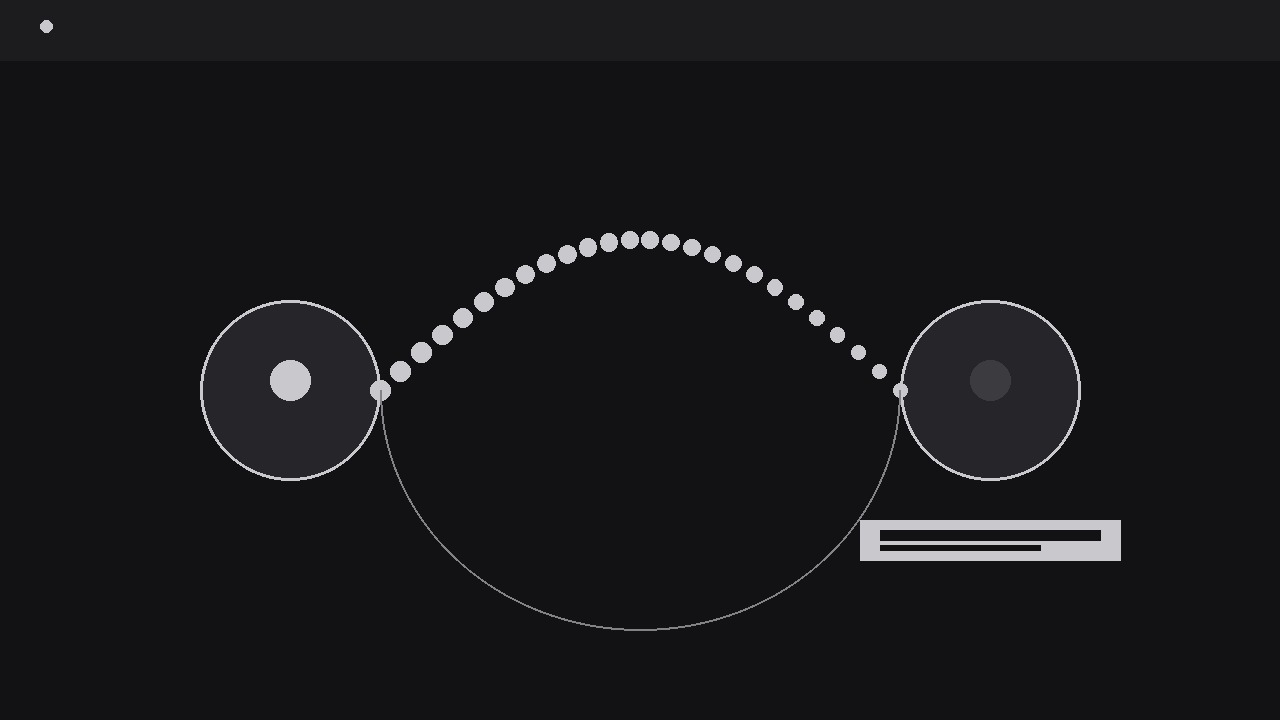
Lay out the frame so the handoff direction is unmistakable. Two holders sit left and right (or top and bottom for vertical video), with a clear gap between them that the baton will travel across. The incoming holder is visually quiet — slightly dimmed, smaller, or desaturated — while the current holder is at full brightness; this contrast tells the viewer where to look before anything moves. Place the explanation label's home position now, in the empty space near the receiving holder, and keep it empty until its moment: a label slot that is visibly reserved reads as intentional, while a label that appears in a random gap reads as clutter. If the handoff is between speakers, keep both faces or avatars in frame during the pass rather than cutting between close-ups — the pass is the story, and a cut hides it. - Animate the pass (input: staged frame → output: baton travelling)
The baton travels across the gap over 400–600 ms with an ease-in-out curve — accelerating out of the giver's hands, decelerating into the receiver's. A straight linear move reads as robotic; a pure ease-out reads as a throw that the receiver never catches. Give the baton a subtle arc (8–12% of the gap height) rather than a flat line: the arc reads as a deliberate pass, and it keeps the baton clear of any centre-screen text. Add a short motion trail or a fading ghost of the baton's path at low opacity so the eye can follow the trajectory on a first viewing. The giver's hand, highlight, or spotlight dims as the baton leaves, and the receiver brightens as it approaches — the light moves with the baton, so attention moves with it. Never let the baton pause mid-gap unless the narration explicitly marks a moment of uncertainty; a mid-air freeze reads as a buffering glitch. - Land the explanation (input: baton arrived → output: baton + explanation label)
The explanation lands in the same instant the baton arrives — within 50 ms, never before. A label that appears early spoils the pass; one that lags feels disconnected from it. The label is one line, eight words or fewer, in plain language: what the receiver does now ("Support checks the ticket") or why the handoff matters ("This is where delays happen"). It slides or fades in from the receiver's side over 200 ms, then holds still while the narration covers it — at least 1.5 seconds for a short label, longer if the viewer must read a number. The baton settles with a small, visible catch: a 40–60 ms scale pulse to 105% and back, or a soft ring that expands once from the catch point. The catch is the punctuation mark of the whole pattern; without it, the pass feels unfinished even if every element is in place. - Chain the next handoff (input: one completed handoff → output: full sequence)
After the explanation hold, the next handoff begins with a 200–300 ms beat of stillness — a breath that separates one pass from the next. The previous holder dims, the current holder becomes the giver, and the baton travels onward with the same timing and arc as before. Consistency is what makes a chain readable: same duration, same arc height, same label style at every step. If the chain has three handoffs, the third one earns a slightly longer hold (2–2.5 s) because it carries the sequence's conclusion. Between handoffs, never move the camera, reframe, or introduce a new background element — any second motion competes with the baton, which must remain the only moving thing in the frame. When the chain ends, hold the final holder with baton and label for a full two seconds before cutting away. - Verify the chain reads without sound (input: finished sequence → output: verified export)
Watch the sequence muted at 1x speed and ask three questions: can I point to the baton at every moment, do I know who holds it now, and does each label make sense where it appears? If any answer is no, the fix is almost always timing (labels early/late, holds too short) rather than more graphics. Check the sequence at phone scale: the baton must stay visible against the background at 25% of full size, and labels must remain legible. If two handoffs happen within two seconds of each other, slow the sequence down — a chain that is too fast reads as a single blur, and the audience retains neither the order nor the explanations. Export with a clean end hold; do not loop a handoff chain, because looping makes the baton teleport back to the first holder and breaks the story's direction.
Aperçu du modèle
Handoff and Explain — Starter Template
One baton, one chain, one line of explanation per pass.
The chain (one sentence)
{A passes X to B, who passes it to C.}
The baton
What it is (visible object): {e.g. glowing ticket card, parcel, file icon} Name used in narration: {one consistent name}
Holders (max 4 — 3 handoffs)
Staging
- Layout: {left → right / top → bottom}
- Incoming holder state: {dimmed / desaturated / smaller}
- Label slot: {reserved space near receiver — describe where}
- Camera: {locked, no movement during the chain}
Animation settings
- Pass duration: {400–600 ms}, easing: {ease-in-out}, arc height: {8–12% of gap}
Le pack de compétence lui-même (SKILL.md + modèle) est rédigé en anglais.