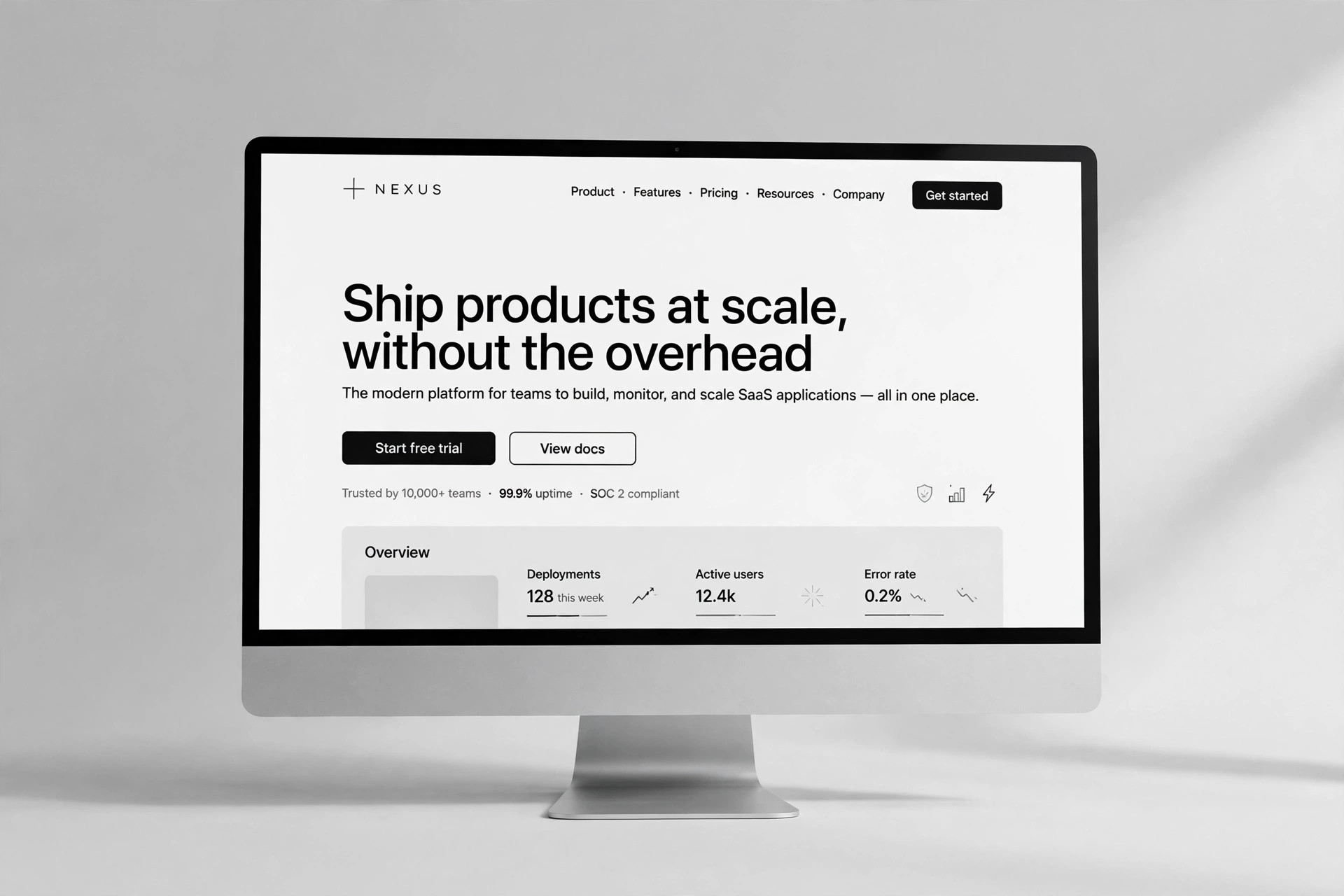
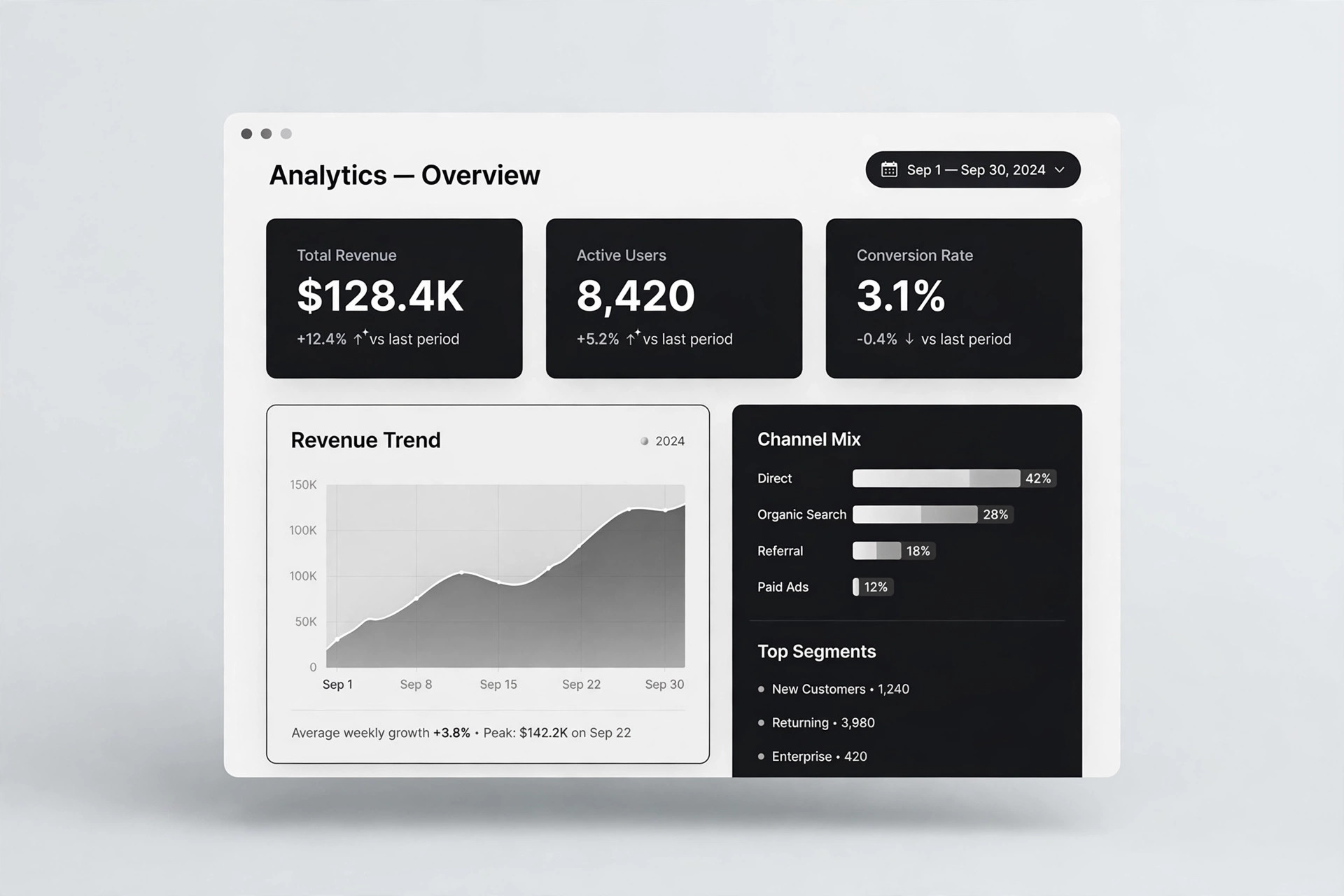
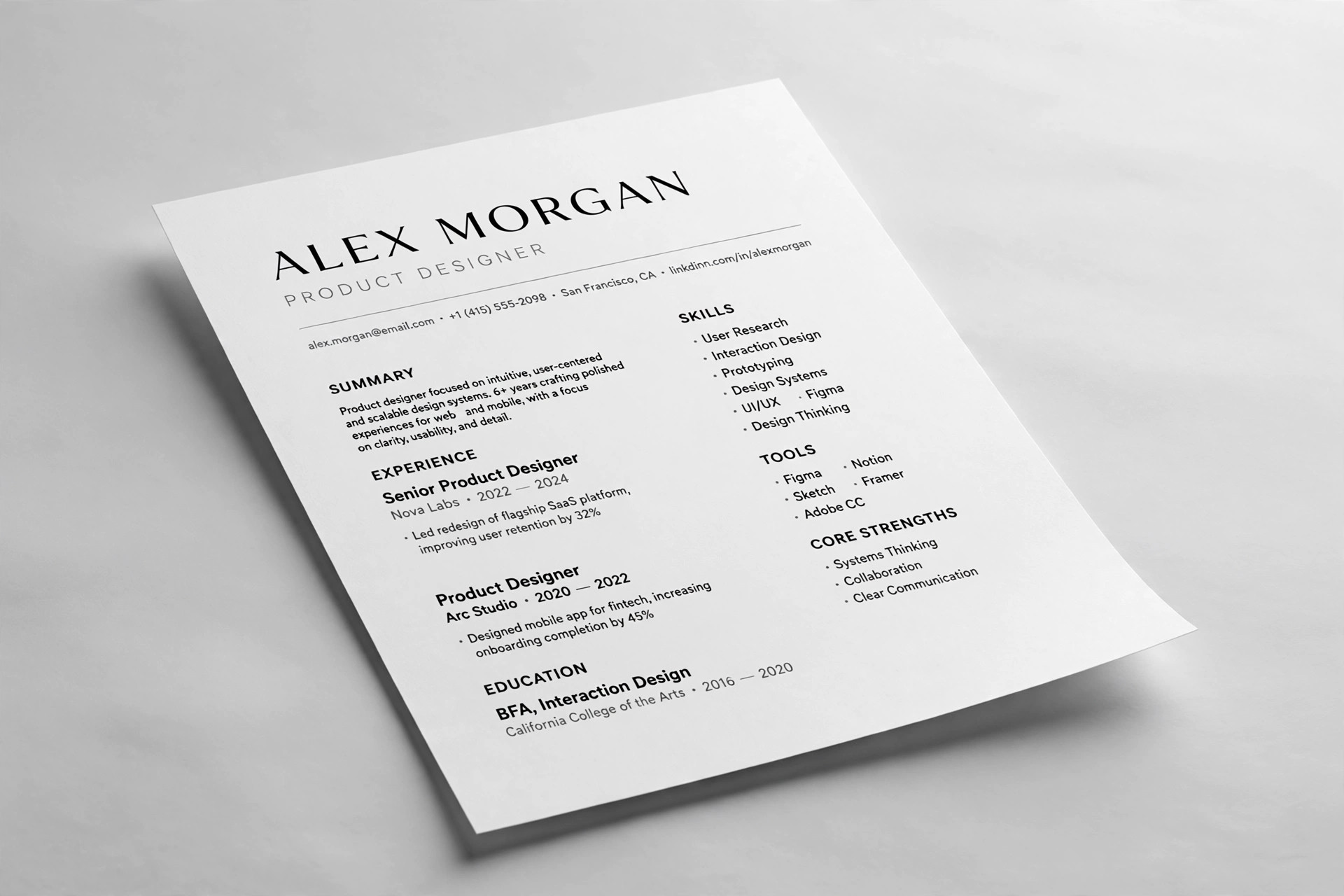
Bento Designer Portfolio
Chaque tuile mérite sa taille.
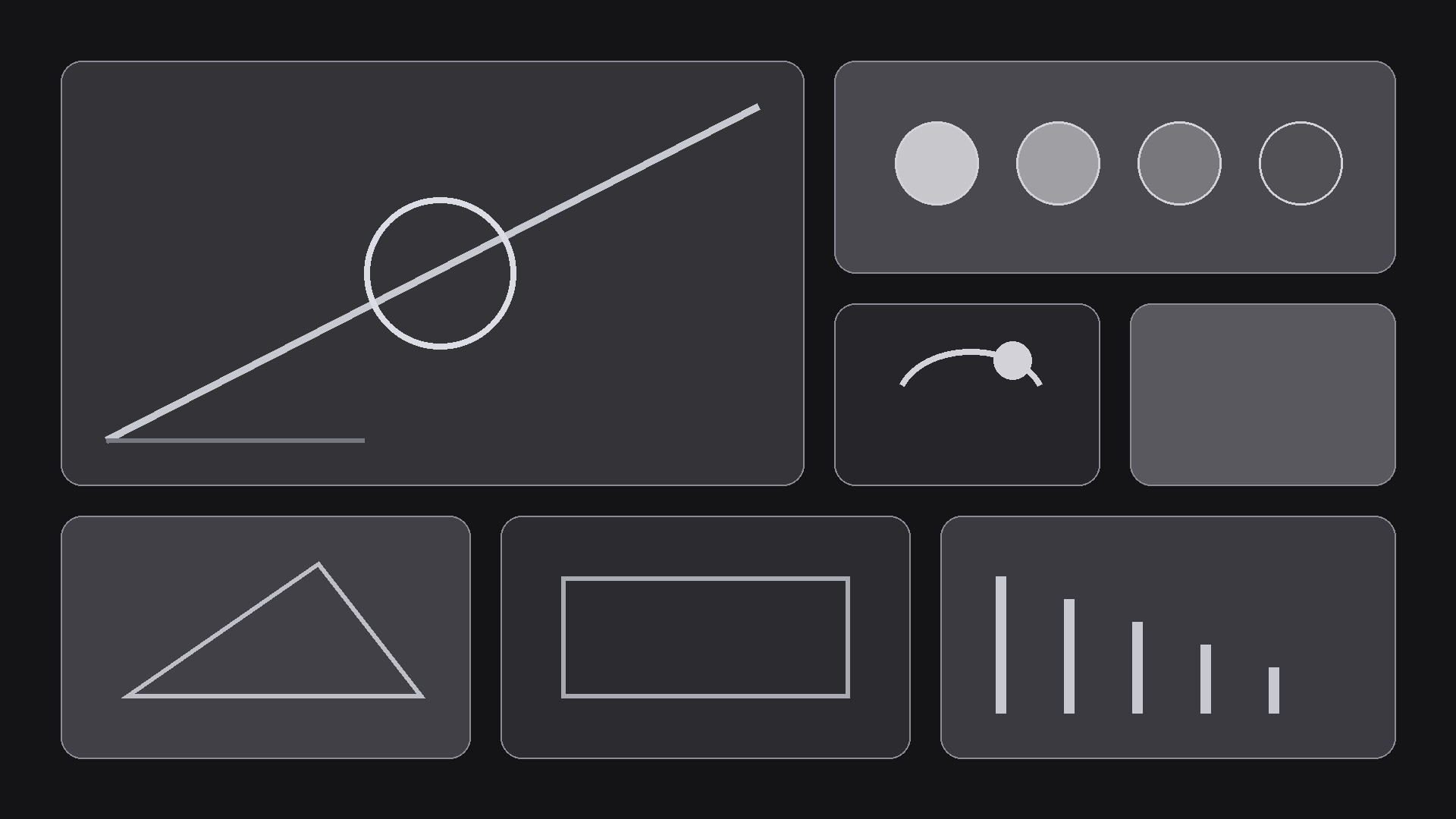
Un guide de portfolio designer utilisant une grille bento : les travaux classés pour que les meilleures pièces obtiennent les grandes tuiles, chaque projet étayé par une courte étude de cas couvrant le problème, la décision clé et le résultat honnête.
Installez-la en 3 étapes
Sans inscription. Sans outils en ligne de commande. Choisissez votre IA, copiez une ligne, collez-la.
Vous préférez le faire vous-même ? Achetez la compétence ($4.99), téléchargez le ZIP depuis votre confirmation d'achat, décompressez-le dans le répertoire indiqué ci-dessus, redémarrez votre session IA — même résultat. Vous l'avez déjà achetée ? Votre assistant IA peut la télécharger pour vous.
Contenu du pack
Un fichier SKILL.md (le guide pratique) + un modèle de départ. Aperçu :
Bento Designer Portfolio
When to use
- You're a product, visual, or brand designer whose portfolio is a uniform grid of thumbnails that all look equally important — so none of them are
- Recruiters skim your site and can't tell which project is your best work
- Your case studies are either missing ("here's the final screen") or 3,000-word essays nobody finishes
- You have 4–10 strong pieces across different formats — screens, brand systems, motion, print — and a single-column list flattens them
- You want a portfolio that reads well on a phone, where most first views happen
Workflow
- Rank the work (input: all pieces → output: ranked shortlist)
Pick 4–10 pieces. Rank by (a) quality of outcome, (b) relevance to the jobs you want. The top 1–2 pieces get the big tiles; the rest fill medium and small tiles. Cut anything you'd be embarrassed to walk through in an interview — a weak piece in a small tile still weakens the page. - Assign tile sizes (input: ranked shortlist → output: bento layout map)
Big tiles (2×2) for the 1–2 hero projects, medium tiles (2×1 or 1×2) for strong supporting work, small tiles (1×1) for logos, textures, experiments, a portrait, or a "currently" note. Every tile has a purpose — no filler tiles added just to make the grid symmetrical. - Write the case-study layer (input: layout map → output: per-project write-ups)
Each project gets: the problem (2 sentences), your role and constraints (2 sentences), the key decision — what you chose and why (2–3 sentences), the outcome — what changed, honestly stated. Final visuals come last in the write-up; thinking first, pixels second. - Design the grid (input: write-ups → output: design spec)
Consistent tile radius and gap, one background tone, clear type hierarchy: project name + one-line outcome per tile. Hover or tap reveals the case-study link. Images cropped to tile, never stretched. Mobile: the grid reflows to one column in rank order, hero first. - Publish and maintain (input: design spec → output: live portfolio)
Link every tile to either its case study or the work itself — no dead tiles. Test on a phone. Maintenance rule: remove or replace the weakest tile every time you add a stronger piece, so the grid never drifts back into a dumping ground.
Output spec
- Bento layout map: tile sizes + which piece fills each, with a reason per size
- 4–10 pieces, each with problem / role / key decision / outcome write-up
- Design spec: grid rules, tile radius/gap, type hierarchy, mobile reflow order
- Every tile linked to its case study or the work itself; no dead tiles
- Maintenance rule: weakest tile out when a stronger piece arrives
Good vs. bad examples
Aperçu du modèle
Bento Designer Portfolio — Grid Planner Template
Fill this in before designing. One portfolio = one planner.
Designer: {name}
Discipline: {product / visual / brand / …} Jobs I want next: {…} Contact: {…}
Ranked shortlist (4–10)
Rank by (a) quality of outcome, (b) relevance to the jobs you want. Top 1–2 get the big tiles.
Bento layout map
Filler tiles added for symmetry: none — [ ] confirmed
Case-study layer (one per project)
#### Project: {name}
- Problem (2 sentences): {…}
- My role + constraints (2 sentences): {…}
- Key decision — what I chose and why (2–3 sentences): {…}
- Outcome (honestly stated): {…}
Le pack de compétence lui-même (SKILL.md + modèle) est rédigé en anglais.