Single Testimonial Card
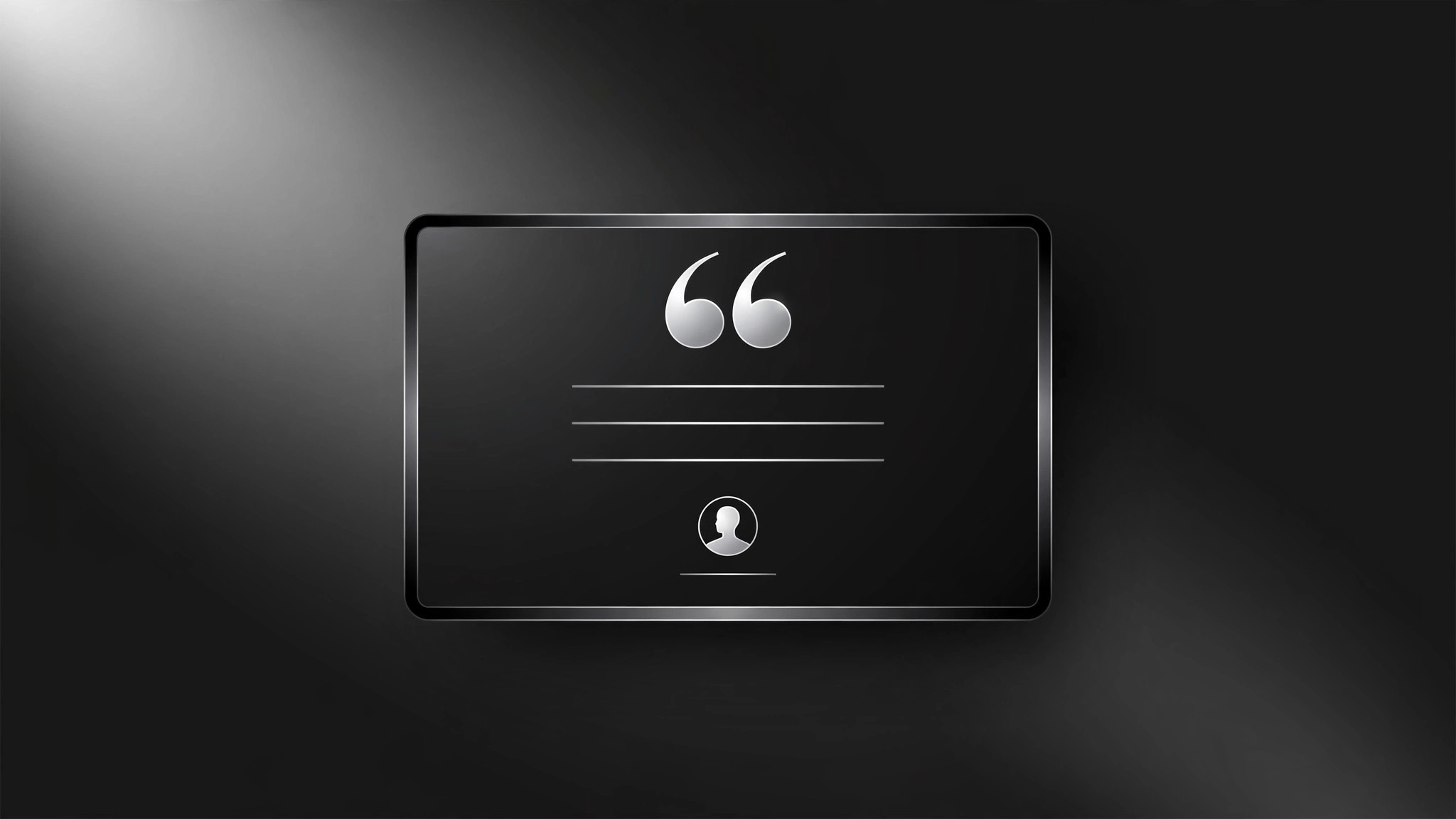
Una cita, una persona, una tarjeta que se gana la confianza.
Convierte tu IA en diseñadora de tarjetas de testimonio: toma una cita real de un cliente y la convierte en una tarjeta única, limpia y creíble, con la cita recortada, atribución honesta y un diseño que encaja en cualquier página de aterrizaje.
Instálala en 3 pasos
Sin registro. Sin herramientas CLI. Elige tu IA, copia una línea y pégala.
¿Prefieres hacerlo tú mismo? Compra la habilidad ($4.99), descarga el ZIP desde la confirmación de compra, descomprímelo en el directorio que se muestra arriba y reinicia tu sesión de IA — el mismo resultado. ¿Ya la compraste? Tu asistente de IA puede descargarla por ti.
Qué incluye
Un SKILL.md (la guía paso a paso) + una plantilla inicial. Una vista previa:
Single Testimonial Card
When to use
- A landing page needs proof, but a full testimonial wall would crowd the page
- You have one strong customer quote and want to give it a proper home instead of burying it in a paragraph
- A sales page needs a trust moment right before the pricing or signup section
- A case-study quote deserves to be pulled out and reused on the homepage
- A pitch deck or one-pager needs a single credible voice on the cover or closing slide
Workflow
- Pick the one story (input: raw testimonials → output: chosen quote + speaker)
Start with the actual words a real customer said — a review, an email, a survey answer, an interview transcript. Choose the quote that names a specific outcome in the customer's own words ("We cut onboarding from two weeks to three days") over one that only praises ("Great product!"). Confirm you have permission to use the person's name, role, and company, and confirm the quote is accurate. One card = one voice = one story; if two quotes are both good, you have two cards, not one crowded card. - Cut the quote to one idea (input: long quote → output: 1–2 sentence quote)
Trim the chosen quote to a single idea in one or two sentences, roughly 20–35 words. Cut throat-clearing ("So basically, what happened was…"), repetition, and anything that needs three more sentences to make sense. Keep the customer's own wording wherever possible; if you must tighten a sentence, mark the edit with an ellipsis (…) and never change the meaning. A card that says one thing clearly beats a card that says three things vaguely. - Lay out the card (input: quote + attribution → output: card layout)
Give the card a clear hierarchy: the quote is the largest text on the card, the attribution sits below it, and everything else stays quiet. Set the quote in a readable size (roughly 1.25–1.5× body text), leave generous padding on all sides, and keep line length short enough that the eye never works hard — about 8–12 words per line. One card, one quote, one speaker: if a logo, badge, or decorative element is fighting the quote for attention, remove it. - Style the attribution (input: speaker details → output: attribution block)
The attribution is what makes the card believable: full name, role, and company (or whatever the speaker agreed to share), plus a small photo or initials avatar if you have one. Put the name in a slightly stronger weight than the role line, and keep the role line factual ("Head of Operations, Northwind Logistics") rather than promotional. If the speaker asked to stay anonymous, say so plainly ("Name withheld on request") instead of inventing a vague title. - Place and test (input: finished card → output: placed, checked card)
Put the card where doubt is highest — beside the signup button, under the pricing table, or at the end of a feature section. Check it at phone width: the quote must stay readable, the attribution must not wrap awkwardly, and the card must not push the call to action off-screen. Read the finished card out loud once; if any word sounds like marketing copy the customer never said, rewrite it in their voice.
Vista previa de la plantilla
Single Testimonial Card — Template
One card = one quote = one speaker. Fill in from the real testimonial, with permission.
Source quote
> {paste the full original quote here — review, email, survey answer, or interview transcript}
Permission confirmed: [ ] Quote wording | [ ] Name | [ ] Role | [ ] Company | [ ] Photo
Cut quote (1–2 sentences, 20–35 words, one idea)
> {trimmed quote — customer's own words, edits marked with …}
Attribution
Name: {full name, as permitted} Role: {role} Company: {company} Photo / avatar: {photo file, or initials: __} If anonymous: {write "Name withheld on request" — do not invent a vague title}
Layout
El paquete de la habilidad (SKILL.md + plantilla) está escrito en inglés.