Proactive Morning Brief Designer
A morning brief worth opening — and nothing it should not have sent
Design the daily brief a proactive agent sends before you ask: which sources it may read, how it ranks urgency, what it drafts but never sends, and the one-tap corrections that teach it your priorities.
Instálala en 3 pasos
Sin registro. Sin herramientas CLI. Elige tu IA, copia una línea y pégala.
¿Prefieres hacerlo tú mismo? Compra la habilidad ($4.99), descarga el ZIP desde la confirmación de compra, descomprímelo en el directorio que se muestra arriba y reinicia tu sesión de IA — el mismo resultado. ¿Ya la compraste? Tu asistente de IA puede descargarla por ti.
Qué incluye
Un SKILL.md (la guía paso a paso) + una plantilla inicial. Una vista previa:
Proactive Morning Brief Designer
The idea in one paragraph
A proactive agent is only as good as its brief. If it surfaces everything, you stop reading it; if it surfaces too little, you stop trusting it. This skill designs the brief before the agent writes one: which sources it may read, how it decides what counts as urgent, what it is allowed to draft but never send, and how a single correction ("not this, ever") retrains its ranking.
What it is built on
Proactive agents (Anthropic's Claude Duet, OpenAI's Dots, Meta's Muse) check connected apps on a schedule — Duet sends a morning brief, then re-checks every few hours — and ask approval before sending, paying, signing, or deleting. That schedule is the design constraint: anything urgent can sit until the next check-in, and anything the agent misunderstands becomes a draft you did not ask for. The brief must therefore say what it checked, when it last checked, and how sure it is — not just what it found.
Workflow
- Source charter (input: your apps -> output: a read list with reasons).
List every connected app and mark it Brief / Draft-only / Never read.
Email and calendar are usually Brief; payments are Draft-only (invoice
reminders drafted, never sent without approval); personal messages are
Never read unless you explicitly opt them in. Write one sentence per
source explaining why — the charter is what you show a colleague who asks
"what does it see?" - Urgency ladder (input: last week's real items -> output: 4 rungs).
Sort 20 real items from last week into: Act today / Act this week /
FYI / Never surface. The ladder must have a test for each rung, e.g.
"Act today = money moves, a person is waiting on me, or a deadline is
inside 24 hours." Anything that fails all tests is FYI at most. If a rung
holds more than 7 items on a normal day, your tests are too loose. - Brief template (input: ladder -> output: the fixed shape).
Every brief has exactly five blocks, in order: (a) Needs you today (max
5 items, each with source + why it is urgent), (b) Drafts waiting for
approval (never auto-sent), (c) Done while you were away, (d) Missed
check-ins (apps it could not reach, with times), (e) One-line confidence
note ("checked 06:00–06:40; Slack unreachable"). No block may grow
without shrinking another. - Correction loop (input: your edits -> output: a rule, not a grudge).
Every time you demote, dismiss, or rewrite a brief item, turn it into a
written rule: "invoices under $50 are FYI, not Act today" or "never
surface social mentions before 9am." Keep the rule list under 20; prune
monthly. A brief that cannot explain its own ranking is a brief you
will stop reading. - Approval gates (input: action types -> output: send/pay/sign/delete matrix).
For each action type, write: auto-allowed / draft-for-approval / never.
Default: sending to anyone outside your team, any payment, any signature,
and any deletion are draft-for-approval or never. Test the matrix with
three uncomfortable examples before you switch the agent on.
Vista previa de la plantilla
Morning Brief Worksheet
Fill this in with your AI, one section at a time. The output is your brief spec.
1. Source charter
2. Urgency ladder
- Act today (test):
- Act this week (test):
- FYI (test):
- Never surface (test):
3. Brief shape (5 blocks, max items per block)
- Needs you today (max 5):
- Drafts waiting:
- Done while away:
- Missed check-ins:
- Confidence note:
4. Correction rules (keep under 20)
1. 2. 3.
5. Approval matrix
El paquete de la habilidad (SKILL.md + plantilla) está escrito en inglés.
También te puede interesar
 Flujos de trabajo
Grok Bot Routine Rescue
Find which scheduled routine is eating your weekly pool — and kill it
 Flujos de trabajo
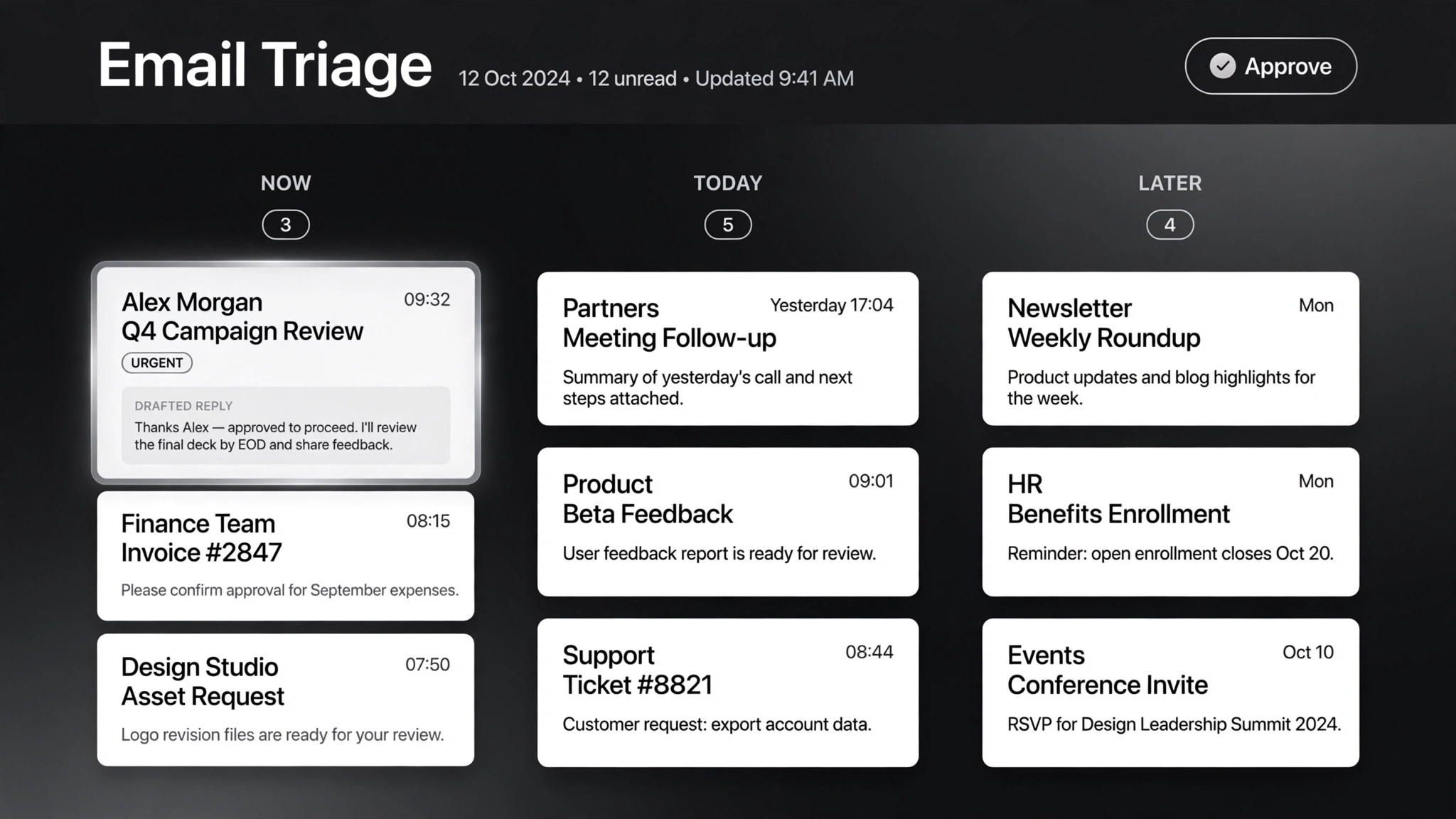
Inbox Triage
Tu bandeja, leída de antemano: urgentes marcados, respuestas redactadas, tú solo pulsas enviar
 Flujos de trabajo
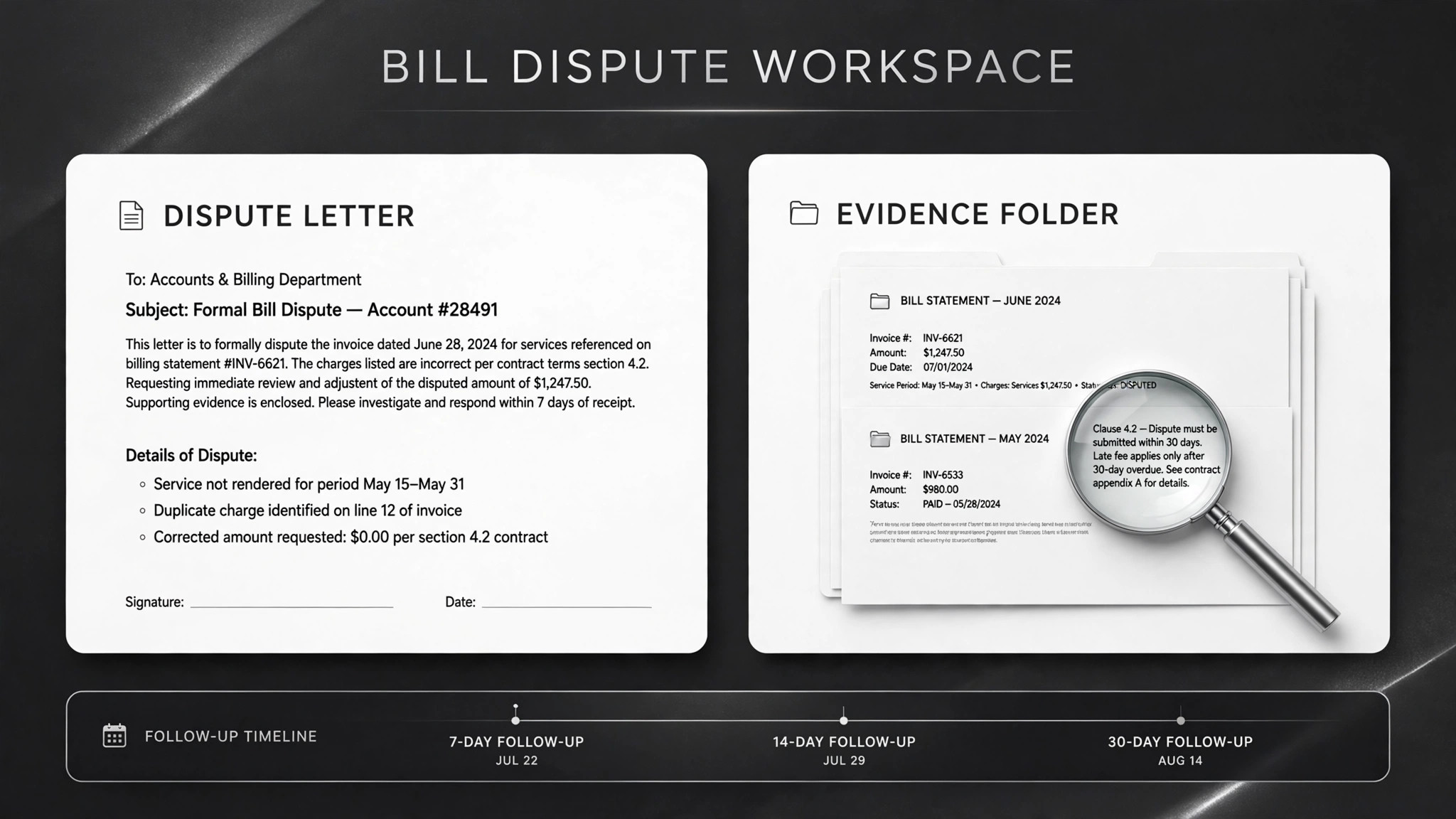
Bill Fighter
Impugna cobros indebidos y reclamos denegados con cartas respaldadas por pruebas