Prismatic Fashion Deck
Luz a través del tejido: una historia de color por look.
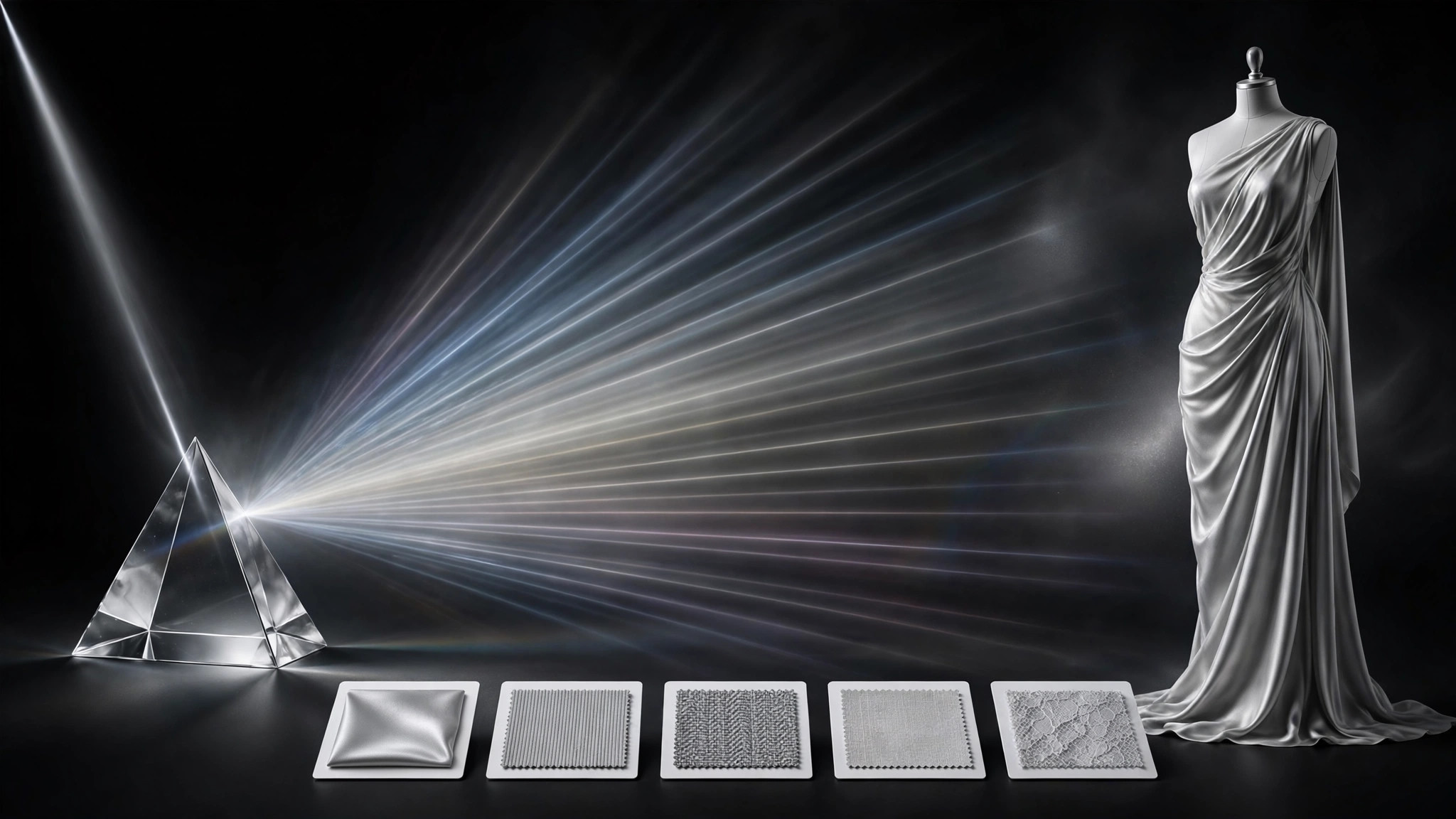
Convierte tu IA en diseñadora de presentaciones de moda con un sistema visual prismático: color de espectro refractado, motivos de luz a través del cristal y una historia de color por look, para que la presentación de una colección se lea como luz moviéndose a través del tejido.
Instálala en 3 pasos
Sin registro. Sin herramientas CLI. Elige tu IA, copia una línea y pégala.
¿Prefieres hacerlo tú mismo? Compra la habilidad ($4.99), descarga el ZIP desde la confirmación de compra, descomprímelo en el directorio que se muestra arriba y reinicia tu sesión de IA — el mismo resultado. ¿Ya la compraste? Tu asistente de IA puede descargarla por ti.
Qué incluye
Un SKILL.md (la guía paso a paso) + una plantilla inicial. Una vista previa:
Prismatic Fashion Deck
When to use
- You're presenting a fashion collection, lookbook, or seasonal line and the deck needs to feel like fashion, not a sales report
- Your collection has distinct color stories that need one visual system to hold them together
- You're pitching to buyers, press, or investors who judge the deck's taste before they read a word
- You need runway order, fabric detail, and pricing to live in the same deck without clashing
- You want a deck that photographs well when someone snaps a slide in a showroom
Workflow
- Define the color stories (input: collection → output: color stories + prismatic system)
Group the collection into color stories — 3–5 looks per story, each story named for its mood and anchored by 2–4 real fabric colors taken from actual swatches, not invented hex values. Then define the prismatic system that ties stories together: a spectrum band (light refracted into its colors) used as the deck's recurring motif — as a thin divider, a slide edge, a title accent. The spectrum never competes with the clothes: it frames them. One rule governs everything: garment colors are always shown true; the prismatic treatment belongs to dividers, backgrounds, and typography, never recolored onto a garment. - Sequence the looks (input: color stories → output: runway order)
Order the deck the way a show runs: open with the strongest look, alternate statement and quiet looks so the eye rests, group each color story into a continuous run, and close with the look people will photograph. Every look gets a two-slide treatment at most: the look itself (full-bleed garment or model shot) and its detail (fabric close-up, construction note, color names). If a look can't justify its place in the sequence — it repeats a previous look's idea — cut it or move it to an appendix. The deck's job is to make buyers remember twelve looks, not to catalog forty. - Design the slide system (input: sequence → output: slide templates)
Build four templates and use nothing else: the look slide (full-bleed image, look number, name, one line), the detail slide (fabric close-up, material names, construction notes), the story divider (color story name, spectrum band, the story's palette as fabric swatches), and the commercial slide (line sheet: style codes, sizes, prices, minimums). Typography stays quiet — one elegant serif or high-contrast sans for look names, one neutral sans for everything else — so the color does the talking. The spectrum band appears in exactly one place per template, in the same position every time, so it reads as a system rather than decoration. - Write the words (input: templates → output: finished copy)
Copy is sparse and specific: look names that a buyer can say out loud, one line per look about what it is ("bias-cut silk, floor length, moves when she walks"), fabric and care facts buyers actually ask for, and prices with currency. Cut adjectives that describe nothing ("stunning," "beautiful," "gorgeous") and keep the ones that describe something ("matte," "bias-cut," "hand-finished"). Every claim about a fabric — its content, its origin, its care — must be checked against the real spec sheet; a wrong fiber content in a buyer deck is a commercial problem, not a typo. - Check the deck (input: finished deck → output: verified deck)
Flip through at show speed: does each look register in three seconds? Do the color stories read as distinct runs, or does the spectrum motif blur them together? Check every garment image for true color — if the deck's color treatment shifted a fabric's hue, fix it; buyers order the color they see. Verify every price, style code, size run, and minimum against the line sheet. Finally, print one slide or view it on a phone in daylight: if the spectrum band is the first thing you notice instead of the garment, the system is too loud — turn it down.
Vista previa de la plantilla
Prismatic Fashion Deck — Build Template
Refracted-spectrum system, true garment colors, runway order. Fill in color stories first, then sequence.
Color stories (3–5 stories, colors from real swatches)
Story 1: {name} — {mood line}
- Palette (from real swatches): {fabric color 1}, {fabric color 2}, {fabric color 3}
- Looks: {3–5}
Story 2: {name} — {mood line}
- Palette: {}, {}, {}
- Looks: {3–5}
Story 3: {name} — {mood line}
- Palette: {}, {}, {}
- Looks: {3–5}
Prismatic motif: spectrum band in ONE fixed position per template — divider, background edge, or title accent. Never recolored onto a garment.
Runway order
El paquete de la habilidad (SKILL.md + plantilla) está escrito en inglés.
También te puede interesar
 Presentaciones
Pitch Deck
10 diapositivas que cuentan una sola historia: los inversores se quedan hasta la última página
 Presentaciones
Work Report
Semanales, mensuales, evaluaciones: primero la conclusión, entendido en 3 minutos
 Presentaciones
Academic Argument Deck
Una presentación que argumenta, y que responde