Orbital Workshop Deck
Una presentación de taller donde cada sesión orbita alrededor de un reto central.
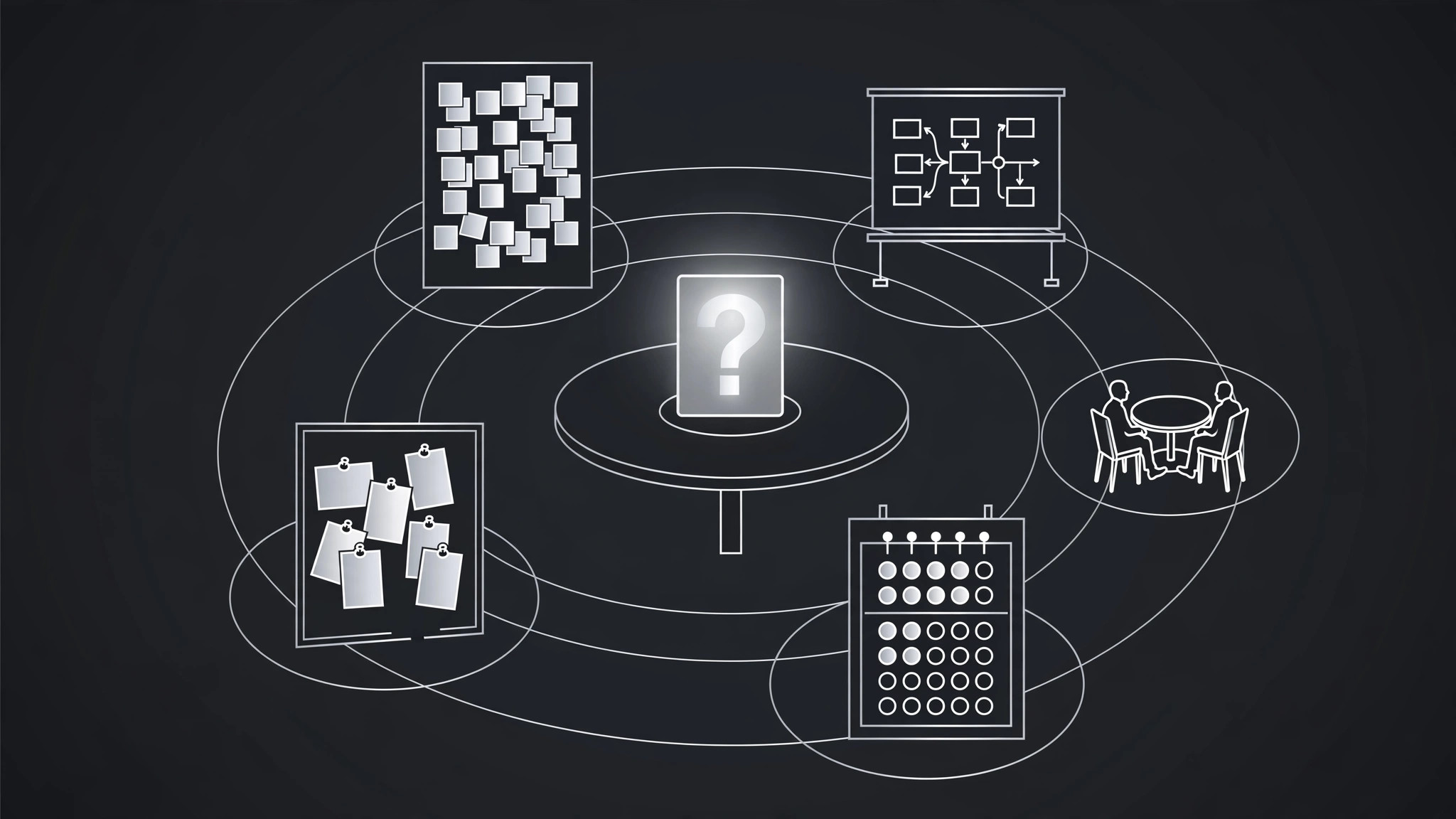
Convierte tu IA en diseñadora de talleres: estructura la sesión como actividades que orbitan alrededor de un único reto central, para que cada ejercicio contribuya visiblemente al resultado en vez de dispersarse.
Instálala en 3 pasos
Sin registro. Sin herramientas CLI. Elige tu IA, copia una línea y pégala.
¿Prefieres hacerlo tú mismo? Compra la habilidad ($4.99), descarga el ZIP desde la confirmación de compra, descomprímelo en el directorio que se muestra arriba y reinicia tu sesión de IA — el mismo resultado. ¿Ya la compraste? Tu asistente de IA puede descargarla por ti.
Qué incluye
Un SKILL.md (la guía paso a paso) + una plantilla inicial. Una vista previa:
Orbital Workshop Deck
When to use
- You're running a workshop and past sessions drifted into disconnected exercises with no clear outcome
- A team offsite needs to solve one real problem, not sit through a generic team-building day
- You're facilitating a training session and participants keep asking "why are we doing this exercise?"
- A planning workshop has to end with decisions, not just sticky notes
- You're designing a half-day or full-day session for a group that has limited patience for theory
Workflow
- Name the central challenge (input: workshop request → output: challenge statement)
Write the one problem the workshop must move forward, as a question the group can answer by the end: "How do we cut customer onboarding from two weeks to three days?" A vague challenge ("improve collaboration") produces vague exercises; a sharp challenge gives every activity a test — does this exercise move the challenge forward? If it doesn't, it doesn't belong in the deck. Get the challenge agreed with whoever commissioned the workshop before designing anything else, because a challenge disputed halfway through sinks the whole day. - Design the orbit (input: challenge statement → output: activity orbit)
Plan three to five activities, each one an orbit around the central challenge: one to frame it (what do we know, what don't we), one or two to generate options, one to decide, and one to commit. Each activity gets a purpose stated in one line that ties it to the challenge ("Generate six onboarding fixes, then rank them"). Order matters: never decide before generating, never commit before deciding. If an activity's purpose line can't mention the challenge, the activity is orbiting something else — cut it or rewrite it. - Time-box each orbit (input: activity orbit → output: timed agenda)
Give every activity a hard time box with a visible countdown, and make the total fit the session with buffer: a half-day workshop holds three activities plus opening and synthesis; a full day holds five. Plan the energy curve deliberately — the hardest thinking goes in the first half, before lunch and fatigue; the deciding and committing go after a break, when the group has something to decide about. State the time box on every deck section divider so the room can see the shape of the day. - Build the deck (input: timed agenda → output: workshop deck)
Build one deck section per activity, in orbit order, with the same repeating shape: a divider slide naming the activity, its purpose, and its time box; the instruction slide (what to do, in what groups, for how long, what "done" looks like); and the capture slide (where the group's output goes). Keep instruction slides brutally concrete — "In pairs, 8 minutes, write one fix per sticky note" beats "Brainstorm improvements." The deck is the facilitator's clock and the group's map: anyone walking in late should be able to open the deck and know exactly where the session is. - Plan the landing (input: workshop deck → output: closing section)
Design the final section before the workshop starts: synthesis (what did we decide, in the group's own words), commitments (who does what by when — named people, dates), and a one-slide retro (what worked, what to change next time). A workshop that ends on a high-energy activity with no landing leaves the group inspired and the challenge unchanged. The landing is the whole point: the deck's last three slides are the deliverable, and everything before them exists to make those three slides true.
Vista previa de la plantilla
Orbital Workshop Deck — Session Template
One challenge, one orbit. Name the challenge before designing any activity.
Central challenge
> {The one problem this workshop must move forward, as a question the group can answer by the end}
Commissioned by: {name} | Challenge agreed: [ ] yes — {date}
Activity orbit (3–5 activities)
Energy curve: {hardest thinking in the first half; deciding + committing after a break} Total time + buffer: {min + min buffer}
Deck structure (repeat per activity)
Divider slide — {Activity name}
Purpose: {one line tied to the challenge} Time box: {min} — visible countdown: [ ]
Instruction slide — {Activity name}
El paquete de la habilidad (SKILL.md + plantilla) está escrito en inglés.
También te puede interesar
 Presentaciones
Pitch Deck
10 diapositivas que cuentan una sola historia: los inversores se quedan hasta la última página
 Presentaciones
Work Report
Semanales, mensuales, evaluaciones: primero la conclusión, entendido en 3 minutos
 Presentaciones
Academic Argument Deck
Una presentación que argumenta, y que responde