Objection-Reversal Launch Film
Responde la duda en pantalla, luego muestra la prueba.
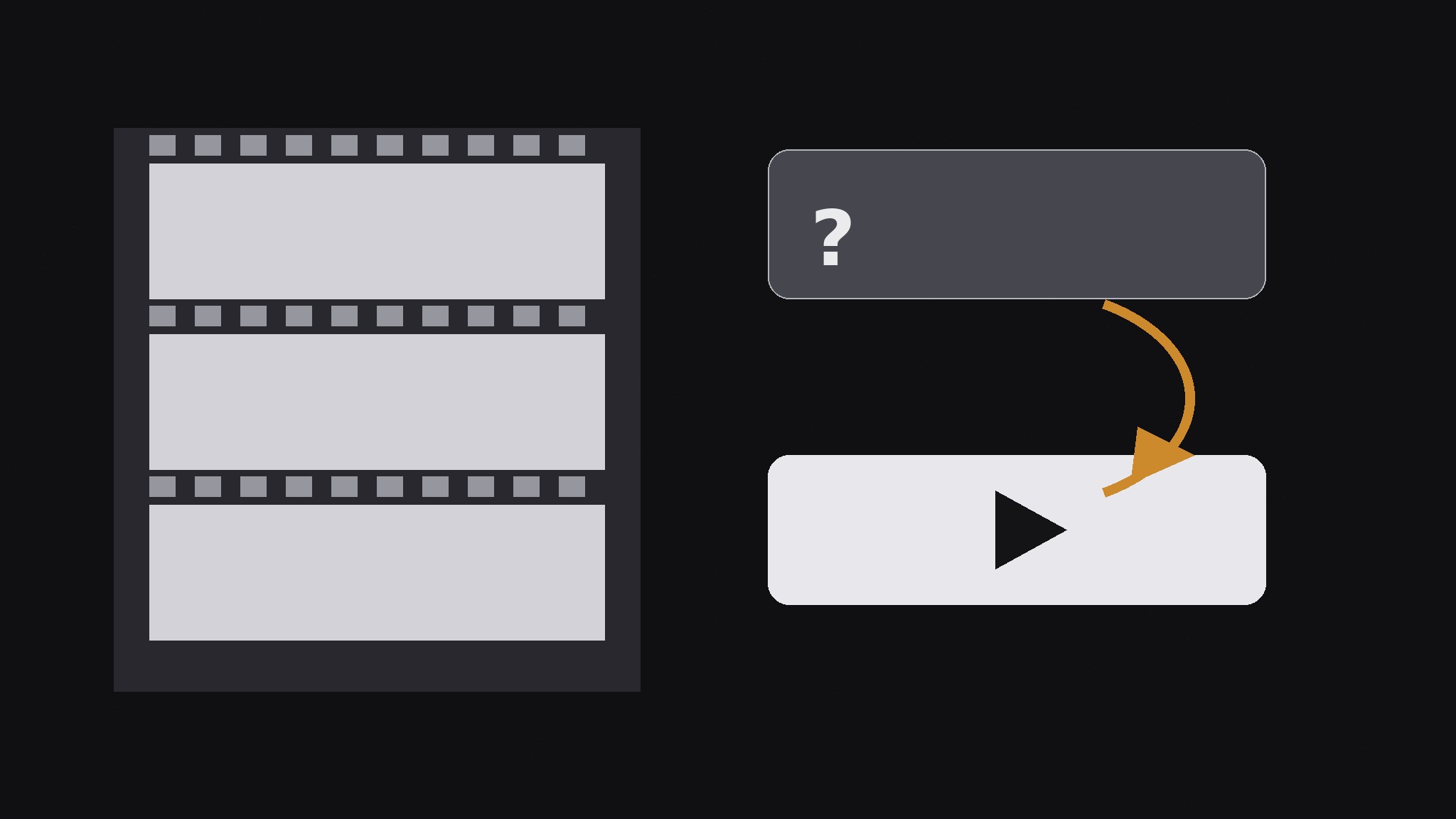
Convierte tu IA en un planificador de vídeos de lanzamiento: estructura una película corta de lanzamiento como una secuencia de objeciones convertidas en pruebas, para que cada escena responda la duda que el espectador ya está pensando en lugar de acumular más afirmaciones.
Instálala en 3 pasos
Sin registro. Sin herramientas CLI. Elige tu IA, copia una línea y pégala.
¿Prefieres hacerlo tú mismo? Compra la habilidad ($4.99), descarga el ZIP desde la confirmación de compra, descomprímelo en el directorio que se muestra arriba y reinicia tu sesión de IA — el mismo resultado. ¿Ya la compraste? Tu asistente de IA puede descargarla por ti.
Qué incluye
Un SKILL.md (la guía paso a paso) + una plantilla inicial. Una vista previa:
Objection-Reversal Launch Film
When to use
- You are launching a product and the obvious launch video — montage of features plus upbeat music — will not survive the viewer's first doubt
- Your sales calls keep hitting the same three or four objections, and you want the launch film to answer them before the demo
- A product announcement video got polite views but no sign-ups, because it never addressed why people hesitate
- You have real proof (a demo, a number, a customer, a guarantee) for each common objection, but no structure for showing it on screen
- Your launch film needs to work muted on a feed (captions, on-screen text) as well as with sound on a landing page
Workflow
- List the real objections (input: sales calls, support threads, reviews → output: ranked objection list)
Write down the objections buyers actually say, in their words: "Too expensive," "We tried something like this and it failed," "Switching will take forever," "What if it doesn't work for our case." Rank them by how often they appear and how fatal they are — the objection that kills deals goes first, not last. Three to five objections is the right count for a 60–120 second film; more than that and each reversal gets no room to land. If you have no record of real objections, gather them first from calls and threads — invented objections produce a film that answers doubts nobody has. - Pair each objection with its reversal (input: objection list → output: objection→proof pairs)
For each objection, find the single strongest reversal you can show, not tell: a screen recording for "does it actually work," a price comparison for "too expensive," a migration timeline for "switching takes forever," a customer in their own words for "it failed for us before." The reversal must be evidence the camera can capture — a claim read aloud by a narrator is not a reversal, it is a claim wearing a costume. If an objection has no showable proof, cut it from the film; an unanswered objection on screen is worse than an unmentioned one. - Script the flip (input: objection→proof pairs → output: scene-by-scene script)
Structure each scene as three beats: voice the objection (on-screen text in the skeptic's words, 3–6 words), pause a beat, then show the reversal. The pause matters — it lets the viewer recognize their own doubt before the film answers it. Order the scenes from the most fatal objection to the least, and end on the reversal that leaves the strongest last image, not on a logo. Keep narration sparse: the film should be fully understandable muted, with captions and on-screen text carrying every beat, because most feed viewers never turn the sound on. - Plan the shots (input: script → output: shot list)
For each scene, specify what the camera actually shows: the screen recording, the customer clip, the product shot, the text card. Prefer real footage of the product doing the thing over stock footage of people nodding at laptops — a launch film's job is proof, and stock says "we had nothing to show." List the assets needed per scene (recording, clip, graphic, caption file) and mark any that do not exist yet as a production task with an owner. A shot list that assumes assets exist is how launch films slip a week. - Cut for the doubt, then the clock (input: shot list + footage → output: finished film)
Assemble the rough cut in script order, then check two things in order: first, does every objection get its reversal before the next scene starts — if a viewer pauses halfway, have they seen at least one complete flip? Second, does the film earn its length — cut any scene whose reversal is weaker than the one before it, and any intro longer than five seconds. End with one call to action on screen for at least three seconds, spoken and captioned, and export a muted-feed version (burned-in captions) plus a landing-page version (clean, with a caption file).
Vista previa de la plantilla
Objection-Reversal Launch Film — Script Template
One film = 60–120 seconds, 3–5 objection scenes. Fill this in before shooting anything.
Film: {product} — {launch / announcement}
Target length: {60–120 sec} | First complete flip lands by: {≤20 sec}
Objection list (ranked, in buyers' own words)
- {most fatal objection}
- {second objection}
- {third objection}
- {fourth objection — optional}
- {fifth objection — optional}
Scenes
Scene 1 — "{objection, 3–6 words on screen}"
Reversal (showable proof): {screen recording / price comparison / migration timeline / customer clip} What the camera shows: {exact shot} Caption / on-screen text: {words}
El paquete de la habilidad (SKILL.md + plantilla) está escrito en inglés.