Electric Studio Deck
Un pitch de estudio de alto voltaje donde cada titular es una afirmación y quien presenta hace el resto
Construye una presentación de pitch de estudio de 10–12 diapositivas: una única línea narrativa, titulares asertivos, notas del orador escritas antes que el diseño y un sistema visual eléctrico y sobrio.
Instálala en 3 pasos
Sin registro. Sin herramientas CLI. Elige tu IA, copia una línea y pégala.
¿Prefieres hacerlo tú mismo? Compra la habilidad ($4.99), descarga el ZIP desde la confirmación de compra, descomprímelo en el directorio que se muestra arriba y reinicia tu sesión de IA — el mismo resultado. ¿Ya la compraste? Tu asistente de IA puede descargarla por ti.
Qué incluye
Un SKILL.md (la guía paso a paso) + una plantilla inicial. Una vista previa:
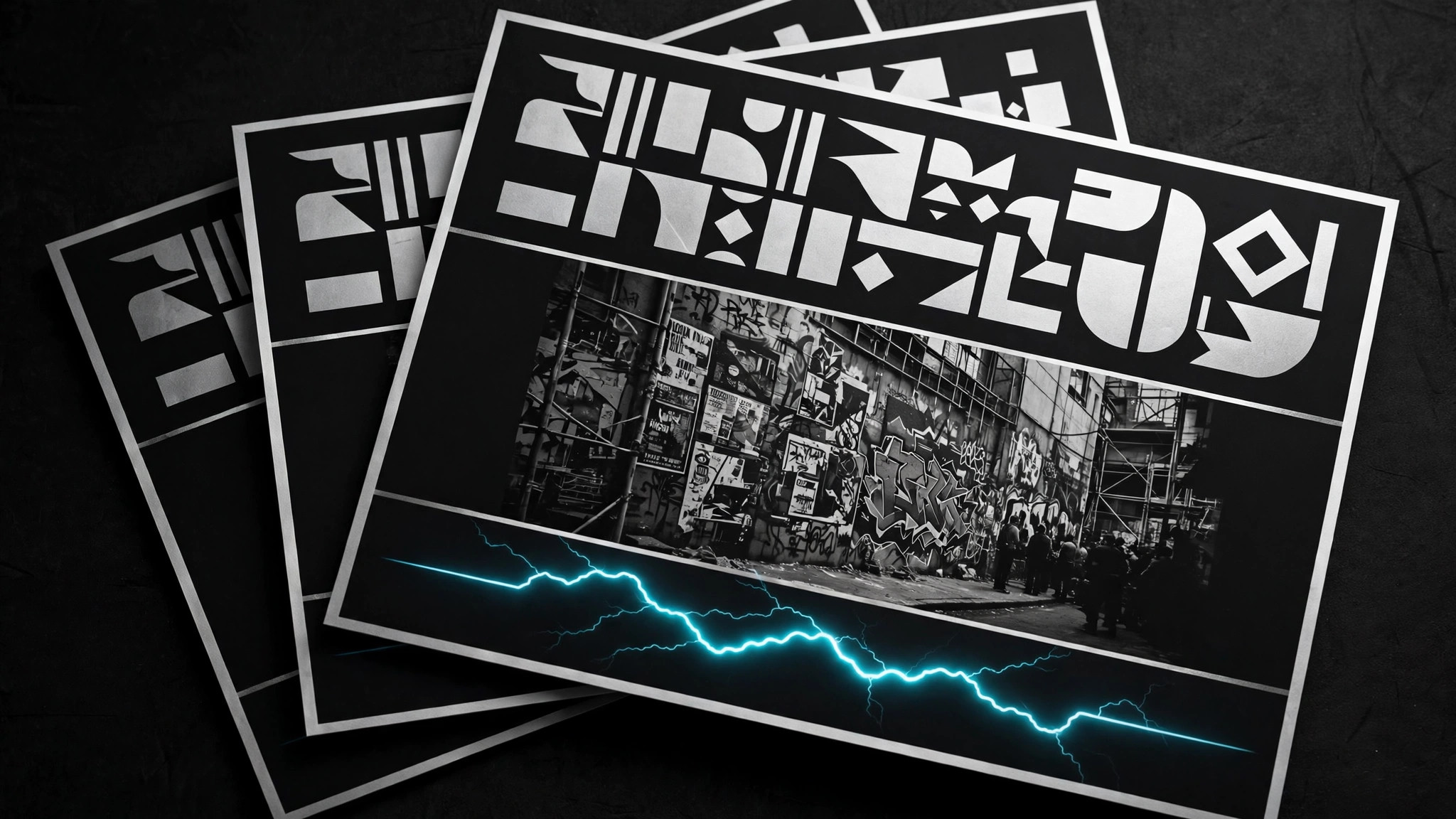
Electric Studio Deck
When to use
- Your studio pitch deck is a portfolio PDF with bullet points — it reads fine and closes nothing
- You're pitching a client, a partner, or a grant panel and have 10–15 minutes to make them feel something
- Your slides are walls of text that the audience reads while you talk, so nobody listens
- You have strong work but no narrative: the deck shows what you made, never why it mattered
- You're presenting live and need slides that support a spoken story instead of replacing it
Workflow
- Define the one story (input: audience + goal → output: one-sentence story spine)
A deck is one argument, not a tour of everything you've done. Before opening any slide tool, write the story spine: "We are {studio} — we {do this} for {these clients} — and this deck proves {one claim}." The claim is the deck's spine: "We make cultural campaigns that young audiences actually finish" is a spine; "Here's our work" is not. Every slide that doesn't advance the spine gets cut, however beautiful it is. - Outline 10–12 slides (input: story spine + best work → output: slide outline)
Structure for a studio pitch: ① hook (one image, one line — the feeling of the work), ② the problem your clients face, ③ your point of view (the opinion that makes you different), ④–⑥ three proof projects (one slide each, problem → move → result), ⑦ how you work (process in three beats), ⑧ the team (faces, not logos), ⑨ what you're proposing for this audience, ⑩ the ask (what happens next, with a date). Ten to twelve slides is the range: fewer feels thin for a studio pitch, more means you're reading slides instead of talking. - Write headlines as assertions (input: slide outline → output: headline + talk track per slide)
Every slide headline must be a sentence that asserts something — "Campaigns that audiences finish" — never a label like "Our Work" or "Results." The headline is the takeaway for someone who reads nothing else; the visual proves it; your spoken words add the part the slide leaves out. Write the speaker notes for each slide (two to four sentences) before designing anything — if you can't say the slide's point in four sentences, the slide isn't ready. - Design the electric system (input: headlines + visuals → output: slide design system)
"Electric" is a system, not a filter: one dark background, one high-voltage accent color used sparingly (headlines, one rule line, one data point per slide — never whole paragraphs), one neutral for body text, and big imagery that bleeds to the edge. Set three rules and keep them: max six words per body block, one idea per slide, and the accent appears at most twice per slide. Motion, if used, is limited to builds that reveal an argument step by step — never decorative transitions that make the audience watch the software instead of the work. - Rehearse and trim (input: designed deck → output: presentable deck)
Present the deck aloud, standing, timed, twice. Cut every slide you apologize for ("this one's a bit text-heavy…"), every sentence you skip while speaking, and every visual the audience doesn't need. Check the practicals: the deck reads from the back of the room (headline size), works on a projector with washed-out color (contrast), and survives without you — the PDF version gets a one-paragraph caption per slide, because a forwarded deck has no speaker. Time the final run: if it runs long, cut slides, never talk faster.
Vista previa de la plantilla
Electric Studio Deck — Template
One argument, not a tour. Fill in the spine first; every slide must advance it.
Story spine
We are {studio} — we {do this} for {these clients} — and this deck proves {one claim}.
Audience: {who's in the room} | Ask: {what should happen next, with a date}
Slide outline (10–12 slides)
(Delete or add one slide max — stay in the 10–12 range.)
Design system
- Background: {dark ground}
- Accent (max 2 uses per slide): {one high-voltage color — headlines, one rule line, or one data point}
- Body text: {one neutral}
- Type: {one display face + one body face}
El paquete de la habilidad (SKILL.md + plantilla) está escrito en inglés.
También te puede interesar
 Presentaciones
Pitch Deck
10 diapositivas que cuentan una sola historia: los inversores se quedan hasta la última página
 Presentaciones
Work Report
Semanales, mensuales, evaluaciones: primero la conclusión, entendido en 3 minutos
 Presentaciones
Academic Argument Deck
Una presentación que argumenta, y que responde