Editorial Ink Landing
Una página, una promesa, una acción: persuasión inspirada en la imprenta con tipografía de tinta sobre papel
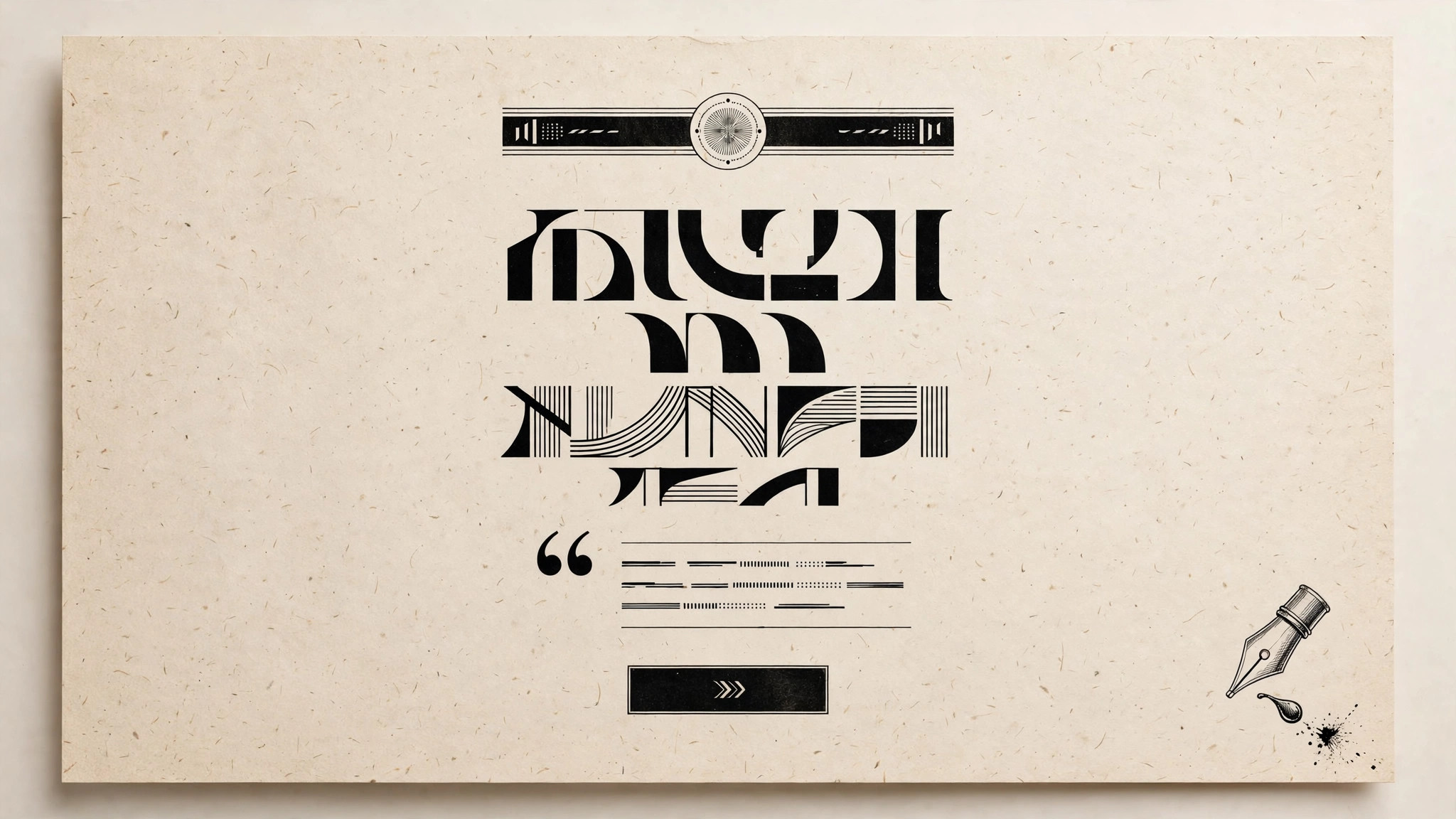
Construye una única landing page editorial: una cabecera, una entradilla, una cita destacada, la evidencia, unas condiciones honestas y una llamada a la acción.
Instálala en 3 pasos
Sin registro. Sin herramientas CLI. Elige tu IA, copia una línea y pégala.
¿Prefieres hacerlo tú mismo? Compra la habilidad ($4.99), descarga el ZIP desde la confirmación de compra, descomprímelo en el directorio que se muestra arriba y reinicia tu sesión de IA — el mismo resultado. ¿Ya la compraste? Tu asistente de IA puede descargarla por ti.
Qué incluye
Un SKILL.md (la guía paso a paso) + una plantilla inicial. Una vista previa:
Editorial Ink Landing
When to use
- Your landing page is a stack of generic sections (hero, features, testimonials, pricing) that could belong to anyone
- You're launching a newsletter, journal, print product, course, or small tool with one thing to sell
- Your product has a point of view — craft, print, slow design, editorial quality — and your page looks like every SaaS template
- You want one page, one promise, one action, and everything else cut
- Your bounce rate is high because visitors can't tell in five seconds what the page is offering
Workflow
- Fix the one promise (input: product + audience → output: one-sentence promise)
A landing page sells one thing. Write the promise as a single sentence a stranger can repeat back: what the reader gets, and what changes for them. "A weekly letter about type design" is a description; "One essay a week that makes you see the letters around you" is a promise. If you can't state it in one sentence, the page isn't ready to be written — go back to the product until you can. - Draft the lede and nut graf (input: promise → output: opening two paragraphs)
Borrow the magazine structure: a lede that hooks with a concrete scene, detail, or tension — then a nut graf that states plainly what this is, who it's for, and what it costs. The lede earns the next ten seconds; the nut graf earns the next minute. Write three ledes and pick the one that is most specific. Specificity is the whole trick: a real detail ("printed on 120gsm uncoated stock") beats a grand claim ("a premium reading experience") every time. - Assemble the page in editorial order (input: lede + product facts → output: full page draft)
Structure the page like a magazine cover story, not a template: masthead (name + one-line description), lede + nut graf, the promise restated as a pull quote, the evidence (what's inside — a table of contents, a sample, a specimen), the terms (price, frequency, what you get, cancellation), and one call to action repeated exactly twice. No feature grid, no logo wall, no three-column benefit icons — the editorial form is the differentiation. - Set the typographic system (input: page draft → output: type and layout spec)
Ink-on-paper means the type is the design. Pick a serif with character for headlines and a highly readable serif or sans for body; set a clear scale (headline, deck, body, caption, footnote) and stick to it. One ink color for text, one paper tone for background, one accent used only for the call to action and key emphasis. Wide margins, a comfortable measure (roughly 60–75 characters per line), and captions under every image. Restraint is the aesthetic — if a decorative element doesn't help reading, it goes. - Proof the page like an editor (input: built page → output: publishable landing page)
Read the page top to bottom as a stranger: does the promise land in five seconds, does every section earn its place, does the price appear before the call to action (never after — hiding the price reads as shame), and does the page work with images off? Check the call to action on a phone, proof every date and price, and cut any sentence that only exists because other landing pages have one.
Vista previa de la plantilla
Editorial Ink Landing — Template
One page. One promise. One action. Fill in order; cut anything that doesn't serve the promise.
Masthead
Name: {product / publication name} One-line description: {what it is, in under 10 words}
The one promise
{One sentence a stranger can repeat back: what the reader gets, and what changes for them}
Lede (hook paragraph)
{Open with a concrete scene, detail, or tension — specific, not grand}
Nut graf (what / who / cost)
{What this is} for {who it's for}. {What it costs, stated plainly.}
Pull quote
> {The promise restated as a single striking line}
Evidence — what's inside
El paquete de la habilidad (SKILL.md + plantilla) está escrito en inglés.