Competitor Researcher
Entérate de lo que hace tu competencia en un solo informe
Vigila los sitios y las ofertas de empleo de tu competencia, compara con la vez anterior y te entrega un resumen de una página con pruebas.
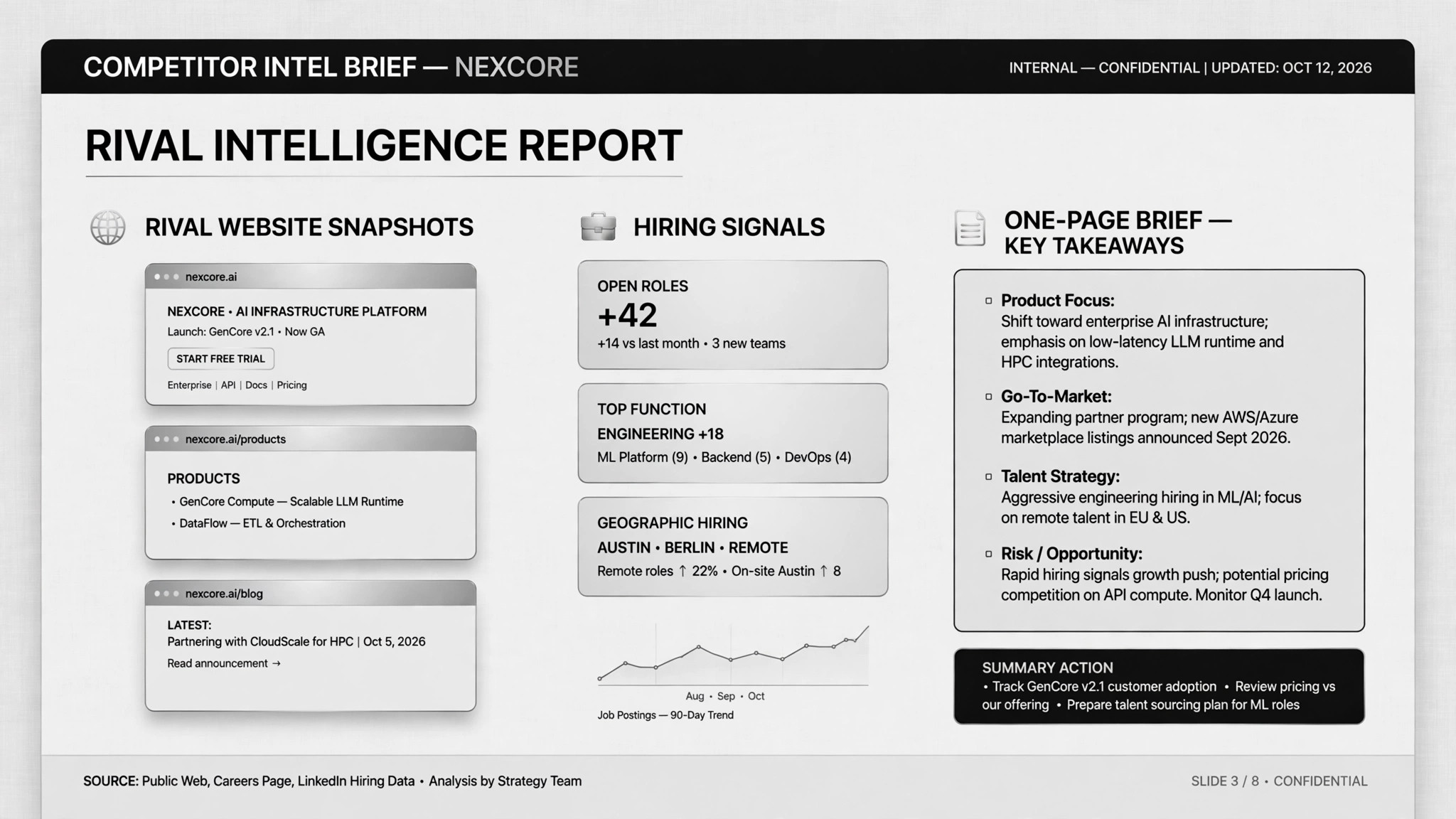
Instálala en 3 pasos
Sin registro. Sin herramientas CLI. Elige tu IA, copia una línea y pégala.
¿Prefieres hacerlo tú mismo? Compra la habilidad ($4.99), descarga el ZIP desde la confirmación de compra, descomprímelo en el directorio que se muestra arriba y reinicia tu sesión de IA — el mismo resultado. ¿Ya la compraste? Tu asistente de IA puede descargarla por ti.
Prueba en el mundo real
Gente real hizo este mismo trabajo con agentes de IA.
Run a Monday competitor-monitoring brief from job listings
Leer el caso →Caso de usoRun web research jobs and capture screenshots into a doc
Leer el caso →Qué incluye
Un SKILL.md (la guía paso a paso) + una plantilla inicial. Una vista previa:
Competitor Researcher
When to use
- You want a Monday-morning snapshot of what competitors changed last week: pricing, features, announcements, hiring
- Job listings are a leading indicator in your market and you want someone reading the signals for you
- You need a one-page competitive brief before a strategy or product meeting
- Pricing pages shift often and you want changes flagged with screenshots as proof
- You'd rather read takeaways than browse five competitors' sites yourself
Workflow
- Set the watch list (input: competitor names → output: watch list + signals)
Name 3–7 competitors and what to watch on each site: pricing page, changelog, announcements, careers page. Be specific per site — "keep an eye on Acme" is not a spec. - Fetch on schedule (input: watch list → output: snapshots + screenshots)
On your chosen cadence (the classic is Monday 8am), visit each site, record starting prices and core features, and capture homepage screenshots. Read-only: never submit forms, never apply for jobs, never create accounts. - Diff against last time (input: this week's snapshots + last week's → output: change list)
Compare and list only what changed. No change means no entry. This step is what makes the brief worth reading — a dump of everything is not intelligence. - Read the hiring signals (input: new job postings → output: inferred intentions)
Read new job descriptions and infer what each hire implies about product direction. Label every inference as inference, not fact — a JD is a signal, not an announcement. - Write the one-page brief (input: change list + signals → output: brief)
One page: changes summary, the single most important item, and three takeaways for your team. Every claim links to a screenshot or page with a capture date. Anything inferred is labeled as such.
Output spec
- One-page brief per run: changes since last run, the top item, three takeaways
- Evidence appendix: screenshots, URLs, capture dates
- A stored snapshot archive so the next run can diff against this one
- Companion template.md skeleton — fill in the blanks and use it
Good vs. bad examples
Vista previa de la plantilla
Competitor Researcher — Weekly Brief Template
One run = one brief. Run on your cadence (classic: Monday 8am), diff against last week.
Run — {date}
Watch list: {competitor names, 3–7}
Snapshots & screenshots
*Read-only only: no signups, no form submissions, no fake demo requests.*
What changed since {last run date}
*No change = no row.*
Hiring signals (inference — label everything)
*Reminder: a JD is a signal, not an announcement. Never state inference as fact.*
One-page brief
The single most important item: {one sentence}
Top takeaways for our team:
- {takeaway + what we should do}
- {…}
- {…}
El paquete de la habilidad (SKILL.md + plantilla) está escrito en inglés.
También te puede interesar
 Flujos de trabajo
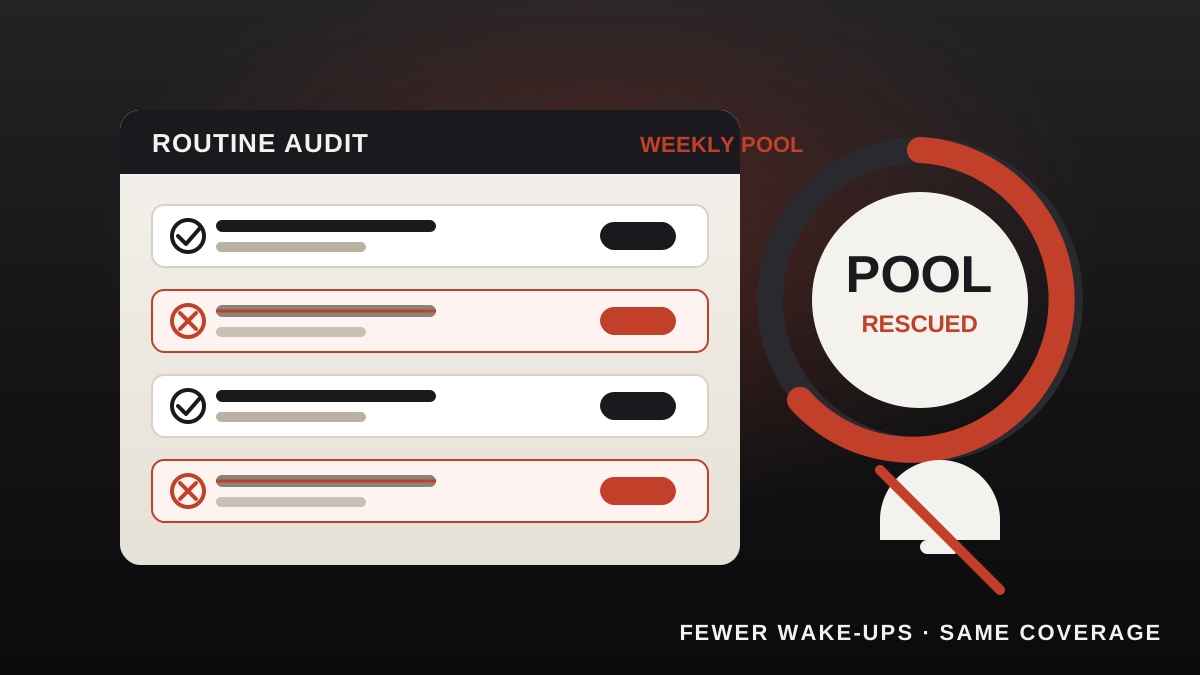
Grok Bot Routine Rescue
Find which scheduled routine is eating your weekly pool — and kill it
 Flujos de trabajo
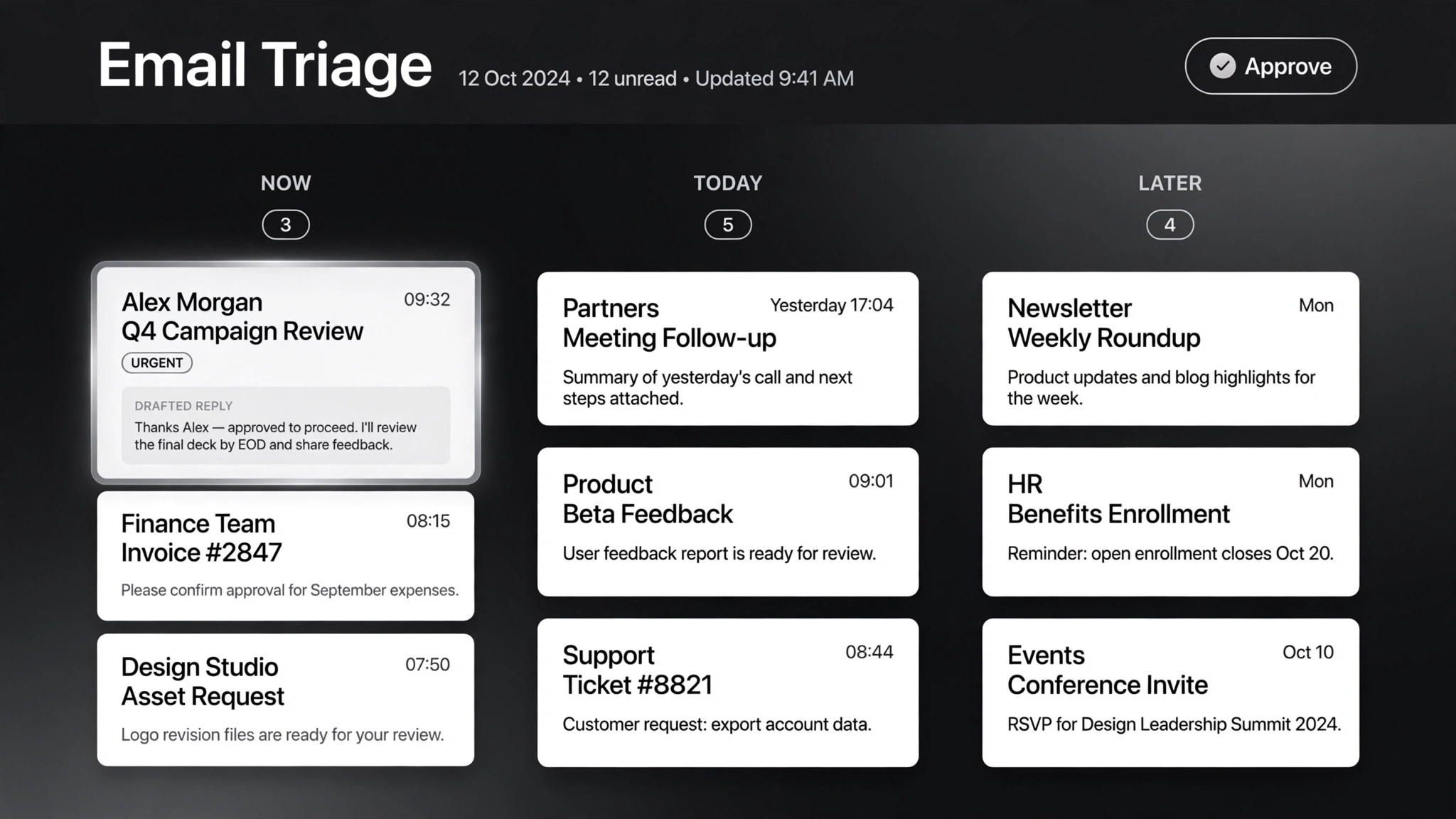
Inbox Triage
Tu bandeja, leída de antemano: urgentes marcados, respuestas redactadas, tú solo pulsas enviar
 Flujos de trabajo
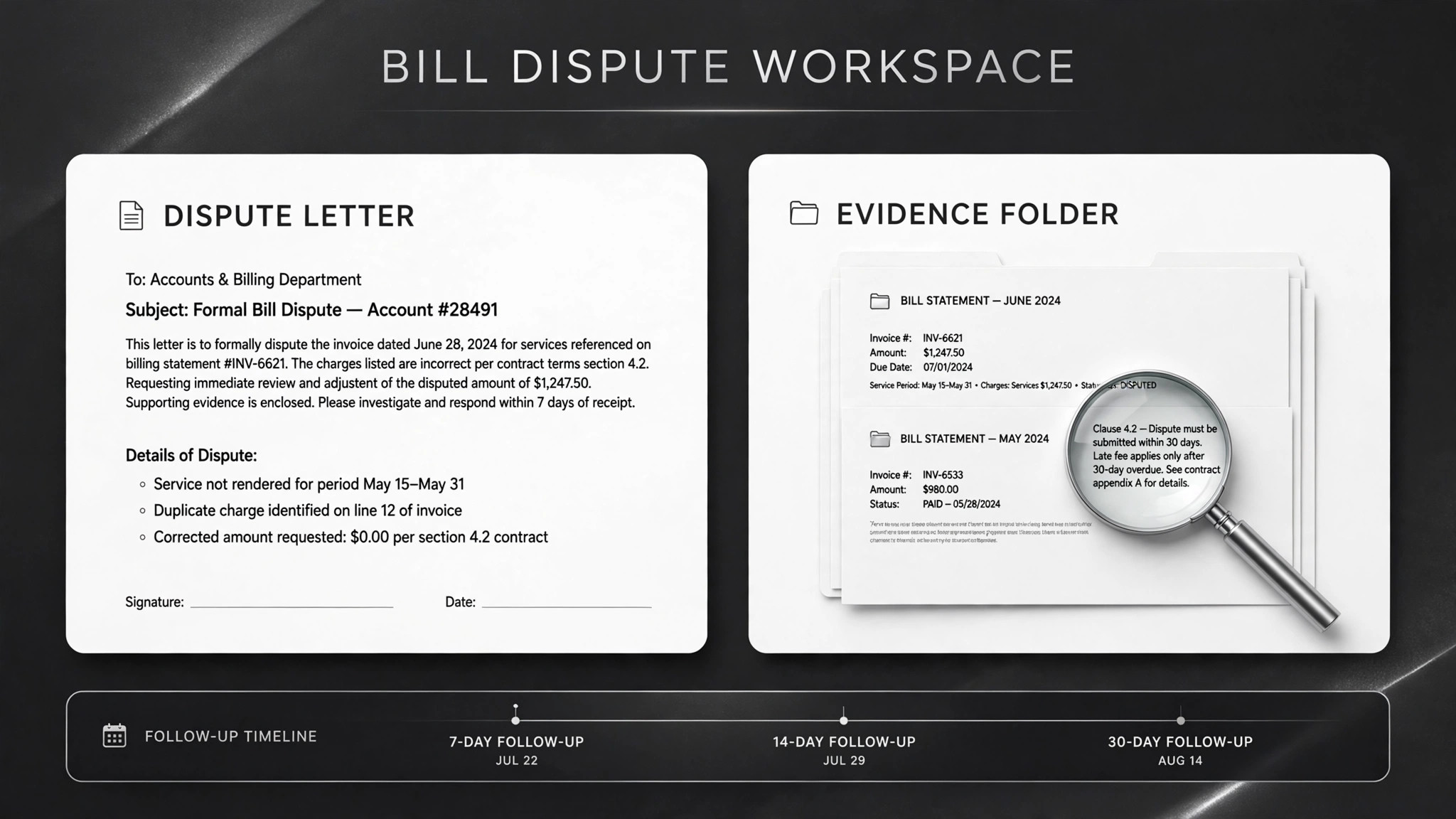
Bill Fighter
Impugna cobros indebidos y reclamos denegados con cartas respaldadas por pruebas