Chromatic Futures Deck
Un pitch deck de futuros donde el color separa cada escenario
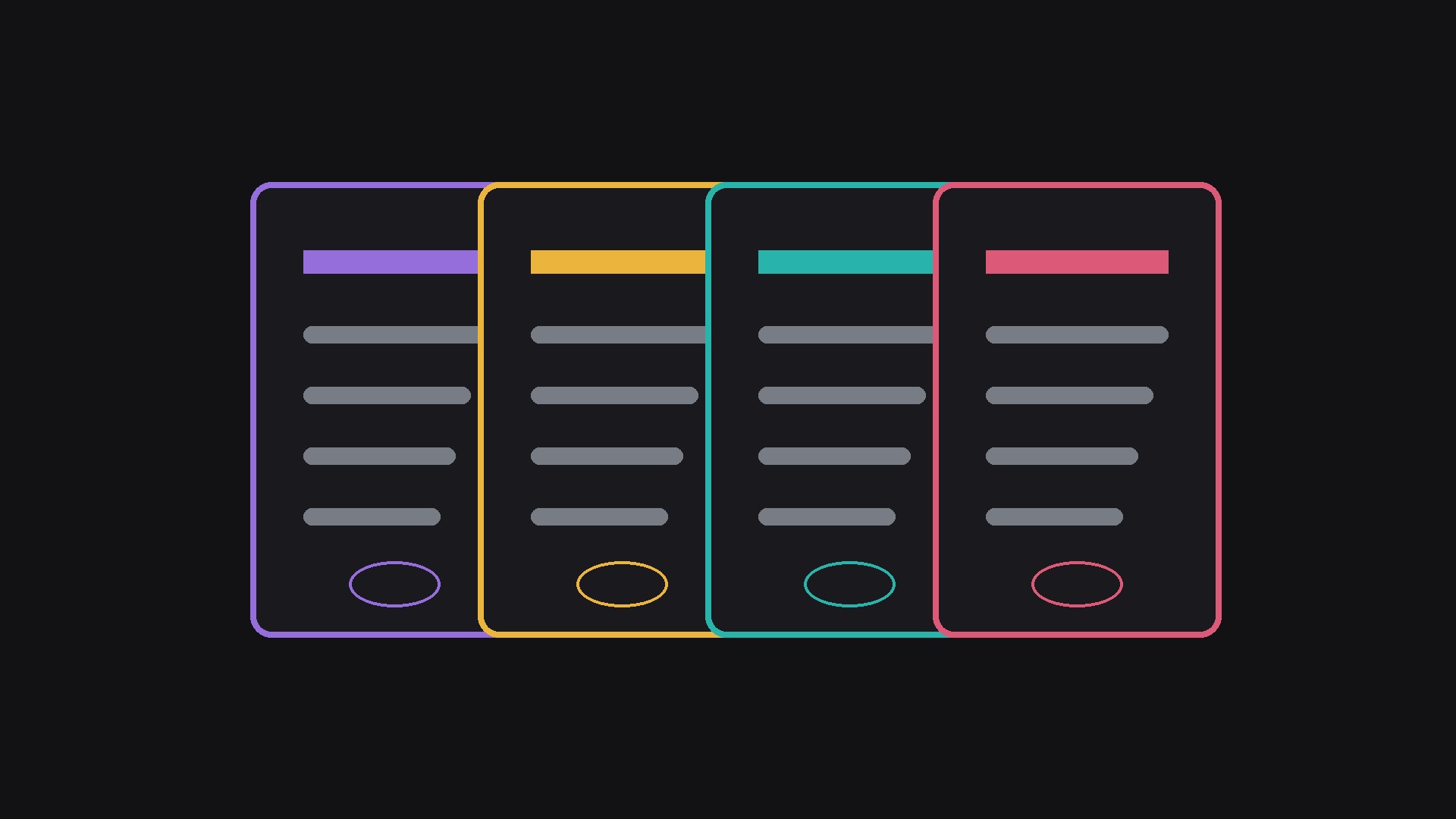
Construye un deck de futuros de 12 a 20 diapositivas con un tono audaz por escenario y una base neutra compartida, para que la audiencia siempre sepa en qué futuro está: el cambio inicial, una sección por futuro, y después la elección y la hoja de ruta.
Instálala en 3 pasos
Sin registro. Sin herramientas CLI. Elige tu IA, copia una línea y pégala.
¿Prefieres hacerlo tú mismo? Compra la habilidad ($4.99), descarga el ZIP desde la confirmación de compra, descomprímelo en el directorio que se muestra arriba y reinicia tu sesión de IA — el mismo resultado. ¿Ya la compraste? Tu asistente de IA puede descargarla por ti.
Qué incluye
Un SKILL.md (la guía paso a paso) + una plantilla inicial. Una vista previa:
Chromatic Futures Deck
When to use
- You're pitching a vision, strategy, or roadmap deck where "the future" is the subject, not a footnote
- Your deck has multiple scenarios or futures that blur together in one corporate color scheme
- You need a keynote, board, or investor deck that looks forward instead of reporting backward
- Your current deck is all grey and blue and the audience can't tell one scenario from another
- You want color to do real work — separating ideas, marking time horizons, and guiding the eye
Workflow
- Define the futures (input: strategy / vision material → output: future list)
Name each future or scenario as its own thing: "The Automated City", "The Creator Economy", "The Regulated Market". Two to four futures maximum — a deck with six futures is a list, not a vision. For each, write one sentence on what changes and one on what it means for the audience. If two futures can't be told apart in one sentence each, merge them. - Assign the palette (input: future list → output: color system)
Give each future its own chromatic identity: one bold hue per future (e.g. violet for one, amber for another, teal for a third), plus a neutral base (near-black or warm off-white) that every slide shares. The rule is strict: a slide about Future A uses Future A's hue and no other. Color becomes a label the audience reads without thinking — they always know which future they're in. - Structure the deck (input: futures + palette → output: slide outline)
Structure: opening (the shift — why the future won't look like the present), one section per future (what changes, evidence, what it means, what we do), then the choice (which future we build toward, and the roadmap to get there). 12–20 slides for a full deck, 6–10 for a short pitch. Every slide gets a job: if a slide doesn't advance the argument, it goes. - Build the slides (input: outline + color system → output: slide deck)
Design rules: one idea per slide, headline as a sentence ("Automation eats the middle of the market"), color used to mark which future the slide belongs to, generous white (or black) space. Data slides use the section's hue for the series that matters and grey for the rest. Transitions between futures get a full-bleed color divider — the audience should feel the shift. No slide should need its speaker to explain what it's about. - Rehearse and tighten (input: slide deck → output: final deck + speaker notes)
Present it aloud, timed: a 20-minute deck gets 20 minutes of rehearsal, not a skim. Cut any slide you apologize for ("this one is a bit dense") and any slide the audience has to read twice. Speaker notes carry the evidence and the caveats; slides carry the argument. End on the choice and the first step — the last slide is a decision, not a thank-you.
Vista previa de la plantilla
Chromatic Futures Deck — Template
One deck = 2–4 futures, one hue each. Fill this in before building slides.
Deck: {title} | Audience: {keynote / board / investors} | Date: {date — version every futures deck}
The shift (one sentence — why the future won't look like the present): {}
The futures (2–4, each distinguishable in one sentence)
Neutral base (shared by every slide): {near-black / warm off-white}
Color rule: A slide about Future A uses Future A's hue and no other. [ ]
Slide outline (12–20 full / 6–10 short)
Per-slide build checklist
- [ ] One idea per slide
- [ ] Headline is a sentence that carries the argument alone
El paquete de la habilidad (SKILL.md + plantilla) está escrito en inglés.
También te puede interesar
 Presentaciones
Pitch Deck
10 diapositivas que cuentan una sola historia: los inversores se quedan hasta la última página
 Presentaciones
Work Report
Semanales, mensuales, evaluaciones: primero la conclusión, entendido en 3 minutos
 Presentaciones
Academic Argument Deck
Una presentación que argumenta, y que responde