Article Brief Deck
El argumento del artículo, en diapositivas dignas de citar
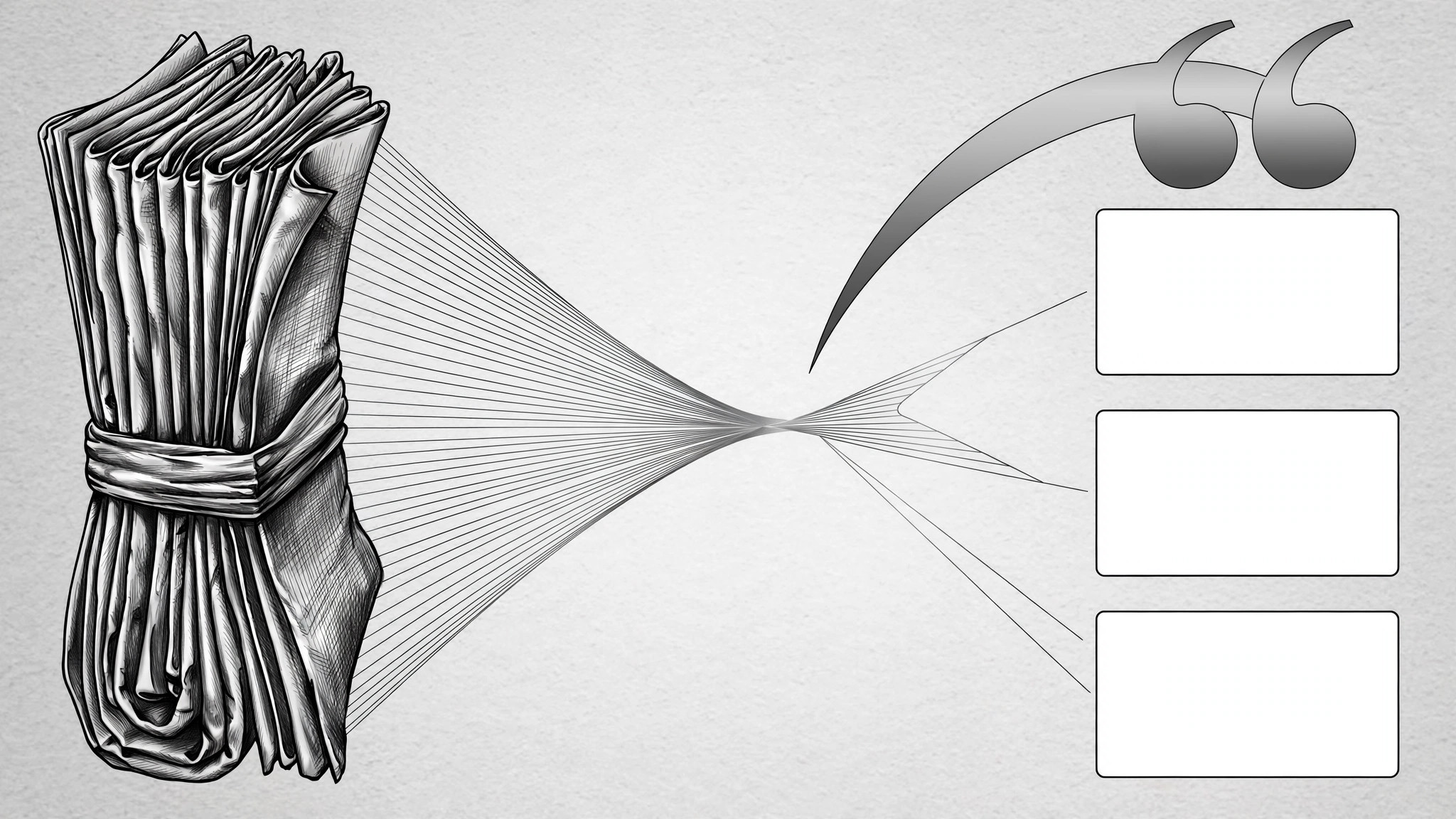
Convierte un artículo largo en un deck corto de diapositivas breves y citables: el argumento, la evidencia y las frases que vale la pena repetir, sin aplanar lo que el artículo realmente dice.
Instálala en 3 pasos
Sin registro. Sin herramientas CLI. Elige tu IA, copia una línea y pégala.
¿Prefieres hacerlo tú mismo? Compra la habilidad ($4.99), descarga el ZIP desde la confirmación de compra, descomprímelo en el directorio que se muestra arriba y reinicia tu sesión de IA — el mismo resultado. ¿Ya la compraste? Tu asistente de IA puede descargarla por ti.
Qué incluye
Un SKILL.md (la guía paso a paso) + una plantilla inicial. Una vista previa:
Article Brief Deck
When to use
- You need to present an article's argument in a meeting without reading the whole piece aloud
- A reading group or class needs a shared starting point for discussion
- You are briefing a colleague or client on a long report, essay, or feature they will not read in full
- A newsletter or social post needs the article's strongest lines pulled out accurately
- You want a quick-reference deck you can revisit instead of re-reading the original
Workflow
- Read and mark the article (input: full article → output: annotated article)
Read the whole article once, then mark four things: the central claim (what the author is arguing), the supporting points (the 2–4 reasons or findings behind it), the key evidence (the data, examples, or quotes that carry the argument), and the caveats (what the author admits is uncertain or limited). If you cannot state the central claim in one sentence, re-read before building slides — a deck built on a guessed thesis will misrepresent the piece. - Extract quotable lines (input: annotated article → output: quote bank)
Pull out the lines worth repeating: short, self-contained sentences that carry the argument or a vivid piece of evidence. Copy each quote exactly, word for word, and record its location (section or paragraph) so it can be checked. Paraphrase is not a quote — if you shorten a sentence, mark it as a paraphrase, never present it in quotation marks. - Structure the brief (input: quote bank → output: slide outline)
Build an outline of 6–10 slides: title (article, author, publication, date) → the claim in one slide → one slide per supporting point, each with its evidence → caveats and limits → what it means / discussion questions. The deck follows the article's own structure, not a generic template: if the article's argument is a comparison, the deck compares; if it is a chronology, the deck follows the timeline. - Build the slides (input: outline + quote bank → output: full deck draft)
One idea per slide, one claim per slide. Headlines state the point in plain words ("The shortage is a training problem, not a hiring problem"); the body carries the evidence and at most one short quote. Keep quotes large and exact, with attribution on the slide. End with a slide that points back to the original: title, author, where to read it, and the caveats — so anyone who wants the full picture knows where to go. - Check fidelity (input: deck draft → output: presentation-ready deck)
Verify the deck against the article, slide by slide: does every claim in the deck appear in the article, is every quote exact, and is anything the author qualified presented here as absolute? Read the caveats slide again — it is the one most decks skip and the one that keeps the brief honest. If a slide cannot be traced back to a specific passage, rewrite or cut it.
Vista previa de la plantilla
Article Brief Deck — Build Template
One article = one deck. Every claim must trace back to a passage in the article.
Article: {title}
Author: {name} | Publication: {name} | Date: {date} | Link: {URL}
Read-and-mark notes
Central claim (one sentence): {what the author is arguing}
Supporting points:
- {point} — evidence: {data / example / quote}
- {point} — evidence:
- {point} — evidence:
Caveats / limits (what the author admits is uncertain):
- {caveat}
- {caveat}
Terms to define for the audience:
Quote bank (exact wording, copy word for word)
Paraphrases (never in quotation marks):
- {paraphrase} — based on {section}
El paquete de la habilidad (SKILL.md + plantilla) está escrito en inglés.
También te puede interesar
 Presentaciones
Pitch Deck
10 diapositivas que cuentan una sola historia: los inversores se quedan hasta la última página
 Presentaciones
Work Report
Semanales, mensuales, evaluaciones: primero la conclusión, entendido en 3 minutos
 Presentaciones
Academic Argument Deck
Una presentación que argumenta, y que responde