Article Brief Deck
Das Argument des Artikels, in zitierwürdigen Folien
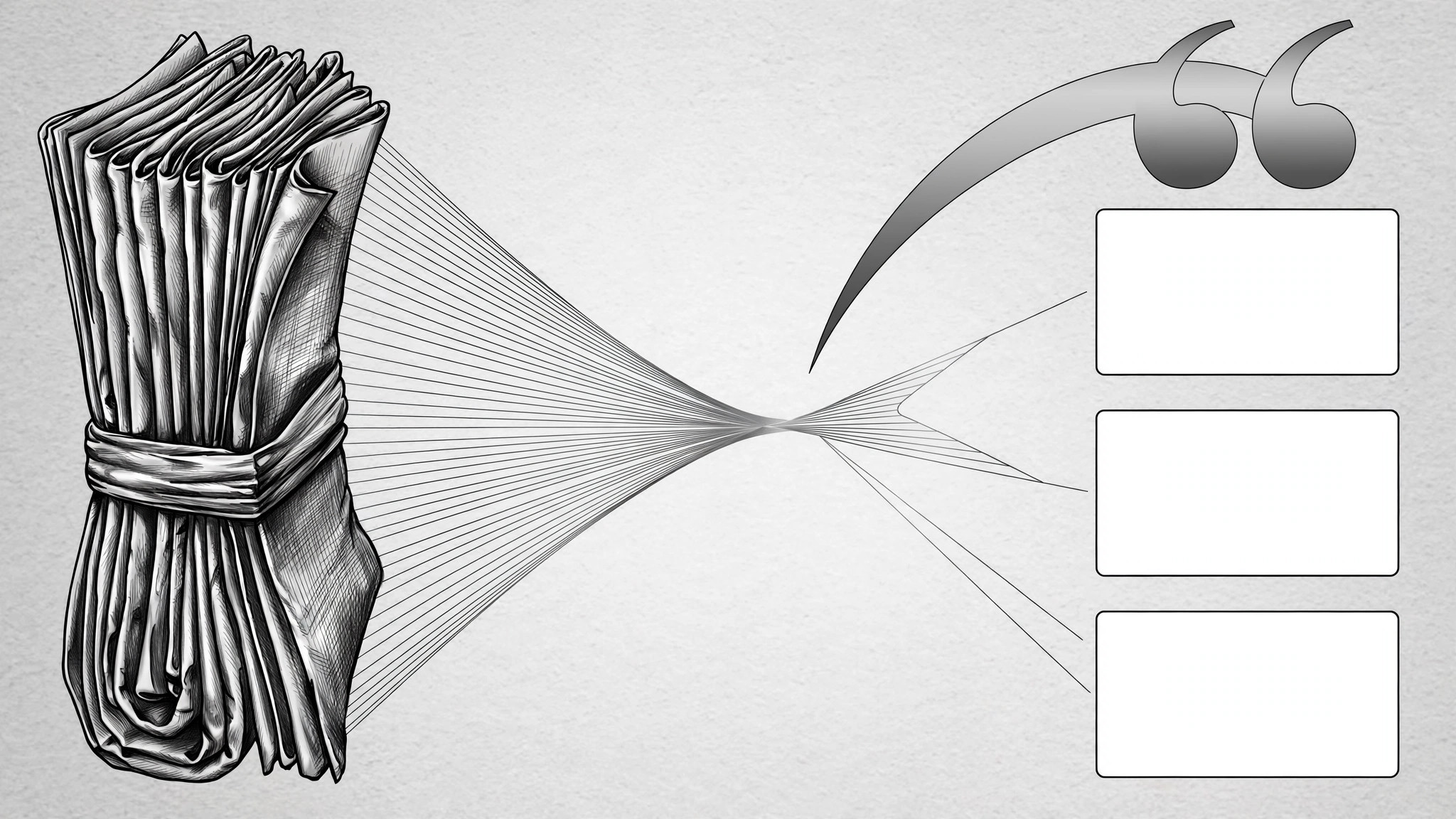
Verwandelt einen langen Artikel in ein kurzes Deck aus prägnanten, zitierwürdigen Folien — das Argument, die Belege und die Zeilen, die es wert sind, wiederholt zu werden, ohne abzuflachen, was der Artikel tatsächlich sagt.
In 3 Schritten installieren
Keine Anmeldung. Keine CLI-Tools. Wählen Sie Ihre AI, kopieren Sie eine Zeile und fügen Sie sie ein.
Lieber selbst machen? Kaufen Sie den Skill ($4.99), laden Sie die ZIP-Datei aus Ihrer Kaufbestätigung herunter, entpacken Sie sie in das oben angezeigte Verzeichnis und starten Sie Ihre AI-Sitzung neu — gleiches Ergebnis. Haben Sie ihn schon gekauft? Ihr AI-Assistent kann ihn für Sie herunterladen.
Was ist enthalten
Eine SKILL.md (die Anleitung) + eine Startvorlage. Eine Vorschau:
Article Brief Deck
When to use
- You need to present an article's argument in a meeting without reading the whole piece aloud
- A reading group or class needs a shared starting point for discussion
- You are briefing a colleague or client on a long report, essay, or feature they will not read in full
- A newsletter or social post needs the article's strongest lines pulled out accurately
- You want a quick-reference deck you can revisit instead of re-reading the original
Workflow
- Read and mark the article (input: full article → output: annotated article)
Read the whole article once, then mark four things: the central claim (what the author is arguing), the supporting points (the 2–4 reasons or findings behind it), the key evidence (the data, examples, or quotes that carry the argument), and the caveats (what the author admits is uncertain or limited). If you cannot state the central claim in one sentence, re-read before building slides — a deck built on a guessed thesis will misrepresent the piece. - Extract quotable lines (input: annotated article → output: quote bank)
Pull out the lines worth repeating: short, self-contained sentences that carry the argument or a vivid piece of evidence. Copy each quote exactly, word for word, and record its location (section or paragraph) so it can be checked. Paraphrase is not a quote — if you shorten a sentence, mark it as a paraphrase, never present it in quotation marks. - Structure the brief (input: quote bank → output: slide outline)
Build an outline of 6–10 slides: title (article, author, publication, date) → the claim in one slide → one slide per supporting point, each with its evidence → caveats and limits → what it means / discussion questions. The deck follows the article's own structure, not a generic template: if the article's argument is a comparison, the deck compares; if it is a chronology, the deck follows the timeline. - Build the slides (input: outline + quote bank → output: full deck draft)
One idea per slide, one claim per slide. Headlines state the point in plain words ("The shortage is a training problem, not a hiring problem"); the body carries the evidence and at most one short quote. Keep quotes large and exact, with attribution on the slide. End with a slide that points back to the original: title, author, where to read it, and the caveats — so anyone who wants the full picture knows where to go. - Check fidelity (input: deck draft → output: presentation-ready deck)
Verify the deck against the article, slide by slide: does every claim in the deck appear in the article, is every quote exact, and is anything the author qualified presented here as absolute? Read the caveats slide again — it is the one most decks skip and the one that keeps the brief honest. If a slide cannot be traced back to a specific passage, rewrite or cut it.
Vorschau der Startvorlage
Article Brief Deck — Build Template
One article = one deck. Every claim must trace back to a passage in the article.
Article: {title}
Author: {name} | Publication: {name} | Date: {date} | Link: {URL}
Read-and-mark notes
Central claim (one sentence): {what the author is arguing}
Supporting points:
- {point} — evidence: {data / example / quote}
- {point} — evidence:
- {point} — evidence:
Caveats / limits (what the author admits is uncertain):
- {caveat}
- {caveat}
Terms to define for the audience:
Quote bank (exact wording, copy word for word)
Paraphrases (never in quotation marks):
- {paraphrase} — based on {section}
Das Skill-Paket selbst (SKILL.md + Vorlage) ist auf Englisch verfasst.


